Amount exceeded


4.7 out of 5 based on 59855 reviews




















4.7 out of 5 based on 59855 reviews
.
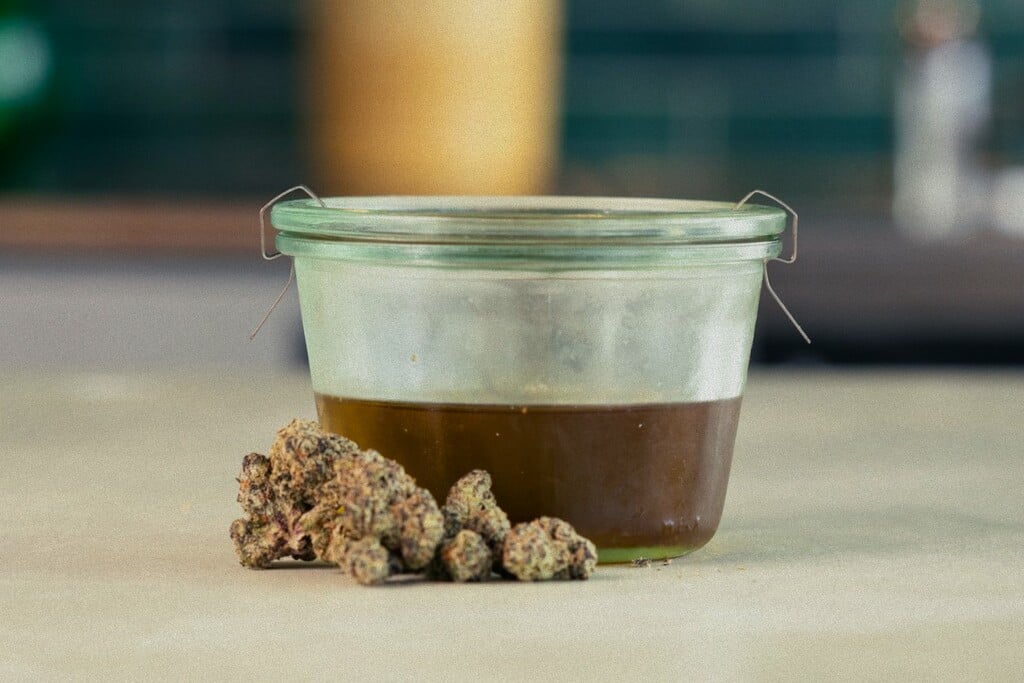
Make cannabis infused MCT oil with a repeatable method: decarb, gently infuse, strain, and store. Includes key equipment, risk-aware guidance, and practical ways to use your oil in the kitchen or as a dropper-style tincture.
Contents:
Looking for a potent, fast-absorbing cannabis oil? This guide shows you how to make cannabis-infused MCT oil at home for tinctures, edibles, and more, using a simple, reliable method you can repeat batch after batch.
Cannabis infused MCT oil is a simple infusion: cannabinoids (like THC and CBD) are dissolved into MCT oil, creating a liquid you can dose by the dropper, mix into food, or use as the base for an MCT oil tincture. Instead of relying on alcohol or butter, you’re using a neutral, stable fat to carry and preserve the active compounds.
MCT oil (medium-chain triglyceride oil) is typically fractionated from coconut oil and sometimes palm kernel oil. “Fractionated” means the longer-chain fats are removed, mainly leaving medium-chain fats (commonly C8 and C10). The result is a clear, odourless oil that stays liquid at room temperature.
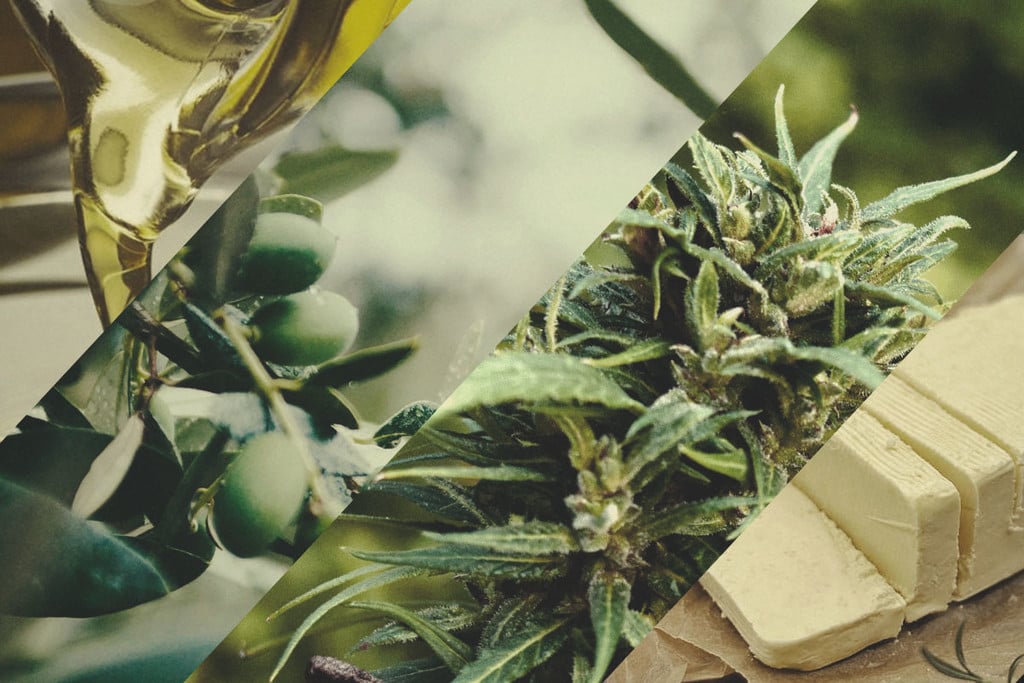
All fats can carry cannabinoids, but MCT has a few practical advantages over more common kitchen options.
Coconut oil works well, but it’s rich in long-chain fats and will often solidify in cooler rooms. That can make accurate dosing harder if you’re using droppers or trying to blend it into drinks. It also has a distinct flavour, which isn’t ideal for every recipe.
Olive oil remains liquid, but its peppery taste can overpower lighter dishes, and it’s more prone to oxidation than MCT, especially when stored for weeks or months.
Butter is brilliant for baking, yet it’s perishable, contains water and milk solids, and can separate, so it’s less convenient for a clean, shelf-stable tincture-style oil.
By contrast, MCT oil is neutral, consistently liquid, and generally easier on digestion for many people. Those medium-chain fats are absorbed quickly, which can support efficient uptake. One reason MCT cannabis oil is a go-to carrier for tinctures and everyday use.
Homemade oils can be deceptively strong. Because it’s easy to take just one more drop, overconsumption is a real risk, especially for beginners and when using a dropper. Start low, go slowly, and wait long enough before taking more.
Heat control matters, too. Cannabinoids and terpenes are sensitive to high temperatures, and overheating during decarboxylation or infusion can reduce potency and flavour. Use a thermometer and aim for steady, gentle heat rather than rushing the process.
Finally, keep legality and personal responsibility in mind. Cannabis laws vary widely, so make and use infused products only where permitted, store them securely away from children and pets, and label your bottle clearly.
For extra precision and cleanliness, consider a digital scale, a funnel, disposable gloves, and amber glass dropper bottles for storage and easy dosing.
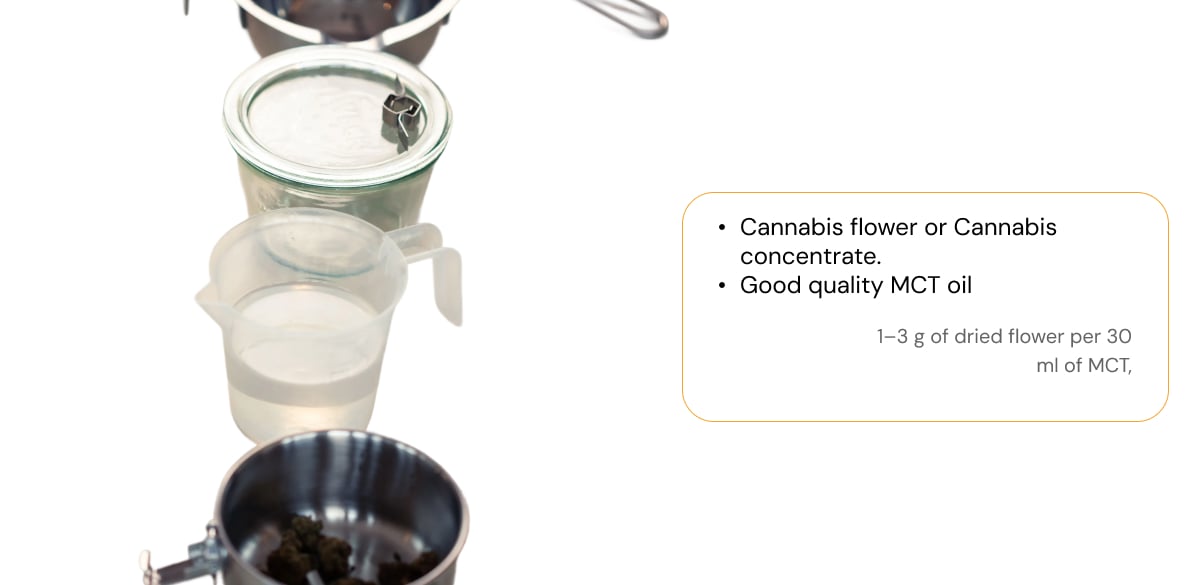
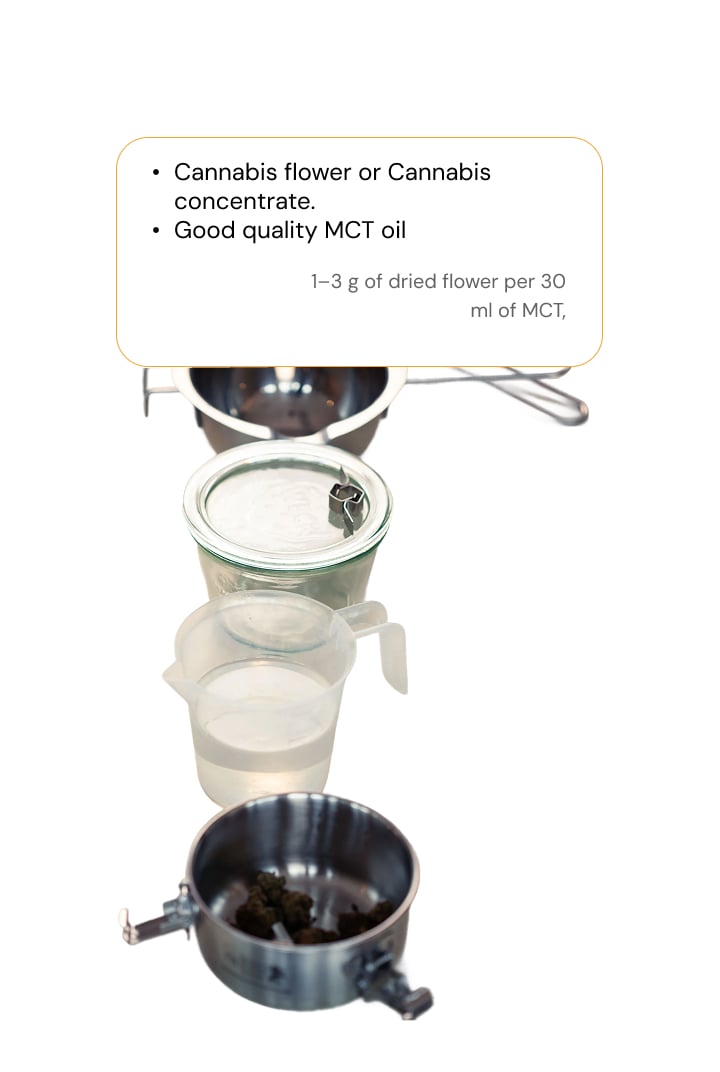
You can make infused MCT oil using either cannabis flower or a cannabis concentrate.
Alongside your cannabis, you’ll need a good-quality, plain MCT oil. As a starting point for ratios, many home users begin around 1–3 g of dried flower per 30 ml of MCT, then adjust in future batches.
Follow the sections in order, take your time with heat management, and you’ll end up with a clean, versatile oil you can use by the dropper or in the kitchen.
Decarboxylation is the process of gently heating cannabis to convert inactive cannabinoids (like THCA) into their active forms (like THC). If you skip this step, your oil will usually be noticeably weaker, even if you use plenty of flower.
For the oven method, lightly break up your dried cannabis, spread it evenly on a lined baking tray, and heat it at a low, steady temperature until it turns lightly toasted and aromatic. Avoid scorching; too much heat can degrade cannabinoids and drive off flavourful terpenes.
If you want exact times, temperatures, and troubleshooting, follow our dedicated decarboxylation article for a more detailed walkthrough.
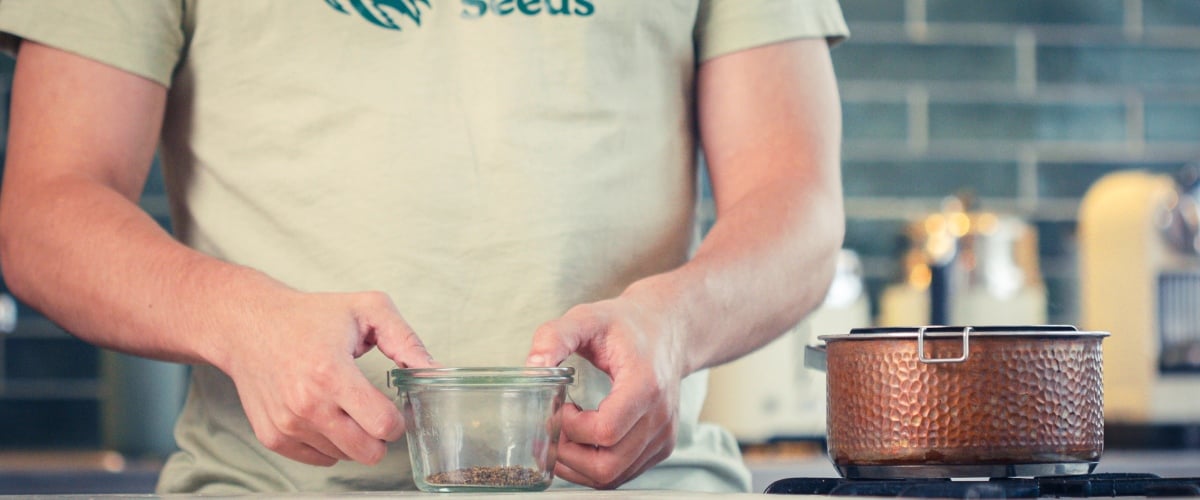
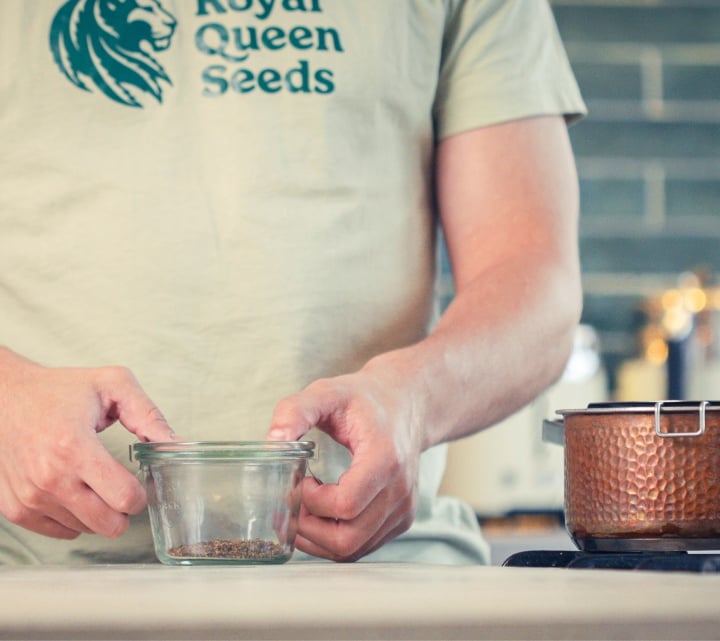
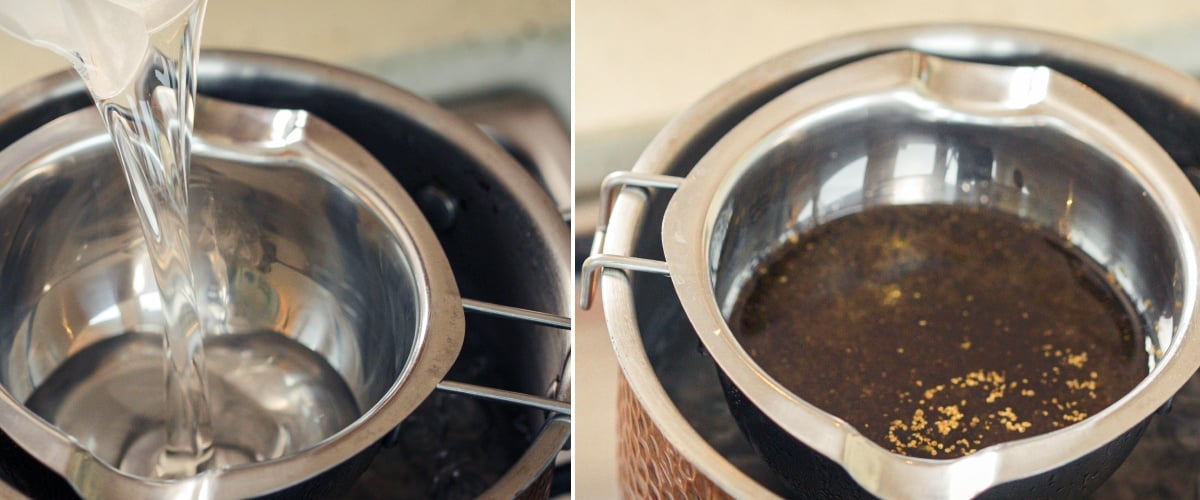
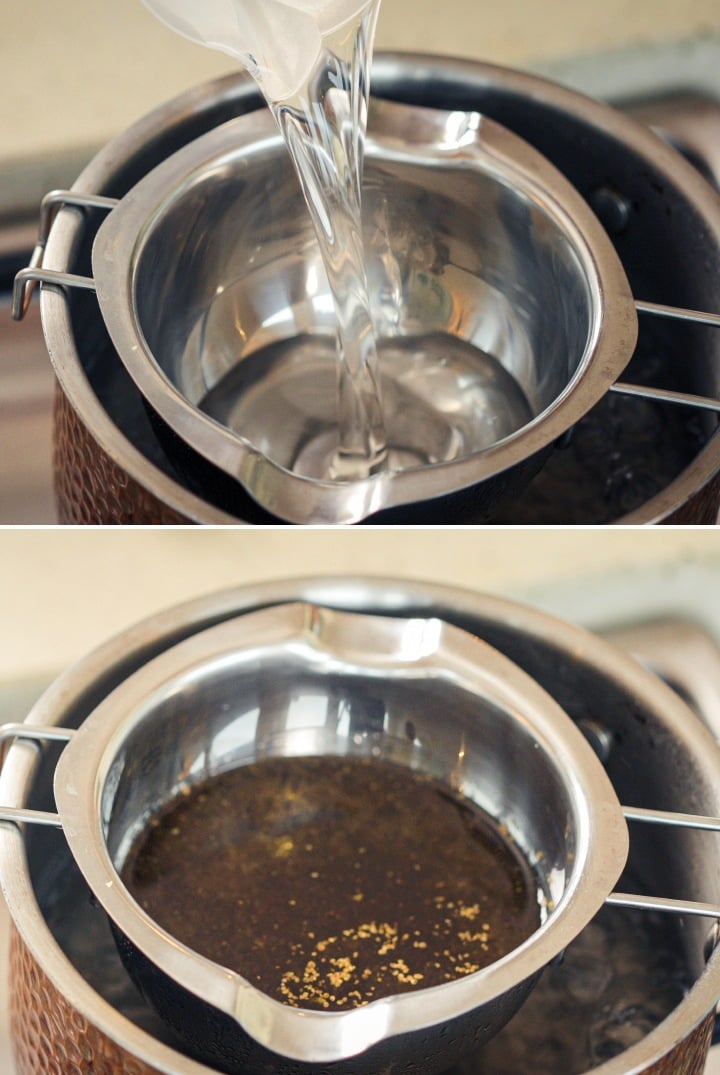
Once your cannabis is decarbed, it’s time to infuse. The goal is to maintain the oil at a temperature that is warm enough to extract cannabinoids, without overheating and degrading them. An ideal target is around 95°C, which is hot but below a vigorous boil.
A double boiler is the safest option: simmer a little water in a saucepan, then set a heat-safe bowl or jar above it so the oil heats gently. If you’re using a saucepan directly, keep it on the lowest heat and monitor it closely with a thermometer.
Combine the decarbed cannabis with your MCT oil and maintain the temperature for 2–3 hours. Stir the mixture every 15–20 minutes to keep the plant material evenly suspended and to enhance extraction. If the mixture starts to bubble aggressively or smell “toasty, reduce the heat immediately.
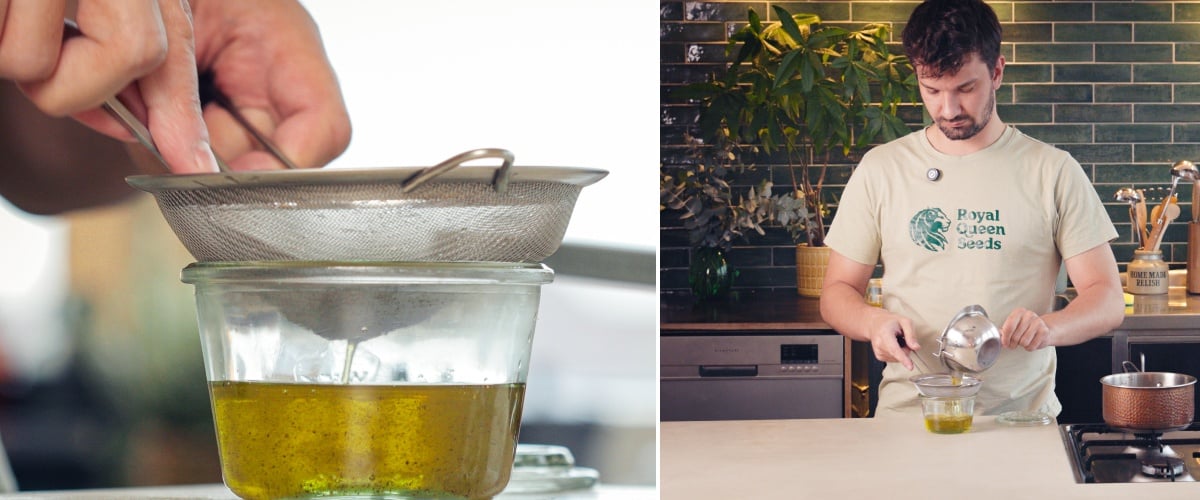
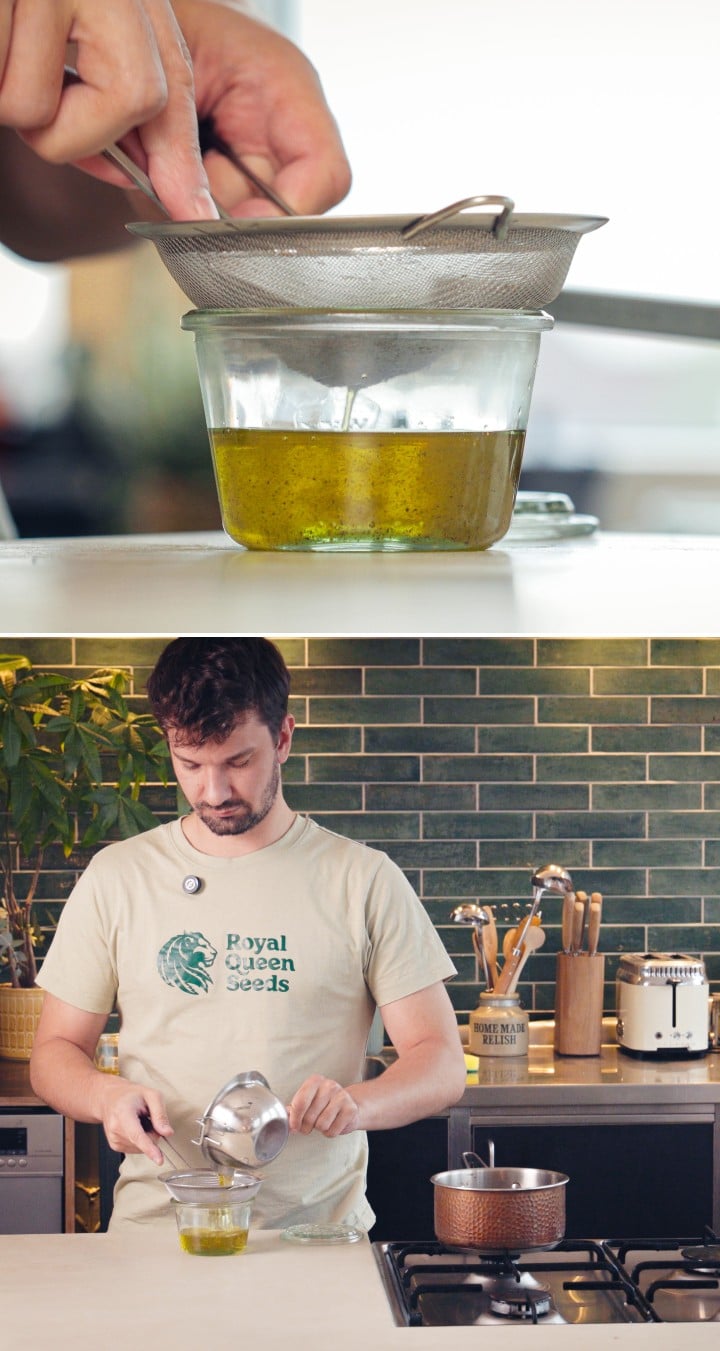
Let the mixture cool slightly so it’s still pourable but not dangerously hot. Set a fine-mesh sieve over a clean jar, or line it with cheesecloth for a cleaner finish, then pour the oil through slowly. Take care with steam and splashes, and use heat-resistant gloves if needed.
Resist the urge to squeeze the plant material hard. Pressing forces more fine particles and chlorophyll into the oil, which can make the flavour greener and more bitter. If you want a milder taste, strain gently and consider a second pass through fresh cloth or a coffee filter once the oil has cooled further.
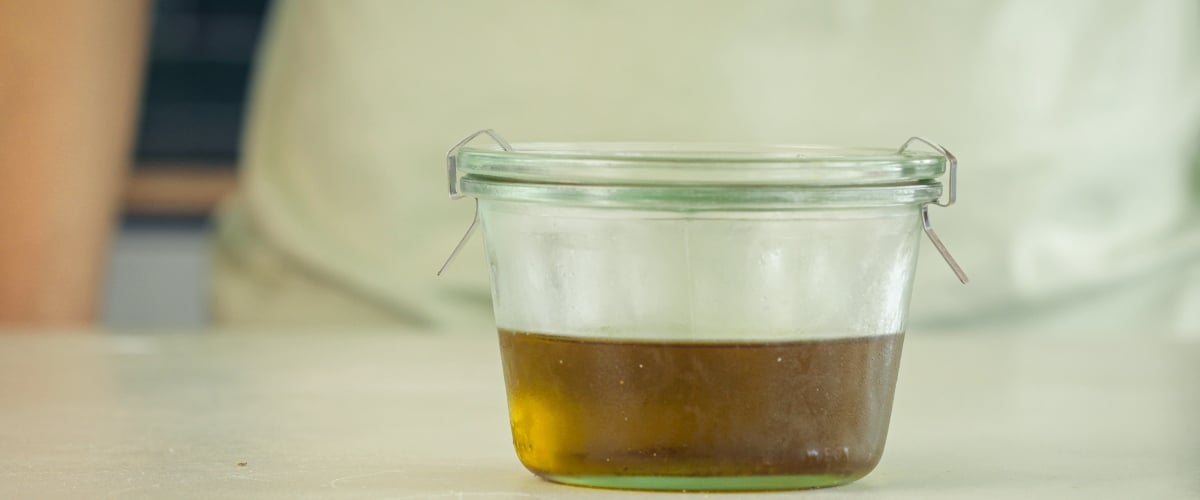
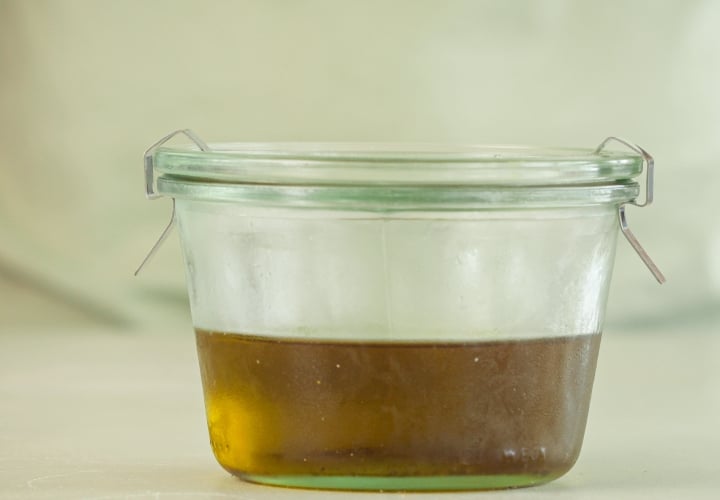
Transfer the oil to a clean, airtight glass bottle (amber glass is ideal) and store it in a cool, dark, and dry place to slow oxidation and preserve the flavour. Label it with the strain (if known), date, and your approximate cannabis-to-oil ratio so you can repeat or refine the strength next time.
Properly stored, it should last for several months, although the aroma and taste can fade over time. If you’re wondering if MCT oil needs to be refrigerated, it typically doesn’t, but refrigeration can be beneficial in warm climates; however, expect the oil to thicken slightly.
Dosage matters most with edibles and oils because the effects can feel stronger, last longer, and take time to show up. With an infused oil, it’s easy to add just a bit more before the first dose has fully kicked in, then the effects can stack.
A simple way to estimate THC strength is:
Example using 20% THC cannabis: 5 g × 0.20 × 1,000 = 1,000 mg THC total (theoretical). If you infuse 100ml of oil, that’s roughly 10mg per ml before accounting for losses during decarb, infusion, and straining.
When using MCT oil cannabis preparations, the onset is often 30–120 minutes, with effects potentially lasting 4–8 hours. Start low and go slow: begin with a small, measured amount, wait at least two hours, and only then consider increasing. Keeping notes on dose, timing, and effects will help you find a consistent routine.
One option is sublingual use as a tincture: measure your dose, place it under your tongue for 30–60 seconds, then swallow.
You can also add the oil to meals: stir it into dressings, drizzle it over finished dishes, or mix it into smoothies, yoghurt, or coffee. Avoid frying or high-heat baking, as this can reduce potency.
DisclaimerWhen consumed, THC metabolizes into 11-hydroxy-THC, which enters the body through the stomach and liver, resulting in a significantly stronger effect due to its increased affinity for CB1 receptors in the brain.
Ensure accurate portion control. Begin with small doses and gradually increase to develop tolerance.
Remember: Set and Setting will help you deal with various situations.
Stay Cultivated.