Amount exceeded


4.7 out of 5 based on 59595 reviews



















4.7 out of 5 based on 59595 reviews
.
Cannabis buds are much more complex than they may appear. In fact, what you know as "buds" are not true cannabis flowers at all, they're inflorescences. Oh, and those protruding hairs: you probably know them as pistils, right? Well, they are actually called stigmas. Discover the accurate anatomy of cannabis buds here to see the plant in a whole new light.
Contents:
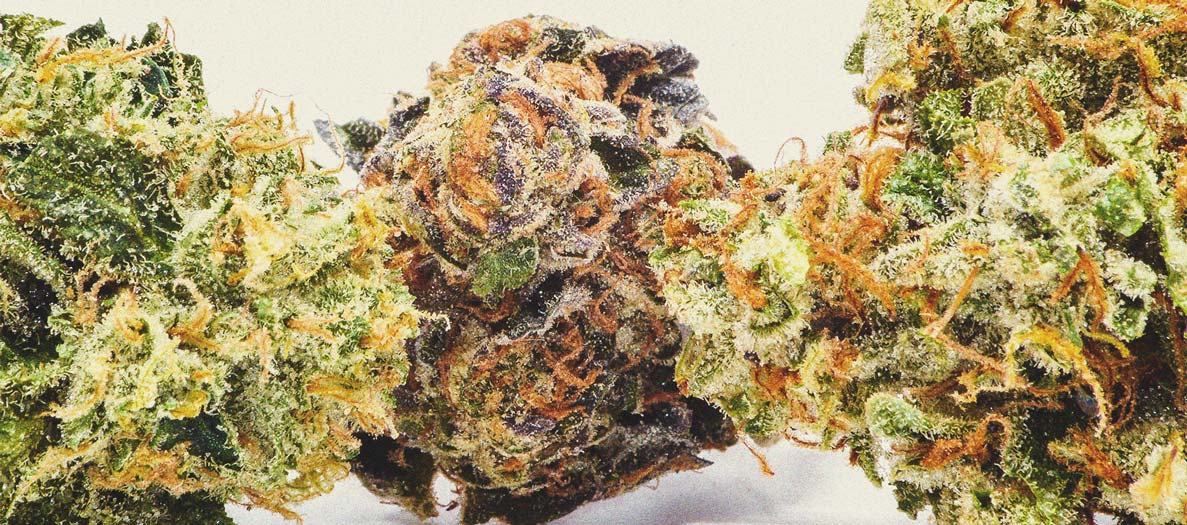
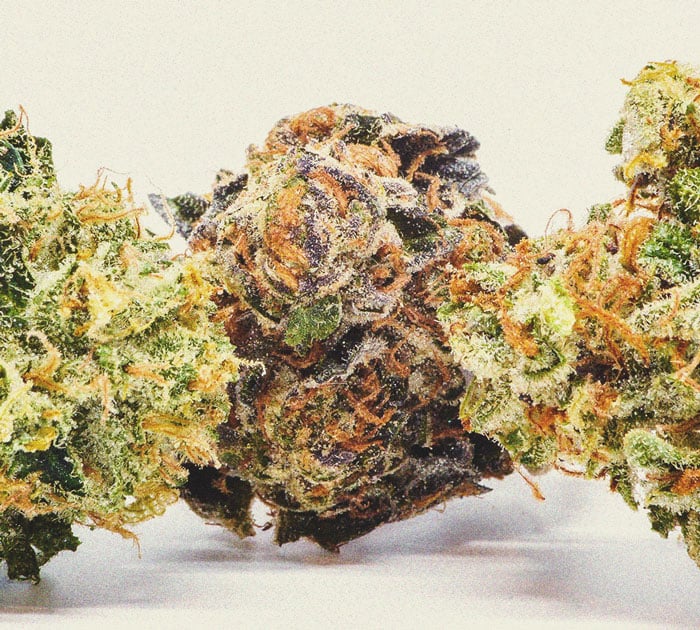
You have handled your fair share of cannabis flowers. Whether you've watched these tissues form during the flowering stage or have only ever handled them before a smoking session, you will know a thing or two about them. They've got a strong scent, are sticky to the touch, exhibit a glossy coating (due to trichomes), and possess small hairs called pistils, which contribute to their distinctive appearance.
Past these superficial characteristics, cannabis buds are highly complex. They manufacture and store most of the phytochemicals, including cannabinoids (such as THC and CBD) and terpenes, responsible for their psychoactive, aromatic, and wellness-related properties. Plus, they feature myriad anatomical components that are difficult to distinguish with the naked eye.
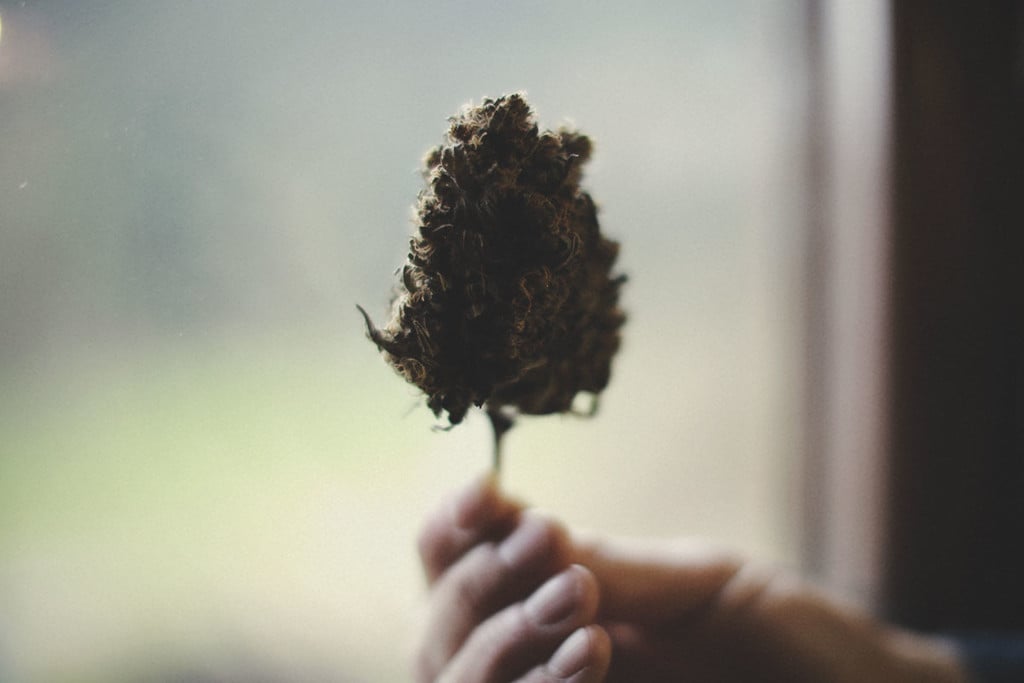
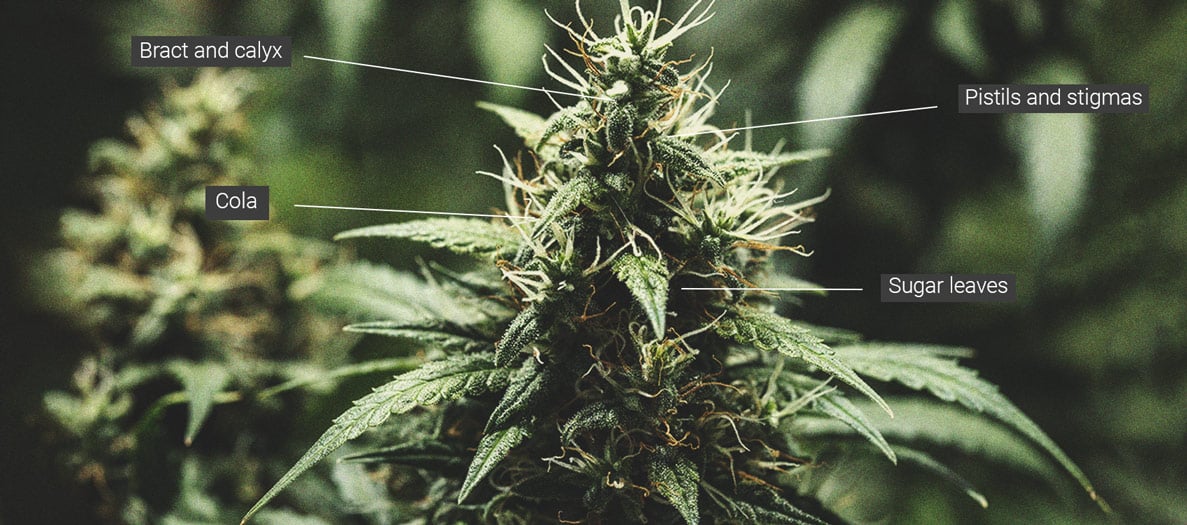
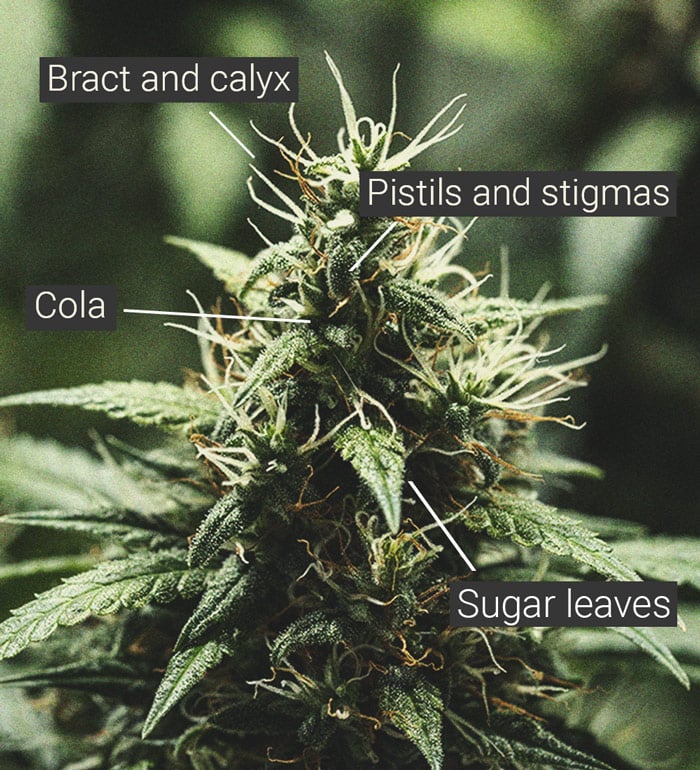
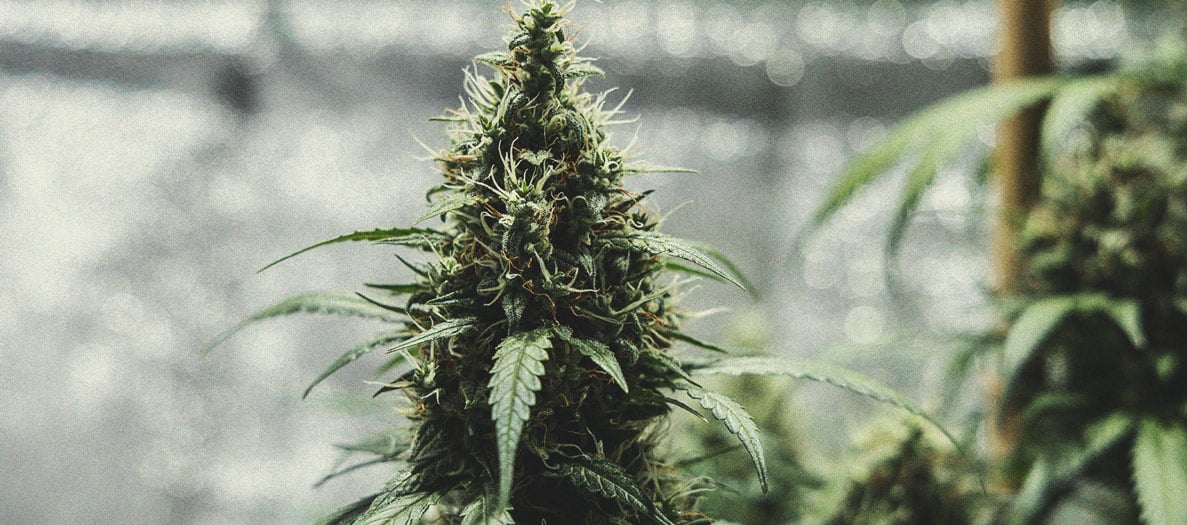
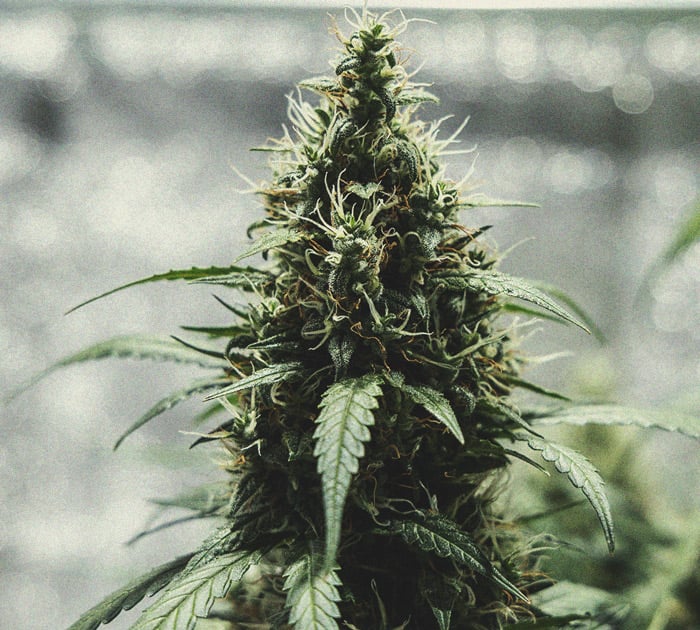
If you grow cannabis, you will know exactly where bud sites are located on cannabis plants. Colas, otherwise known as terminal buds, form at the end of branches. In untrained and untopped plants, a large central cola forms at the top of the Christmas tree-like structure. This vertical stack of buds can vary greatly in size depending on the genetics of a plant and how it responds to its environment.
Plants also produce many other smaller buds, often called popcorn buds because of their shape. These buds form at the nodes, the point at which branches join at the main stem.
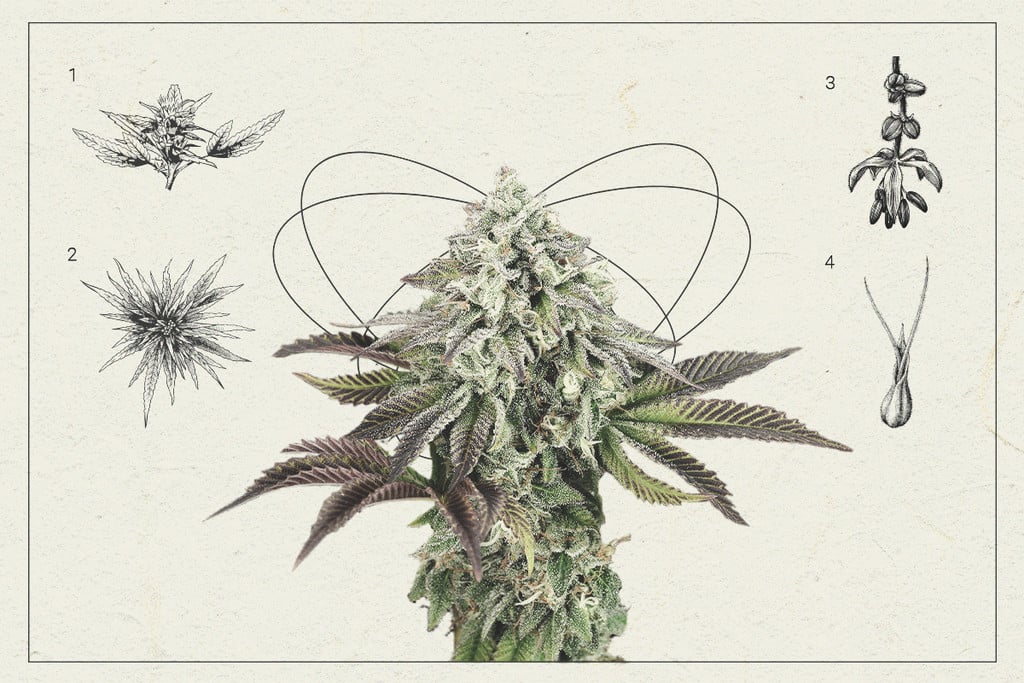
Cannabis buds are often incorrectly labelled as cannabis flowers. Rather, they are inflorescences: the complete flowering head made up of bracts, pistils, stigmas (commonly mistaken for pistils), and trichomes.
The true flowers of cannabis[1] are known as pistils. In botany, this term describes the reproductive structures designed to support the pollination process. Cannabis pistillate flowers[2] are composed of two stigmas, a style, and an ovule protected by trichome-coated bracts. A cluster of pistillate flowers makes up what most growers know as a bud.
Below, we'll explore the anatomy of pistillate flowers and buds, moving from the smallest structures to the largest.
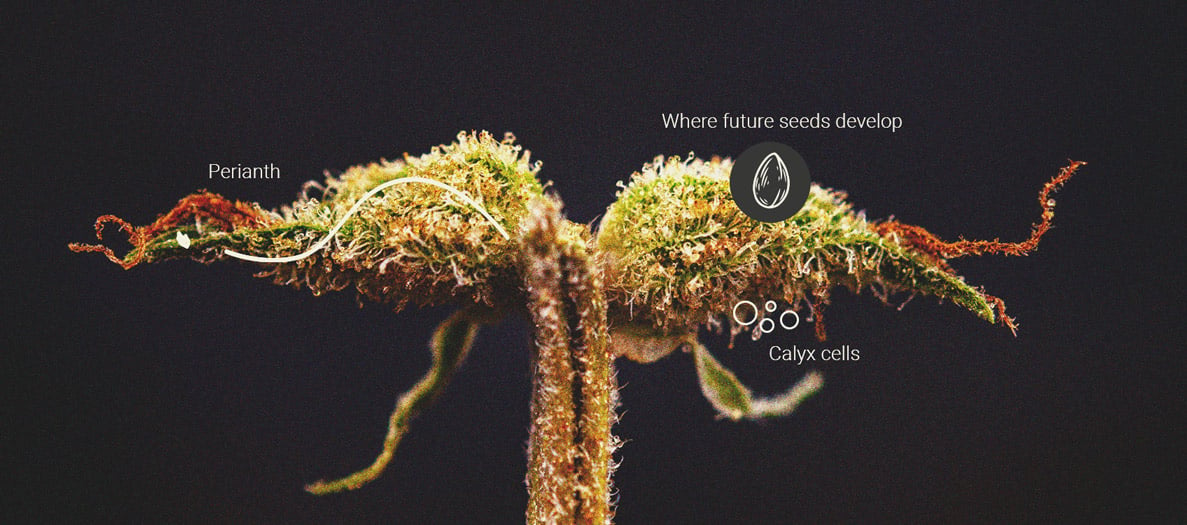
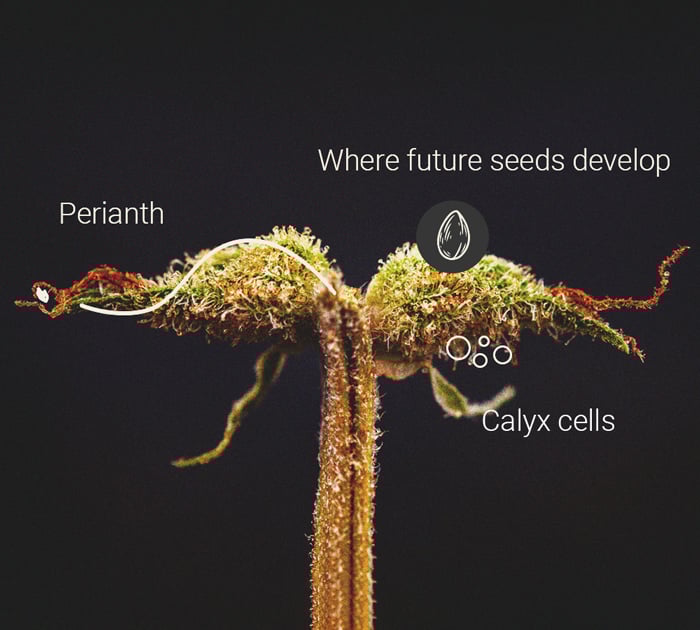
Many cannabis growers often confuse bracts with calyxes. However, cannabis flowers do not have a clearly differentiated calyx as in other plants. Instead, they have calyx cells located inside the perianth, a translucent tissue structure that partially envelops the ovule. This perianth protects the ovule, which is the site where future seeds will develop should pollination occur.
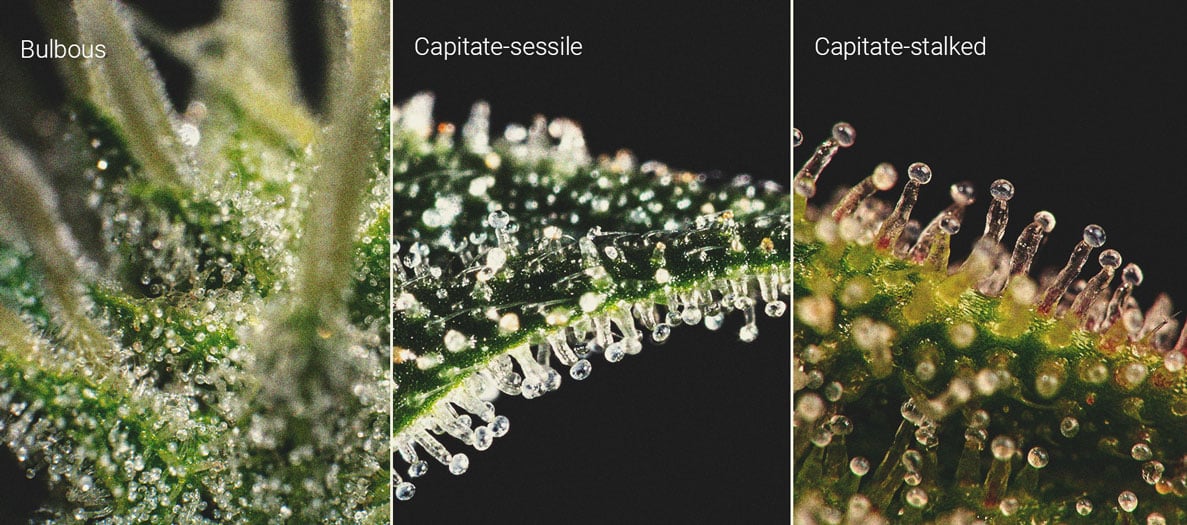
Trichomes are glands that give cannabis buds their frosty appearance. They produce and store cannabinoids, terpenes, and other compounds that give cannabis its aroma and psychoactive properties. While they don't look like much to the naked eye, up close, trichomes take on several different forms. These include:
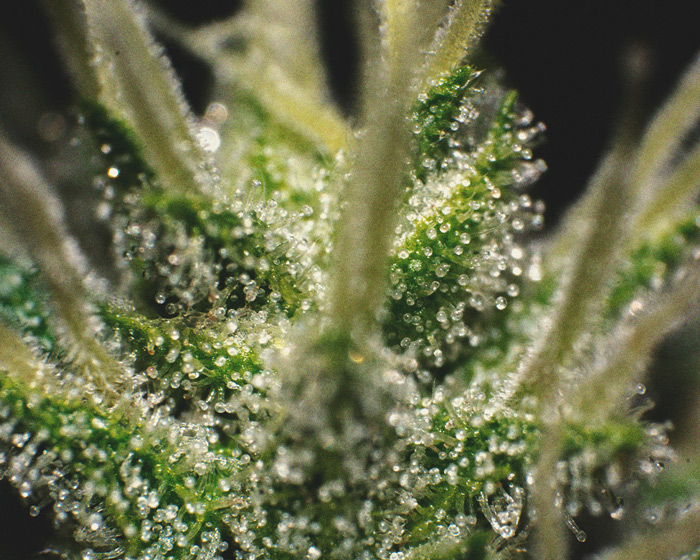
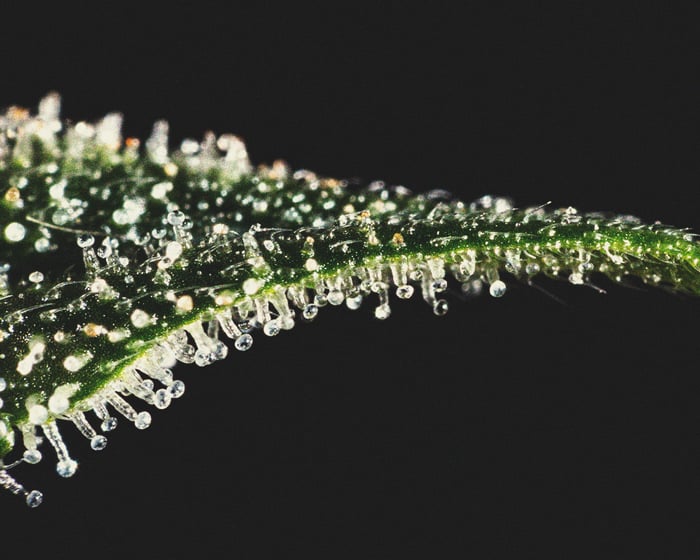
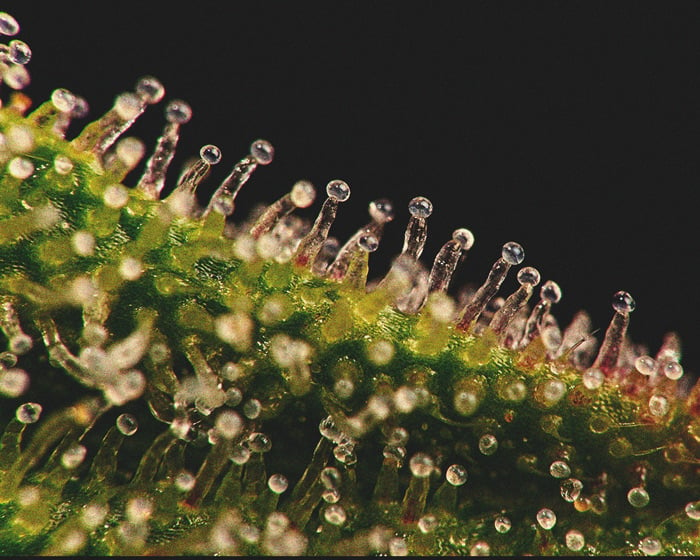
Of the three, capitate-stalked trichomes are the main producers of desirable secondary metabolites, such as terpenes and cannabinoids. They produce these compounds in secretory discs and store them in subcuticular cavities. Trichomes produce these compounds for several reasons, including protecting plants from insects and UV rays.
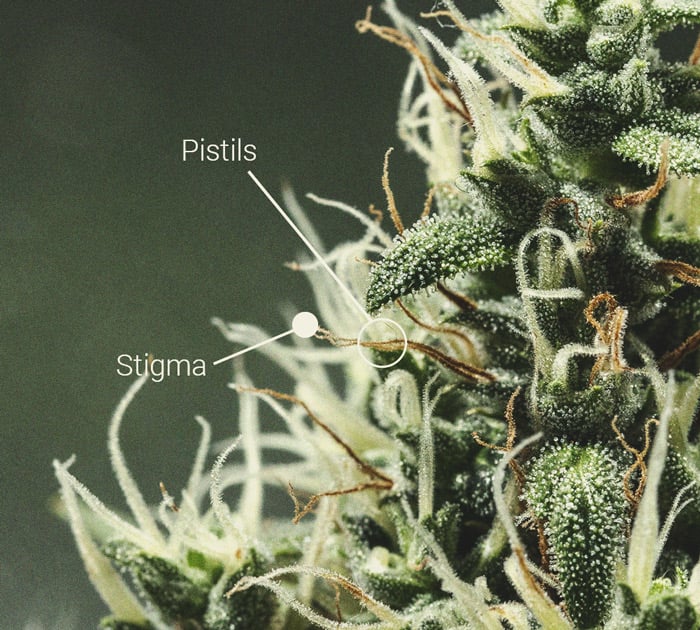
Mainstream cannabis culture has created some confusion when it comes to the stigmas of cannabis plants. Each female flower (or pistillate flower) produces two stigmas that protrude up and outwards into the open air.
Growers often label these hair-like structures as pistils. Rather, they are components of pistils, but not pistils themselves. Stigmas are covered in tiny hairs known as papillae that help to catch male pollen from the air. When successful, pollen becomes lodged into the side of a female stigma and transfers genetic material that leads to fertilisation. During the flowering stage, stigmas start out white and gradually turn orange or brown.
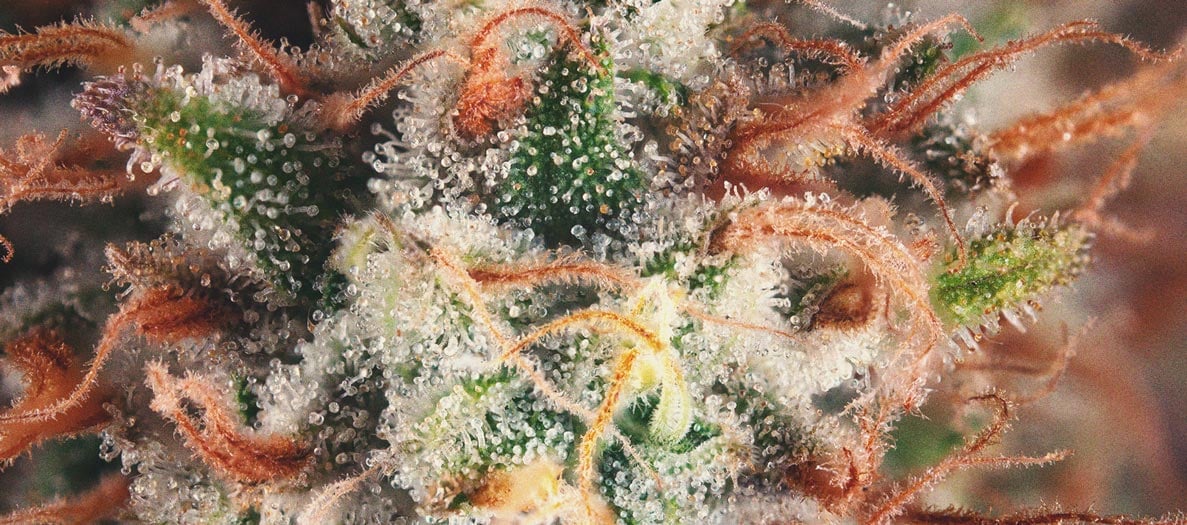
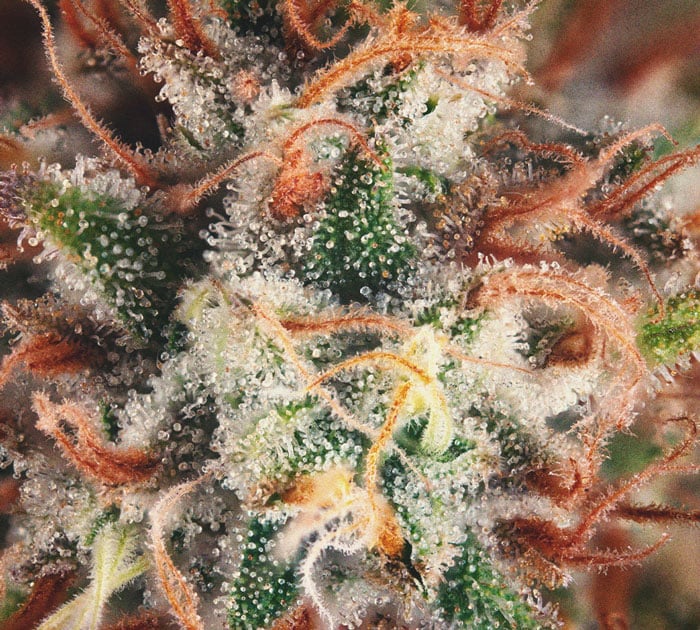
Bracts are essentially specialist leaves that are designed to protect the pistil components that they envelop. These fragile structures include the ovule, style, and bottom section of the stigmas. Because bracts protect such precious structures, they are equipped with the highest concentration of trichomes found anywhere on a cannabis bud. Overall, bracts form the main tissue component of manicured nugs.
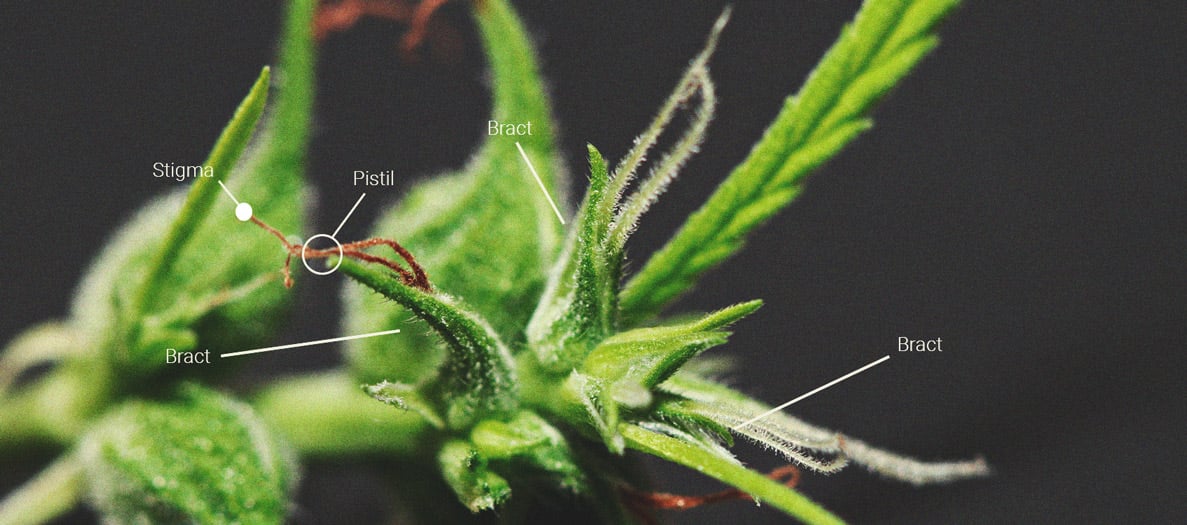
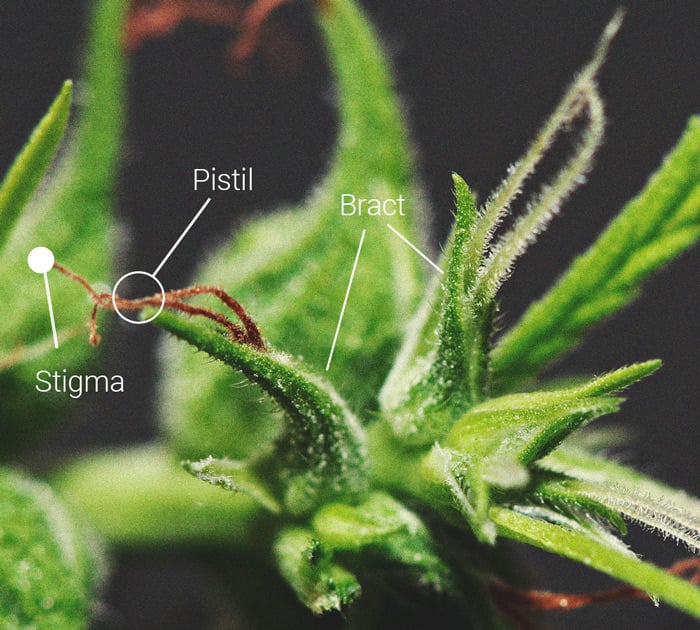
Unless you have a penchant for botany, you probably assign the label "pistils" to the small hairy protrusions found on cannabis flowers. However, this common misconception confuses stigmas with the entire pistil. Stigmas only make up part of this reproductive structure, alongside the style and the ovule.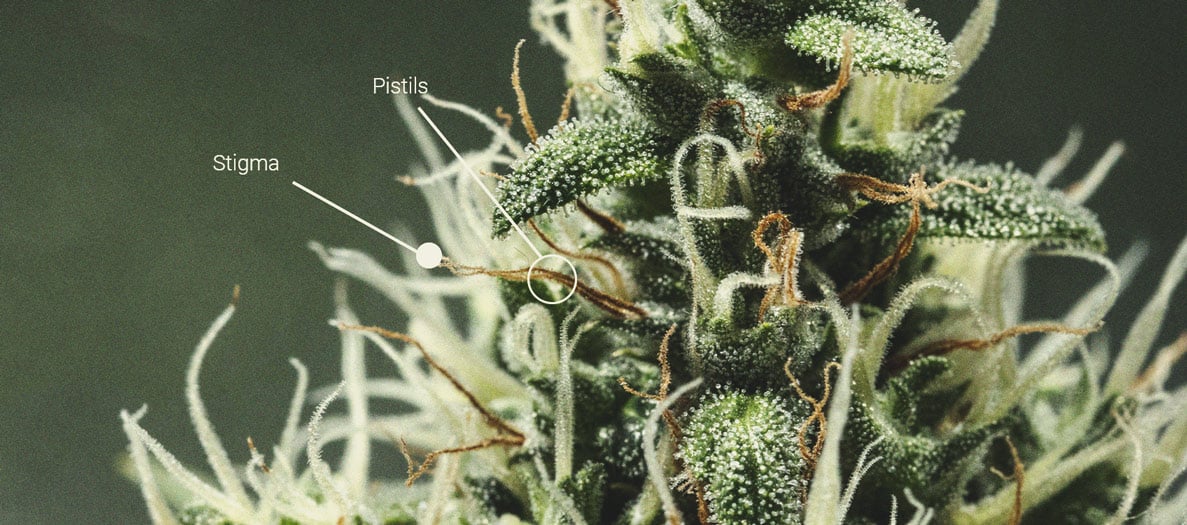
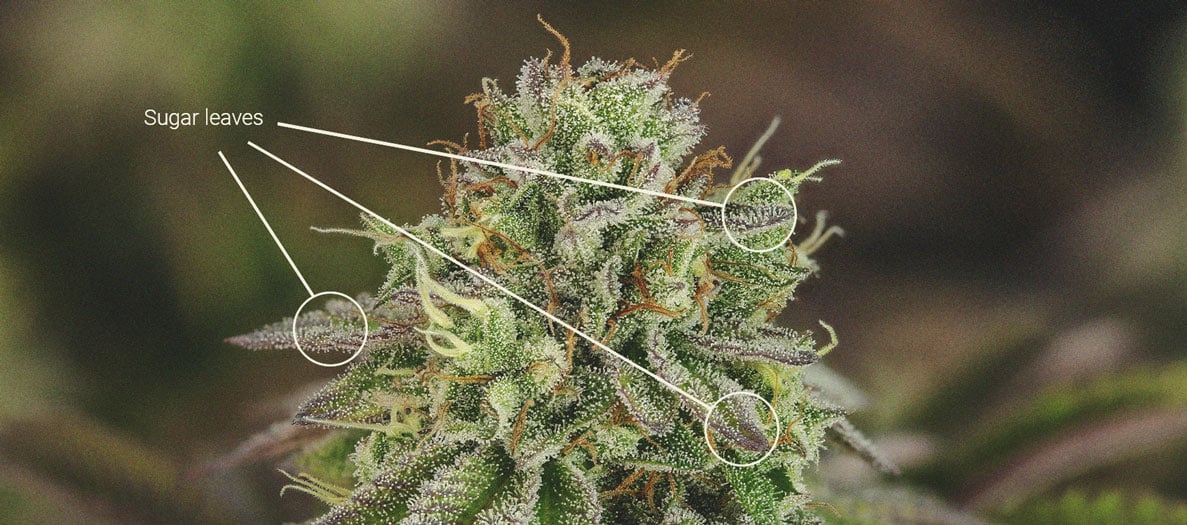
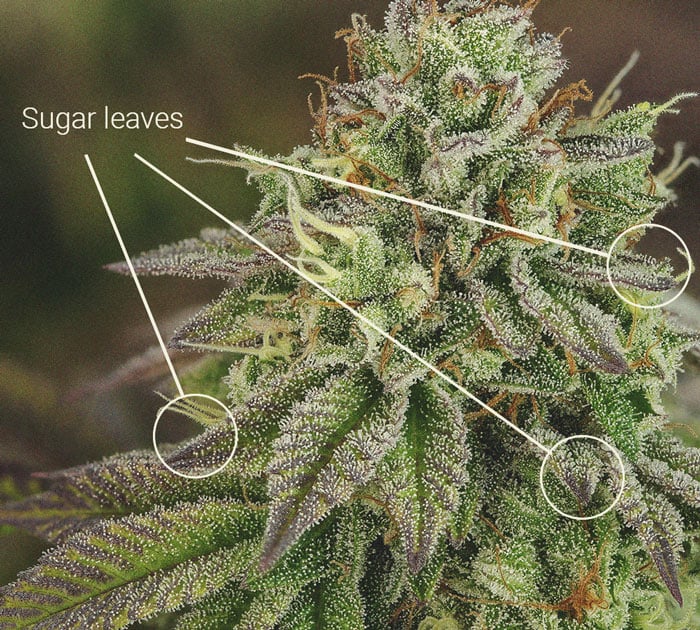
Sugar leaves are small leaves found among cannabis inflorescences. Although much smaller than the larger fan leaves found elsewhere on the plant, they play an important role. As photosynthetic structures, these leaves produce sugars and other necessary compounds near the buds, where the products of photosynthesis can be used immediately to support flower development.
They are also platforms for trichomes, and therefore offer protection against pests, predators, and abiotic stress. Growers remove sugar leaves after harvesting either before or after drying. Although they lack the dense trichome counts of bracts, many cultivators keep them to make products such as hash.
Colas are the buds that form specifically at the end of branches. For this reason, they are also known as terminal buds. Colas are the largest clusters of pistillate flowers anywhere on the plant. When left untrained and untopped, cannabis plants develop large column-like central colas that can weigh impressively heavy.
As a dioecious species, cannabis has distinct male and female plants. Whereas the females develop pistillate flowers that feature two stigmas within a bract, male flowers are made up of the following components:
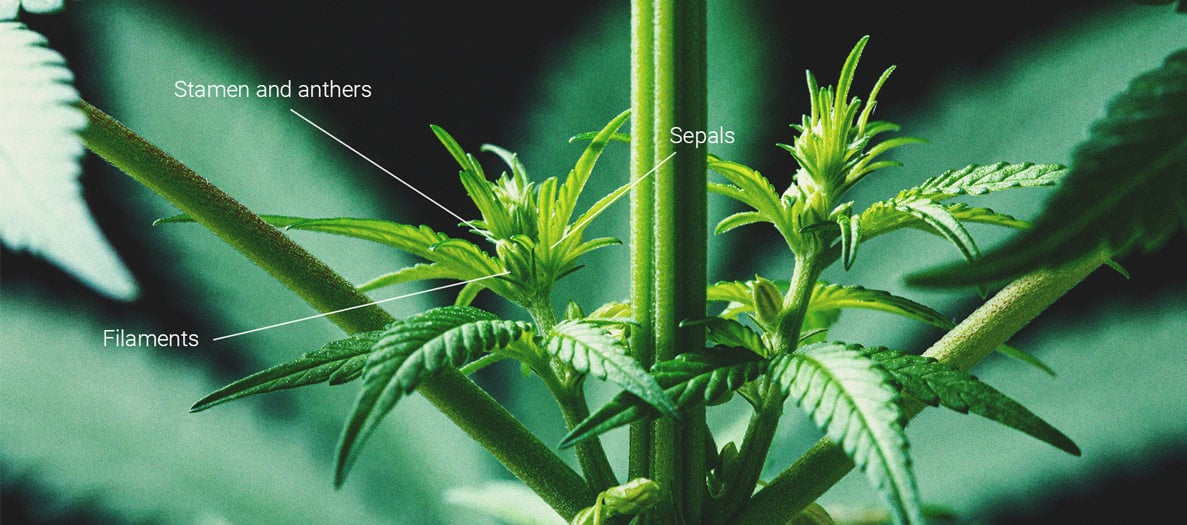
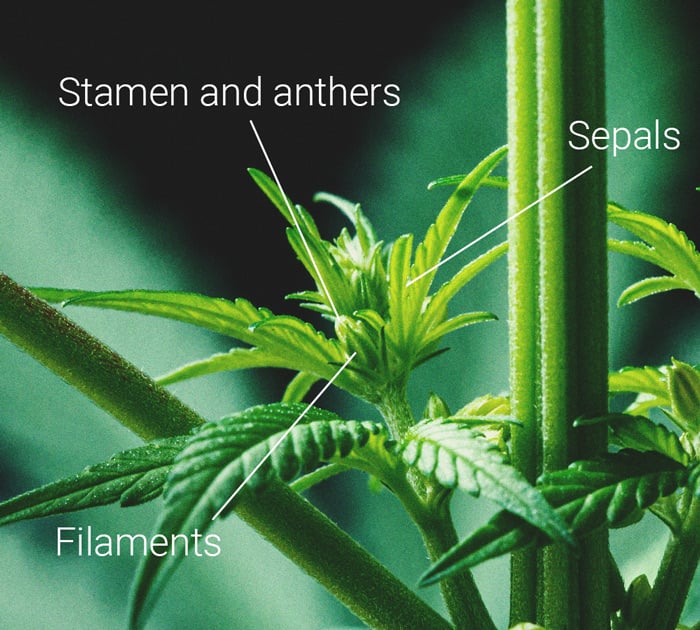
Early in the flowering stage, male cannabis flowers have a sac-like appearance. Eventually, the sepals open up and the anthers start to release pollen to fertilise female flowers.
Much like with certain aspects of cannabis botany, much confusion revolves around the sativa and indica dichotomy. Over the years, companies have perpetuated the idea that sativa and indica varieties exert specific effects. Because of this, sativa plants are associated with an energising effect and indica with a stoning high.
In reality, things are much more complex than this. Although THC creates the core effects of each cultivar, an array of aromatic terpenes underpin the varying effects. For example, a sativa plant may produce mainly energising terpenes, but it need not always be like this.
With that said, indica and sativa subtypes of cannabis do differ in their morphology. Sativa cultivars are taller and have thin leaflets on their fan leaves; indica plants are shorter and display wider leaflets. Adding to these differences, indica subtypes normally produce smaller buds that are more compact, whereas sativa flowers are typically larger and fluffier.
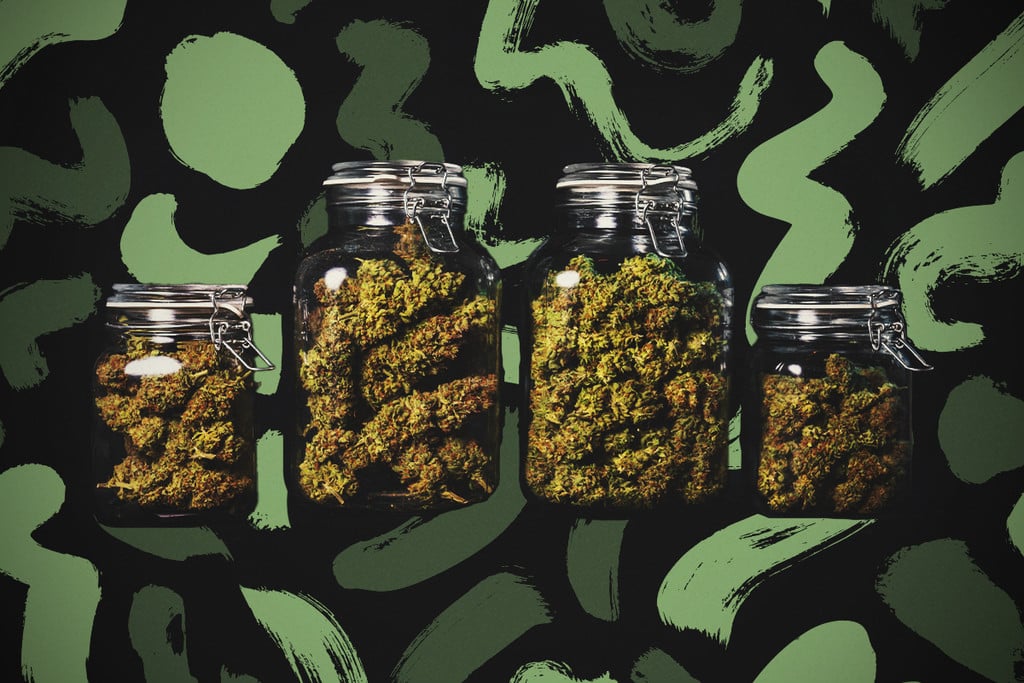
Several factors determine flower density. As we have just discussed, genetics play a big role. However, bud density can also indicate the quality of cannabis flowers in some circumstances. Flowers are more likely to develop as dense nuggets loaded with cannabinoids if they are treated to optimal lighting, nutrition, temperature, and humidity. Likewise, a lack of these factors can lead to poor-quality airy flowers with reduced secondary metabolites.
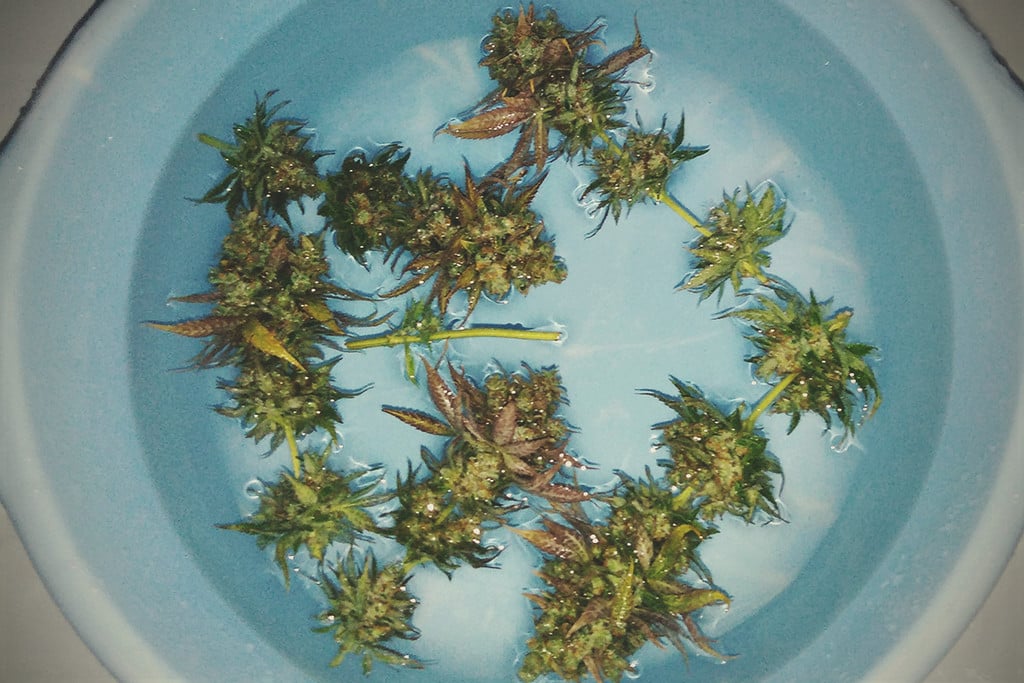
You will come across several different colours when looking at cannabis buds. Some of these are genetic, whereas others are environmental. These include:
Seeds forming on buds is a sight that most growers try to avoid. Why? Because, unless they are trying to intentionally breed plants, seeds ruin the quality of cannabis flowers. After fertilisation, the ovule within the bract begins to swell into a seed. This causes plants to divert their resources towards reproduction, and to spend less energy on forming large flowers packed with valuable secondary metabolites.
The anatomy of cannabis buds is at once complex and fascinating, as it's here that most of the desirable chemical constituents are produced. Now, when you look at a cola, you'll be able to spot every intricate detail, from the stigmas to the sugar leaves. We hope this gives you a deeper appreciation for such a fascinating plant.