Amount exceeded


4.7 out of 5 based on 59984 reviews




















4.7 out of 5 based on 59984 reviews
.
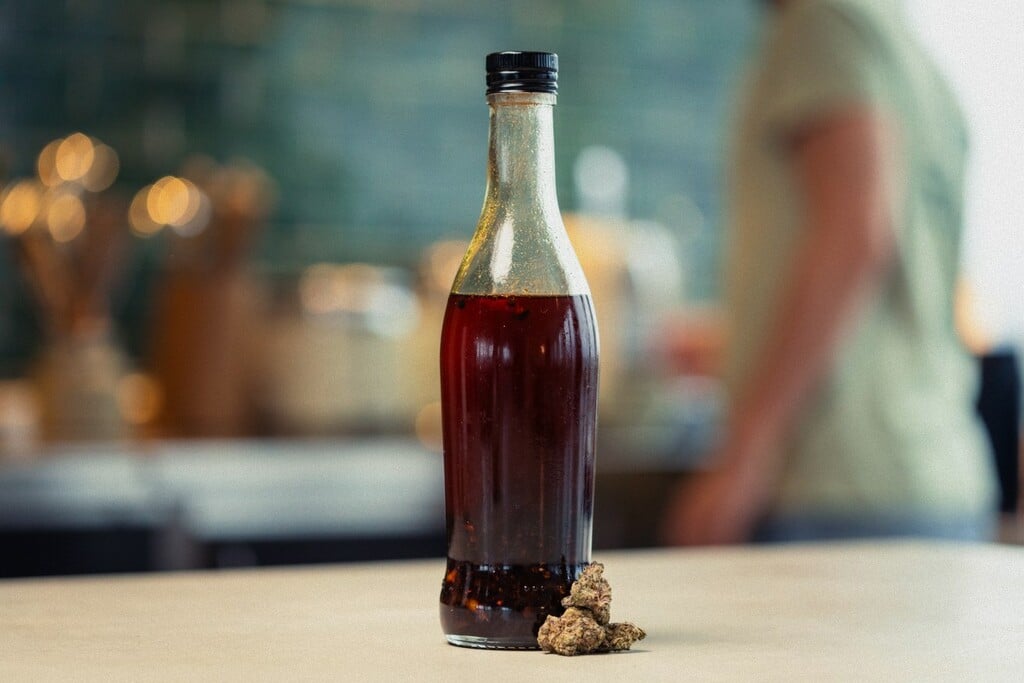
Create a flavour-first weed chilli oil recipe you can drizzle or use in savoury meals. Includes equipment, step-by-step infusion, potency estimation, and responsible dosing guidance.
Want to add heat and potency to your meals? Learn how to make cannabis chilli oil at home for cooking, drizzling, and bold flavour-packed dishes. It’s a fast, flavour-forward twist on a classic condiment, combining the richness of oil with a chilli kick and the depth of cannabis.
In this guide, we’ll walk through a reliable method that prioritises taste, control, and consistency, so you get a cannabis cooking chilli oil you can actually use day to day. You’ll also learn how to keep the process safe, estimate strength, and choose the right applications.
Chilli oil is a flavoured cooking oil infused with chilli flakes, dried chillies, or fresh aromatics like garlic and ginger. The result is a punchy condiment that brings heat, fragrance, and a silky richness to food without needing a full sauce.
When made and stored correctly in a clean, airtight jar, chilli oil is also relatively shelf-stable. That versatility, part seasoning, part ingredient, makes it a staple you can keep on hand for quick, bold meals.
Cannabis chilli oil is a multi-use cannabis cooking oil that fits naturally into savoury meals. Instead of building an edible from scratch, you can dose by the spoon or drizzle, making it easier to control how much you’re taking while still enjoying a proper dish.
Chilli, garlic, and other aromatics do a great job of masking the herbal, “green” notes that can stand out in plain cannabis-infused olive oil.
Edible-style cannabis oils can take 30–120 minutes to kick in, so the biggest risk is overconsumption. If you redose too soon, effects can build and become unpleasant, including anxiety, nausea, dizziness, or an uncomfortably strong high. Keep portions small and wait before taking more.
When making chilli oil, treat hot oil with respect. Keep the heat low, never leave the pan unattended, and avoid adding wet ingredients that can cause splattering. Have a lid nearby in case you need to smother a flare-up.
Store your finished oil clearly labelled and out of reach of children and pets, ideally in a locked cupboard.
Finally, always check your local laws before making or using cannabis infusions, and only prepare them where it’s legal to do so.
Gather the following equipment:
Allow around 10 minutes of prep, 45–60 minutes of gentle cooking, and about 1 hour and 10 minutes total (including cooling and straining).
Select a high-quality olive oil with a clean, neutral flavour profile. Extra virgin brings more flavour, but can be peppery and overpower delicate aromatics if it’s very robust. For chilli strength, start modest and build up next batch; the heat intensifies as the oil sits.
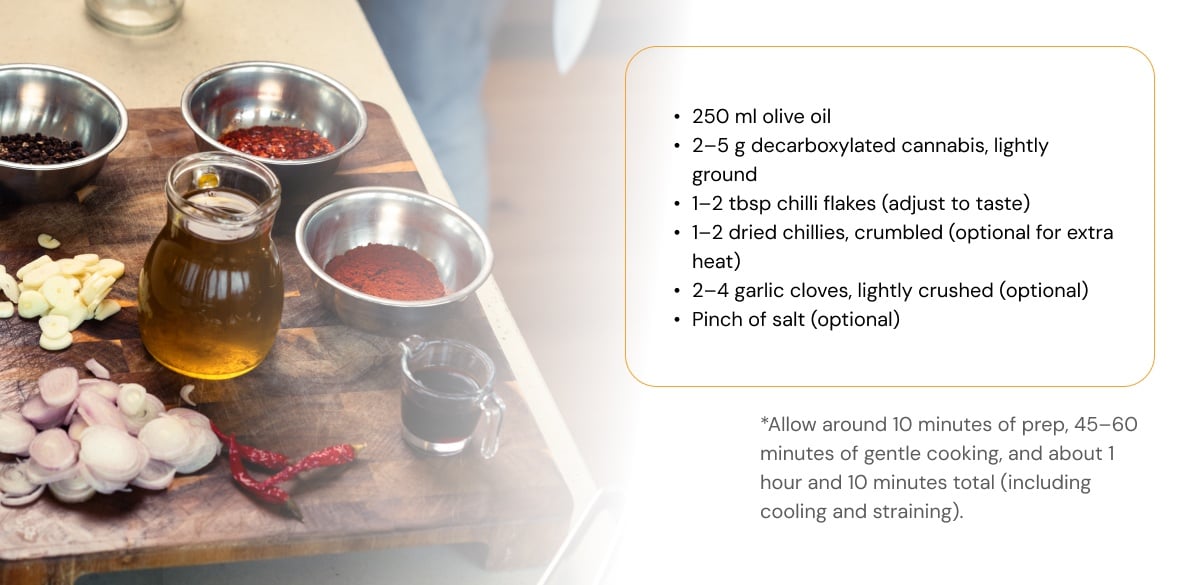
This method uses low, controlled heat to infuse olive oil with decarboxylated cannabis and chilli, keeping flavours bright while helping to protect cannabinoids from excessive temperatures.
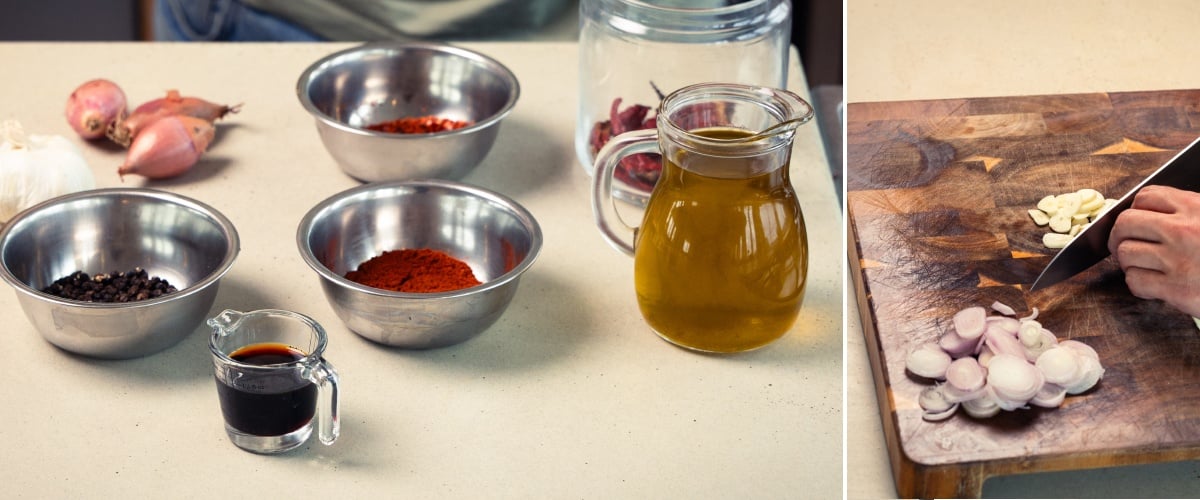
Start with a clean workspace and dry everything thoroughly; water and hot oil don’t mix. Measure out your olive oil, chilli flakes, and decarboxylated cannabis so you’re not scrambling once the pan is warm.
If you’re using garlic, peel the cloves and lightly crush them to release flavour without turning them into tiny bits that are hard to strain. For dried whole chillies, remove the stems and crumble or snip them into pieces; for fresh chillies, wash, pat dry, and slice (wear gloves to avoid capsaicin on your hands). Keep aromatics and chillies ready in separate piles so you can add them smoothly and safely.
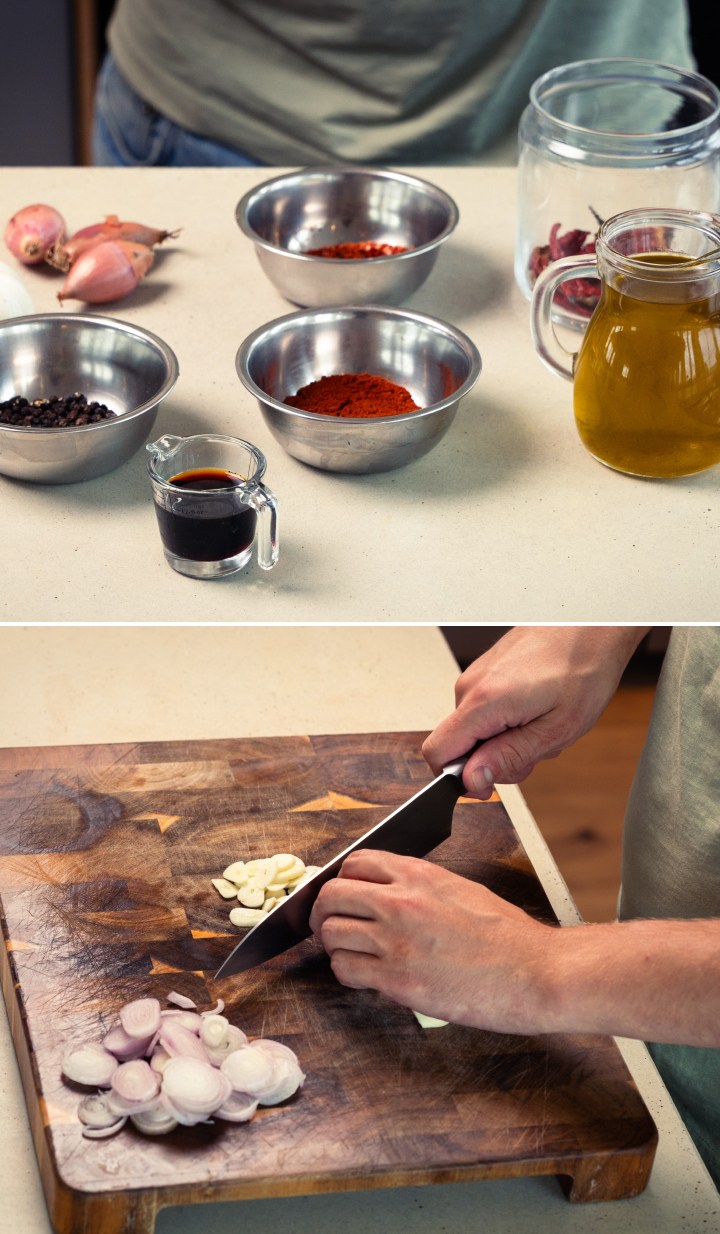
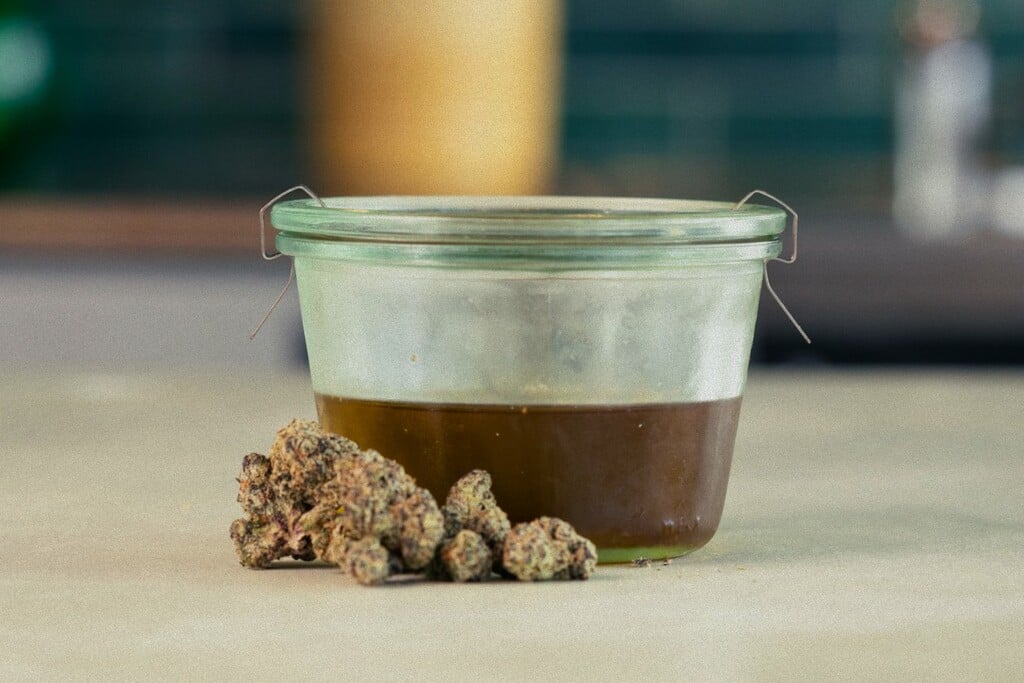
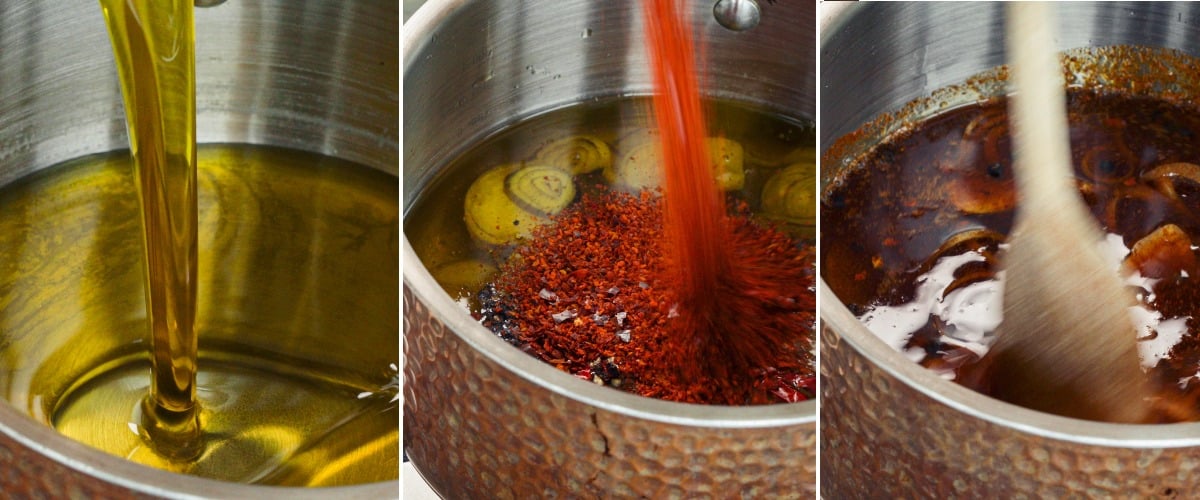
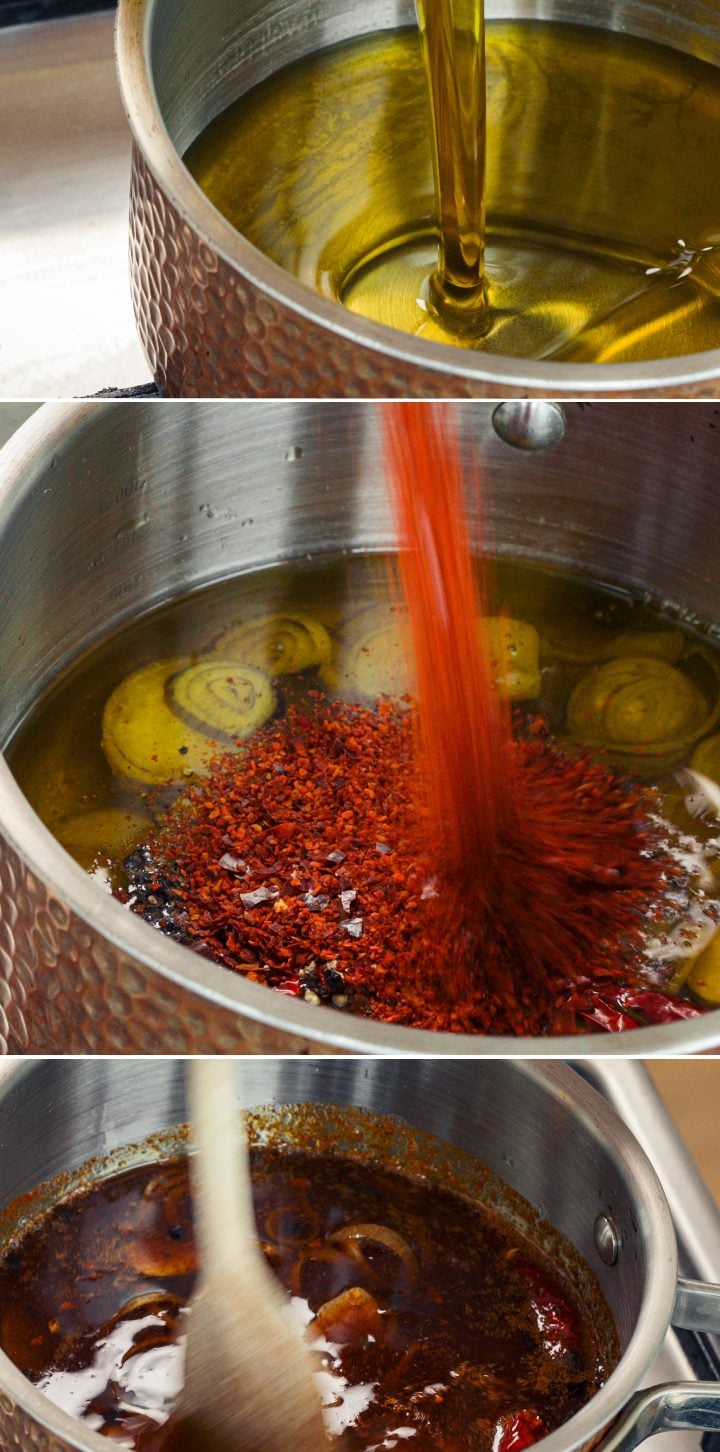
Pour the olive oil into a saucepan or double boiler and warm it gently, using a thermometer to bring the temperature to approximately 160°C. Keep the heat steady; if it smokes, it’s too hot.
Add your aromatics (such as crushed garlic) and chilli ingredients first, then stir in the decarboxylated cannabis. Maintain the temperature and cook for 30–45 minutes, stirring every few minutes to prevent anything from settling or catching on the bottom. You’re aiming for a light simmer in the oil, not frying.
If you’d rather protect flavour and potency further, you can use a two-oil approach: make a small batch of cannabis oil separately at lower heat, then combine it with regular chilli oil once both are warm (not hot) and mix thoroughly before straining.
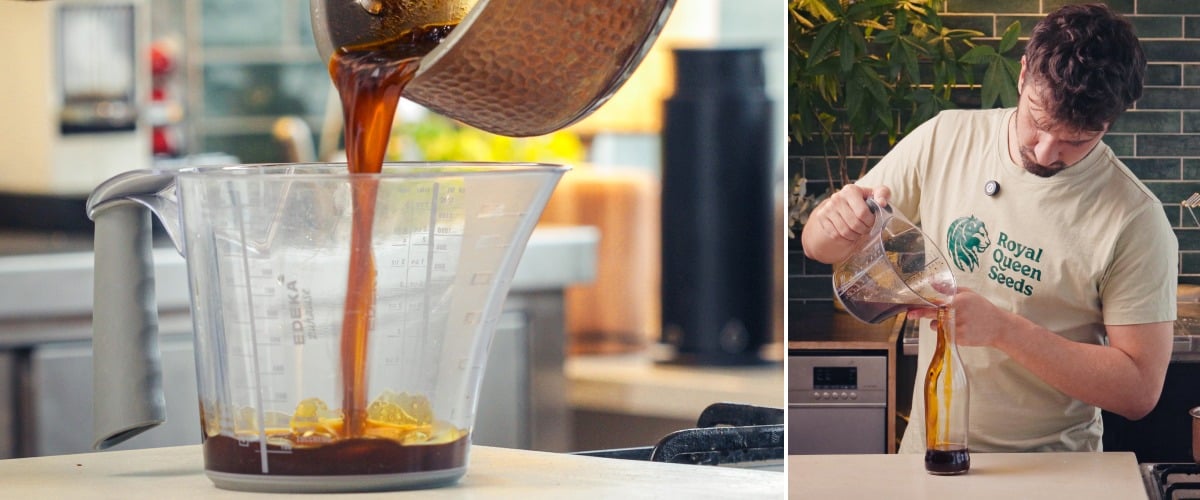
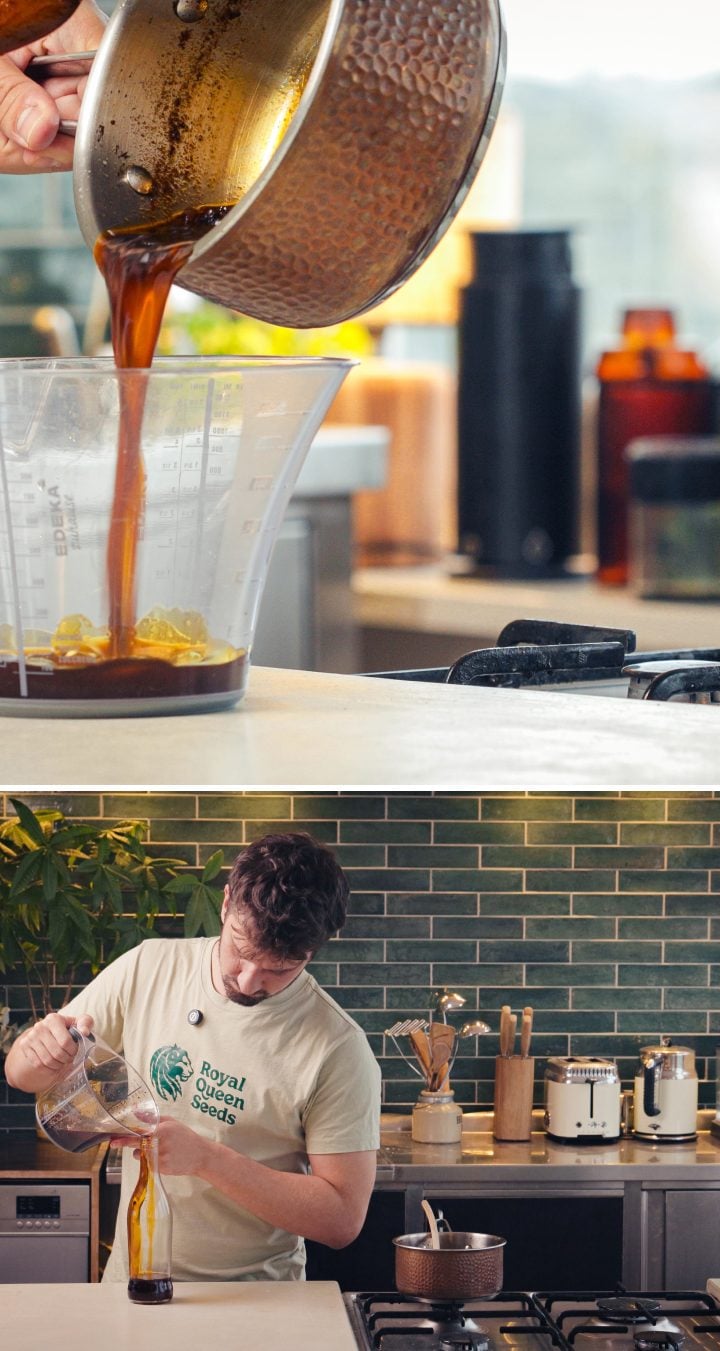
Remove the pan from the heat and let the oil cool for 10–15 minutes, making it safer to handle. Set a fine-mesh strainer (or cheesecloth) over a heatproof jug and pour slowly, wearing gloves to protect against splashes. Don’t press the solids hard; squeezing can push through fine particles that make the oil taste bitter and continue “cooking” in the bottle.
Once strained, use a funnel to transfer the oil into sterile glass jars or bottles. Seal tightly and label with the date, ingredients, and an estimated potency if you’ve calculated it. Clear labelling helps you dose consistently and keeps your kitchen organised, especially if you store multiple infused oils.
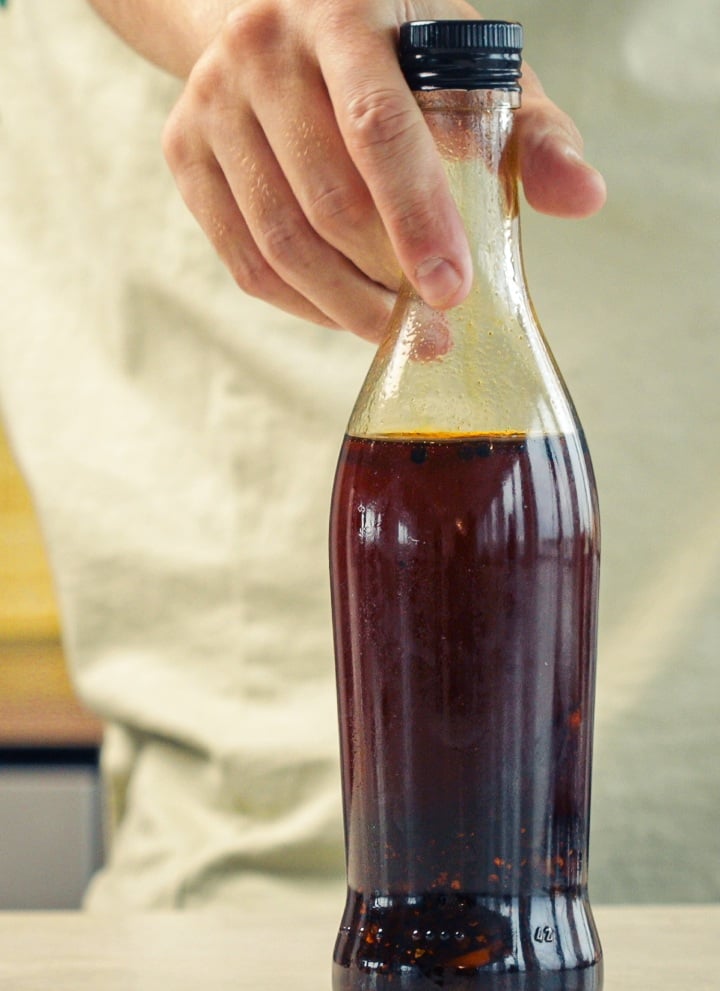
Store your cannabis chilli oil in a sealed glass bottle or jar in a cool, dark place, away from the hob or sunny windowsill. Light and heat can degrade flavour and cannabinoids over time, so an opaque bottle or cupboard is ideal.
For best quality, aim to use it within 4–6 weeks, and always check for off smells or cloudiness before cooking. If you’ve included any fresh ingredients, keep the oil in the fridge and use it sooner, as moisture can shorten shelf life. Keep it clearly labelled and out of reach of children and pets.

Dosing matters with cannabis oils because once THC is infused into fat, it’s easy to add more than you intended, especially with something as moreish as chilli oil. The goal is consistency: you want to know roughly how much THC is in a teaspoon so you can cook and serve responsibly.
A simple estimate starts with the cannabis THC percentage. Convert that percentage into milligrams per gram, and then factor in the amount of flower you used.
For example, 1 g of cannabis at 20% THC contains about 200 mg THC (because 20% of 1,000 mg is 200mg). If you infuse 2 g, that’s 400 mg THC total before losses.
Home infusions aren’t perfectly efficient, so many people assume a 60–80% extraction rate. Using a cautious 70%, you’d expect about 280 mg THC in the finished oil. If that oil volume is 200 ml, you’re looking at roughly 1.4 mg THC per ml (so around 7 mg per teaspoon).
Edible effects take time. Onset can be 30–120 minutes, and topping up too soon can lead to stronger-than-expected results as doses accumulate. Stick to the classic rule: start low and go slow. Try a small amount, wait, and only then adjust next time.
Think of cannabis chilli oil as a finishing oil first, and a cooking oil second. A small drizzle over savoury food gives you the bold aroma and heat without pushing the oil to high temperatures.
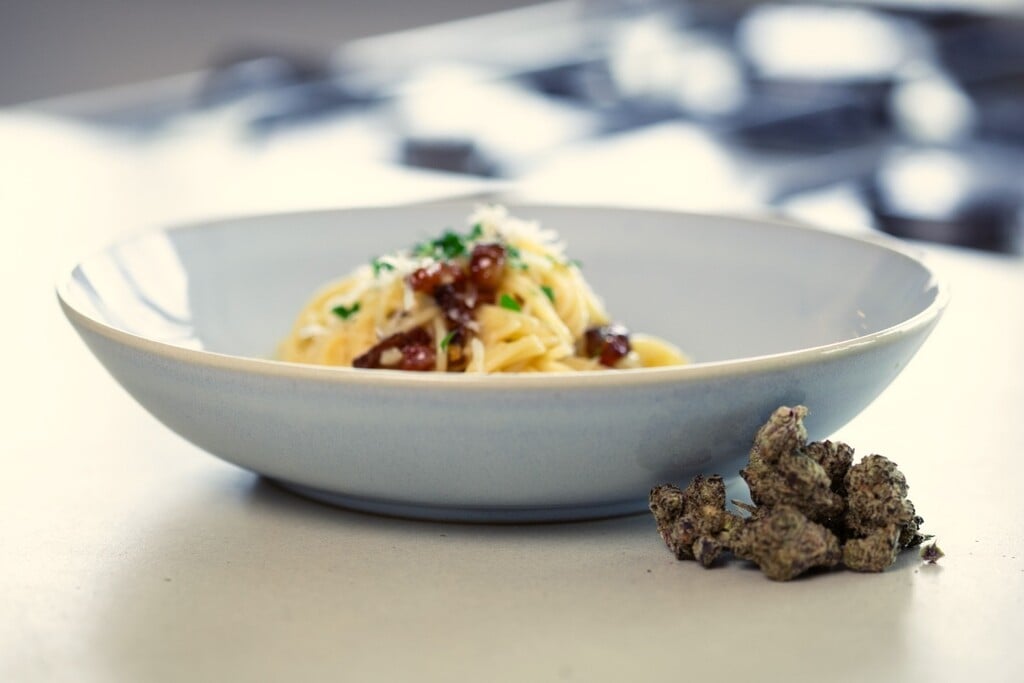
It’s ideal over noodles, fried rice, dumplings, ramen, and stir-fried greens. You can also use it in marinades and sauces. When heating, keep it gentle and add towards the end of cooking to preserve flavour and make dosing easier.