Amount exceeded


4.7 out of 5 based on 60086 reviews




















4.7 out of 5 based on 60086 reviews
.
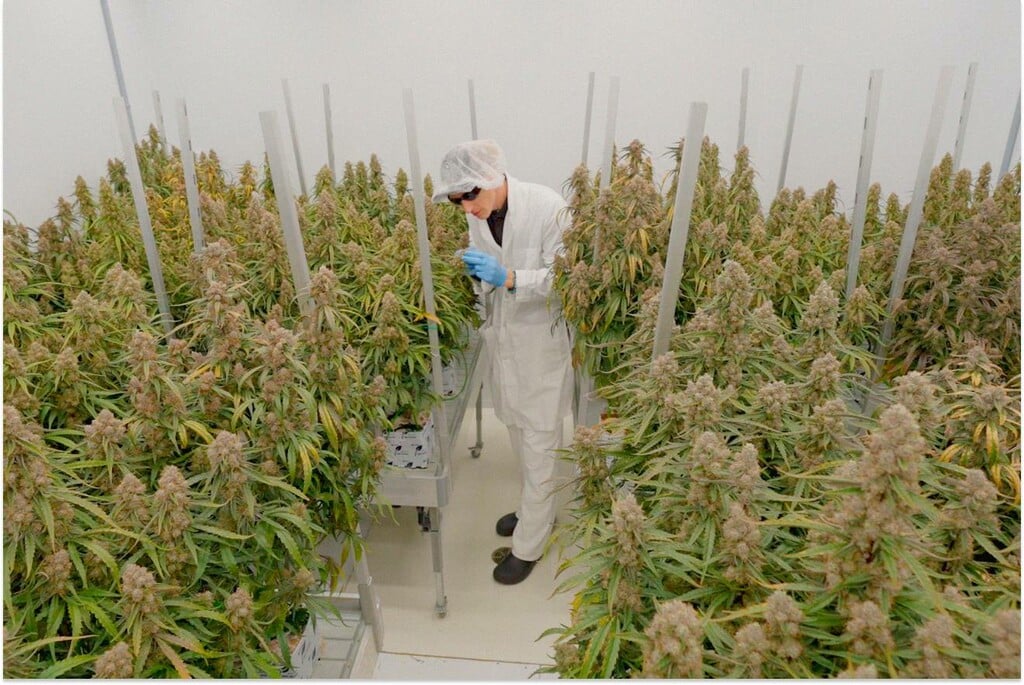
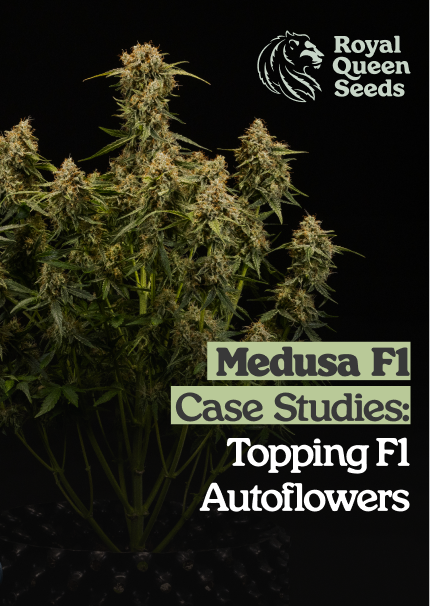
A controlled CRIC Labs trial evaluated topping in Medusa F1 autoflower plants. Results showed minor yield reduction, modest cannabinoid increases, and improved canopy structure.
A controlled trial led by Grodan and conducted at CRIC Labs in Montréal, Quebec (Canada), in collaboration with Royal Queen Seeds, evaluated the effects of topping on F1 hybrid autoflower cannabis plants of the Medusa F1 cultivar (Royal Queen Seeds).
Plants subjected to topping produced a slightly lower average yield (255 g/plant) compared to non-topped controls (270 g/plant). However, topped plants also exhibited a moderate increase in cannabinoid concentration and a 2% higher proportion of sugar leaves on harvested inflorescences.
Growth parameters, plant architecture, yield, and harvest quality were assessed across both treatments. While topping altered canopy structure and cannabinoid levels, no statistically significant differences were observed in final yield.
These results indicate that topping in F1 autoflower plants does not substantially compromise production under optimal conditions. Its application should therefore be guided primarily by grower objectives related to canopy management, space constraints, and harvest characteristics.
Topping is a high-stress training (HST) technique commonly applied to photoperiod Cannabis sativa plants to modify plant architecture, optimise light distribution, and increase both flower size and number. Its use in autoflower varieties, which are characterised by rapid seed-to-harvest cycles and a short vegetative phase before automatic flowering, remains a topic of debate.
Get the
Cultivation Report
Autoflower varieties have gained popularity due to their fast development, independence from photoperiod, and ease of cultivation. These traits primarily result from the introgression of Cannabis ruderalis genetics, which induce flowering after a brief vegetative period of approximately 2–4 weeks.
F1 hybrid autoflower varieties represent a significant genetic advancement, combining phenotypic uniformity, hybrid vigour, stress resistance, and high yield potential. Medusa F1 is representative of this category, with reported yields reaching up to 1.8 kg/m² under optimal conditions.
Given the limited vegetative window in autoflower plants, the use of HST techniques raises important questions. Specifically, do the architectural benefits of topping outweigh the stress-related costs incurred by the plant? This trial, led by Grodan in collaboration with Royal Queen Seeds and conducted at CRIC Labs, aims to address that question under controlled cultivation conditions.
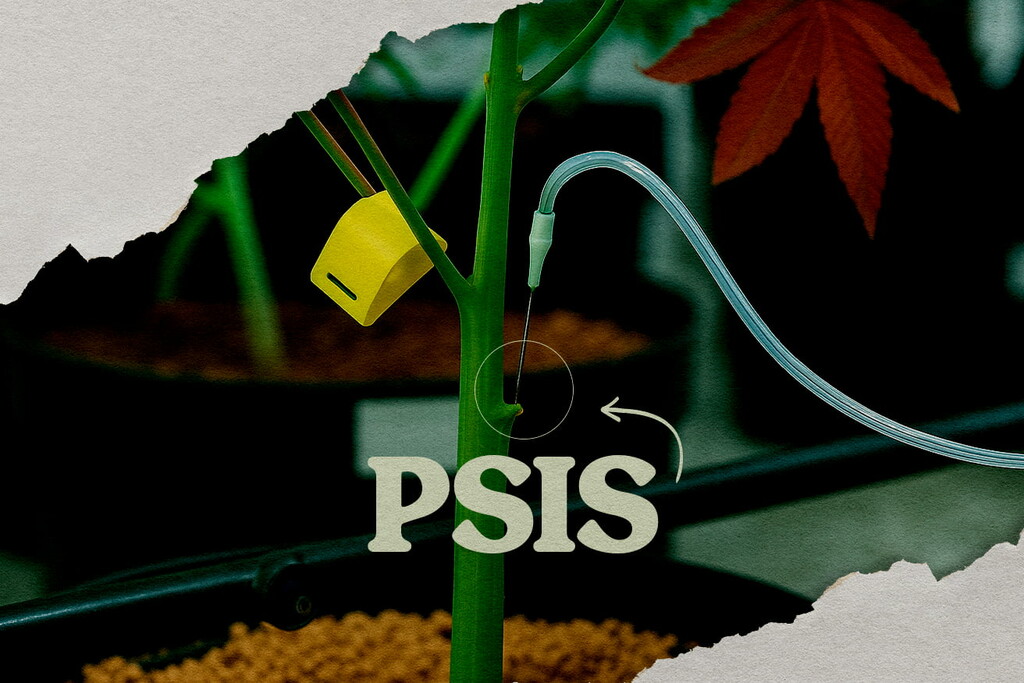
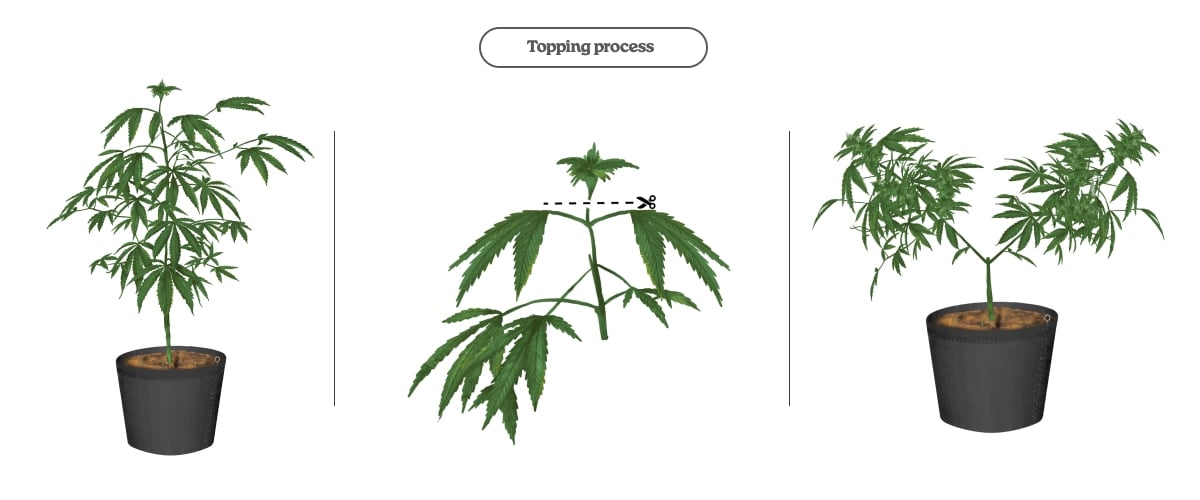
Topping involves the removal of the main stem during the early vegetative stage to interrupt apical dominance and promote lateral branch development.
From a physiological perspective, apical dominance is regulated primarily by auxins, plant hormones produced in apical meristems that suppress lateral growth. Removal of the apical tip reduces localised auxin concentration and shifts hormonal balance towards lateral meristems, encouraging a more compact growth habit and a more uniform canopy with improved light interception.
Topping necessitates the reallocation of plant resources toward wound healing and growth reorganisation. In autoflower cannabis, the limited vegetative phase may constrain recovery time, thereby reducing yield. For this reason, the use of nutritional supplements, such as amino acids, may support cellular regeneration and mitigate stress effects.
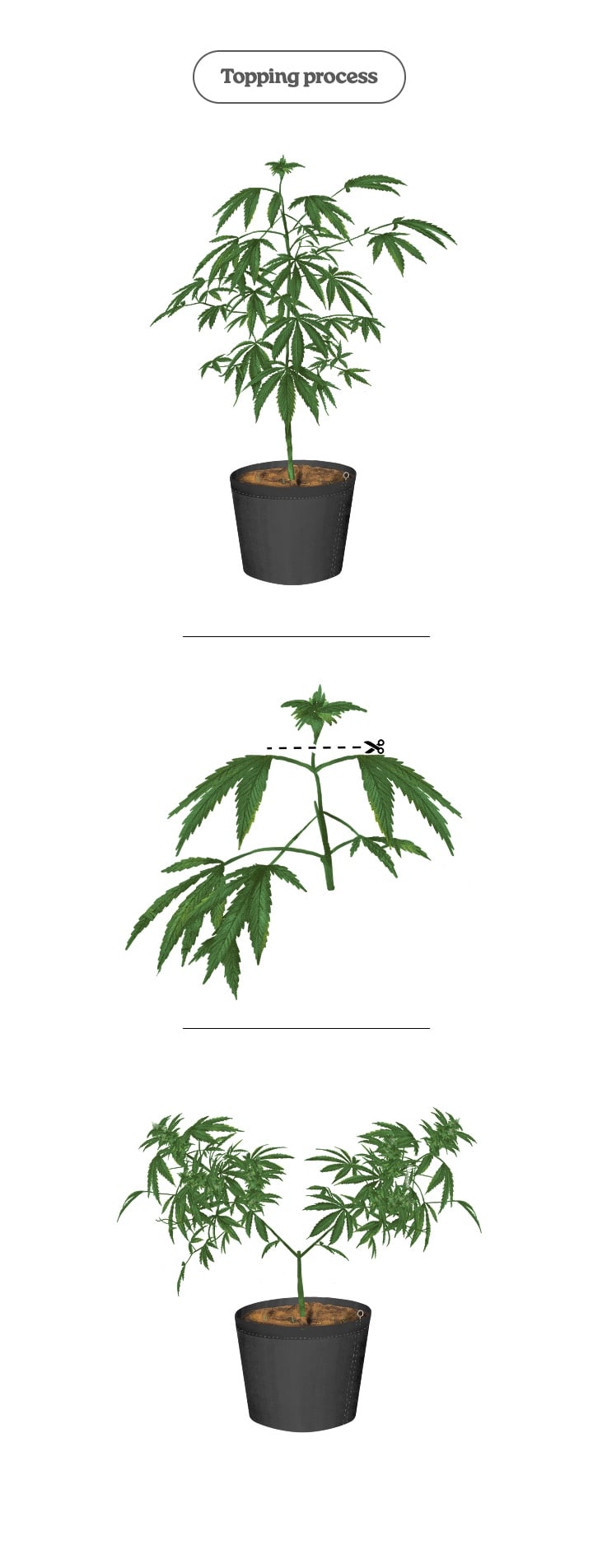
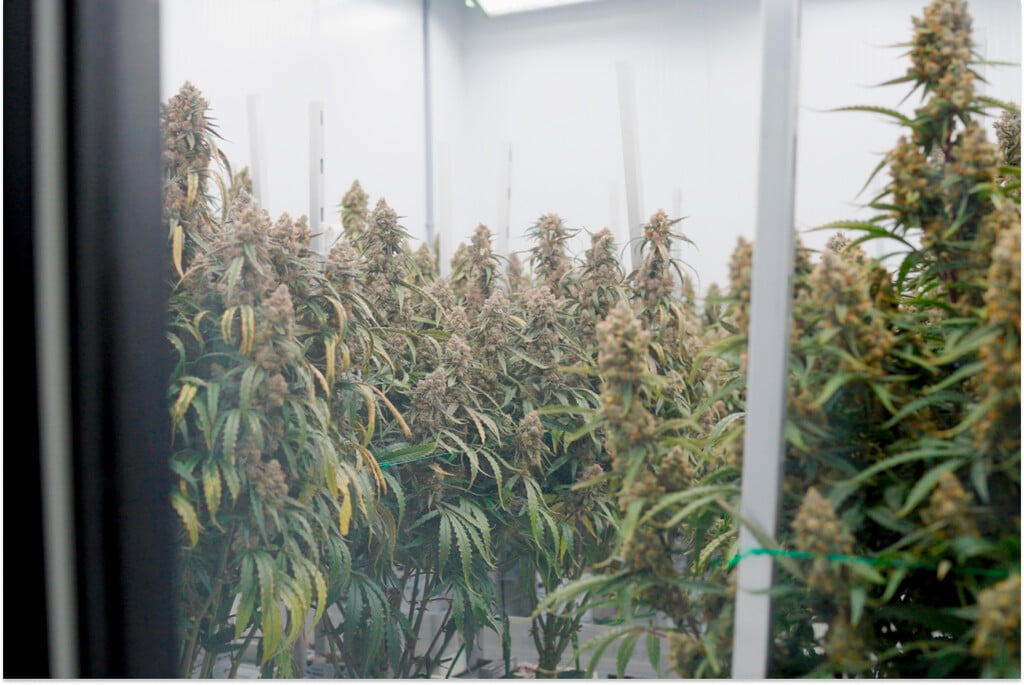
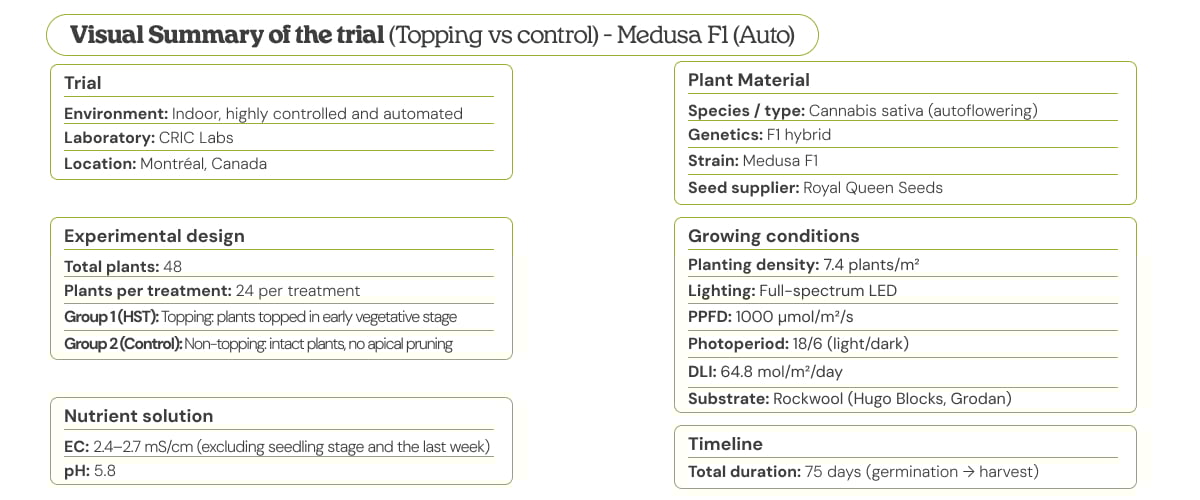
The trial was conducted in a highly controlled, automated indoor environment at CRIC Labs in Montréal, Canada. F1 hybrid autoflower Cannabis sativa plants of the Medusa F1 cultivar (Royal Queen Seeds) were used.
Plants were divided into two experimental groups:
Topping (HST): plants topped during the early vegetative stage
Control (Non-Topping): plants left intact without apical pruning
This experimental design ensured uniformity across key variables, including plant density, light intensity, irrigation, and nutrition. Differences observed between treatments can therefore be attributed primarily to the application of topping.
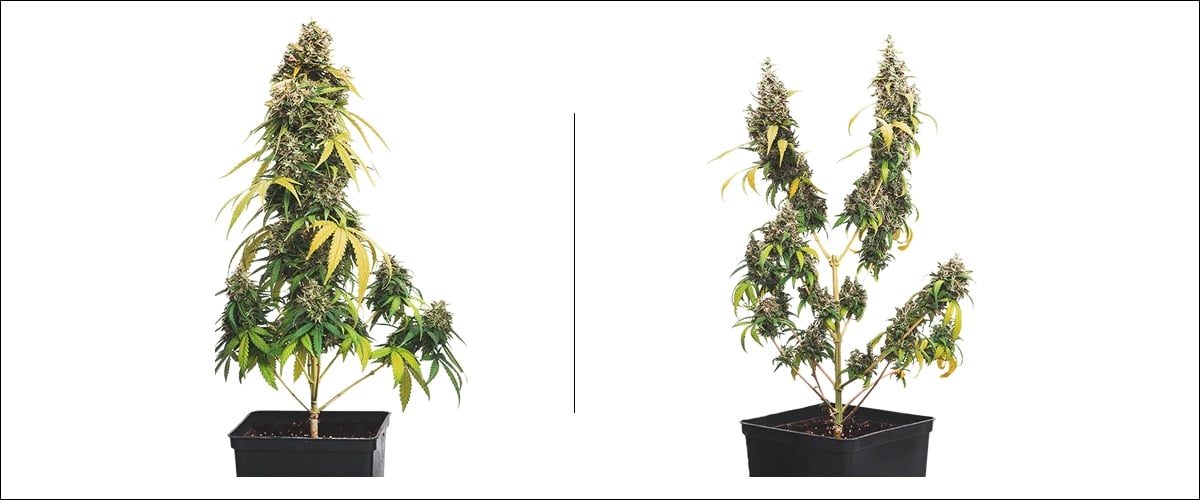
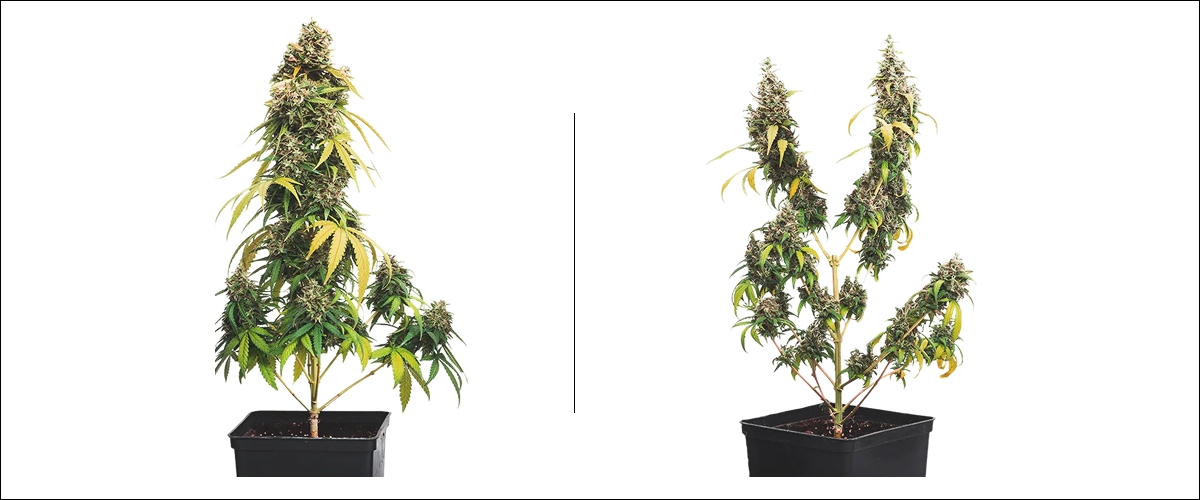
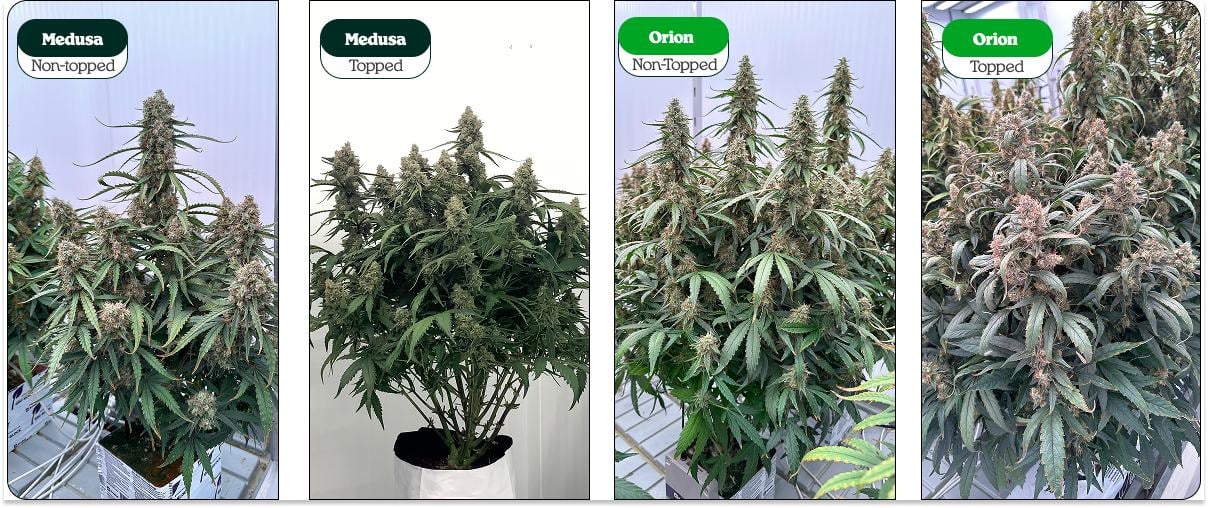
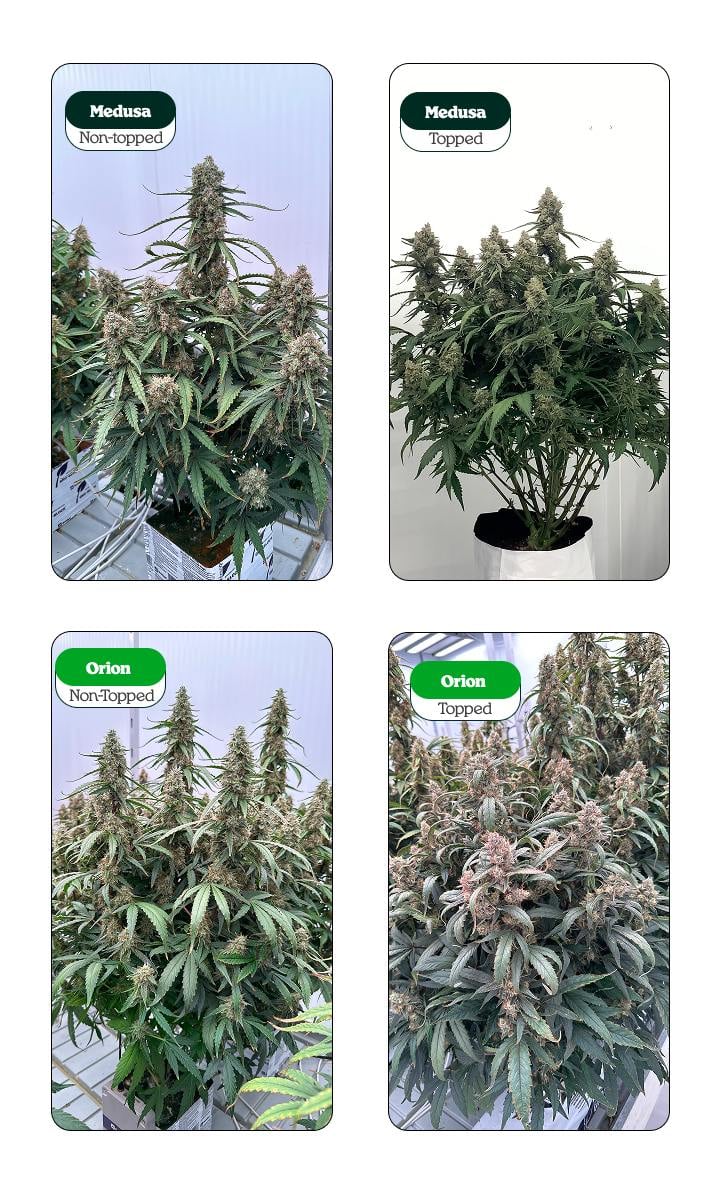
Topped plants exhibited an average height reduction of approximately 10 cm compared to control plants (74 cm vs. 84 cm), resulting in a more compact and uniform canopy.
Main cola length was slightly reduced in topped plants (19 cm vs. 21 cm), suggesting a redistribution of growth towards lateral branches and secondary inflorescences.
Yield: Topped plants produced a slightly lower average yield (255 g/plant) than non-topped controls (270 g/plant). While topping can improve light distribution, the recovery period required following apical removal may temporarily limit biomass accumulation.
Cannabinoid content:Topped plants displayed a modest increase in cannabinoid concentration, potentially linked to stress-induced metabolic responses and improved light penetration.
Sugar leaves: The proportion of sugar leaves was approximately 2% higher in topped plants, which may increase trimming time and influence final bud appearance.
Statistical analysis revealed no significant differences between treatments for total yield or overall harvest quality. Under optimal environmental conditions, topping does not appear to severely compromise productivity in F1 hybrid autoflower plants.
The primary advantage of topping lies in improved canopy architecture and height control, which can be beneficial in limited-space cultivation environments or where uniform light distribution is critical.
However, the slight reduction in yield and increased labour requirements may limit its practicality in large-scale operations. Additionally, responses may differ among varieties, and results observed in Medusa F1 should not be generalised across all autoflower genetics without further study.

|
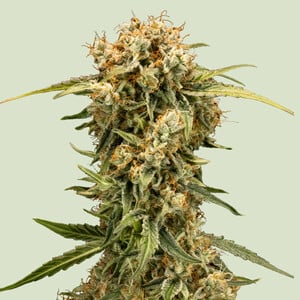
Sugar Magnolia x American Beauty |

|
XXXL |

|
60 - 90 cm |

|
40 - 45 days |

|
Very high |

|
Balanced, Creative, Physically Relaxing, Sleepy |

|
70 - 75 days after germination |
This trial demonstrates that topping in F1 autoflower cannabis plants, specifically the Medusa F1 cultivar, is agronomically viable when applied early under controlled conditions. While topping does not increase yield, it can enhance canopy management and slightly elevate cannabinoid concentration.
The technique requires additional labour and may delay maturation by up to one week, factors that should be considered in production planning. Ultimately, the decision to apply topping should balance structural control, yield stability, operational complexity, and final product quality.
Further research across additional autoflower cultivars and cultivation environments is recommended to validate and expand upon these findings.
Topping F1 autoflower plants, such as Medusa F1, can be explored in home cultivation setups. In this trial, yield reduction was minimal (255 g/plant vs. 270 g/plant), while a modest increase in cannabinoid concentration was observed, potentially enhancing harvest quality.
This technique is particularly useful in confined spaces, where plant height control, light penetration, and canopy ventilation are priorities.
To achieve comparable results, growers should aim to maintain stable conditions similar to those used in the trial:
PPFD: 1000 µmol/m²/s
Photoperiod: 18/6
Nutrient solution: EC 2.4–2.7 mS/cm, pH 5.8
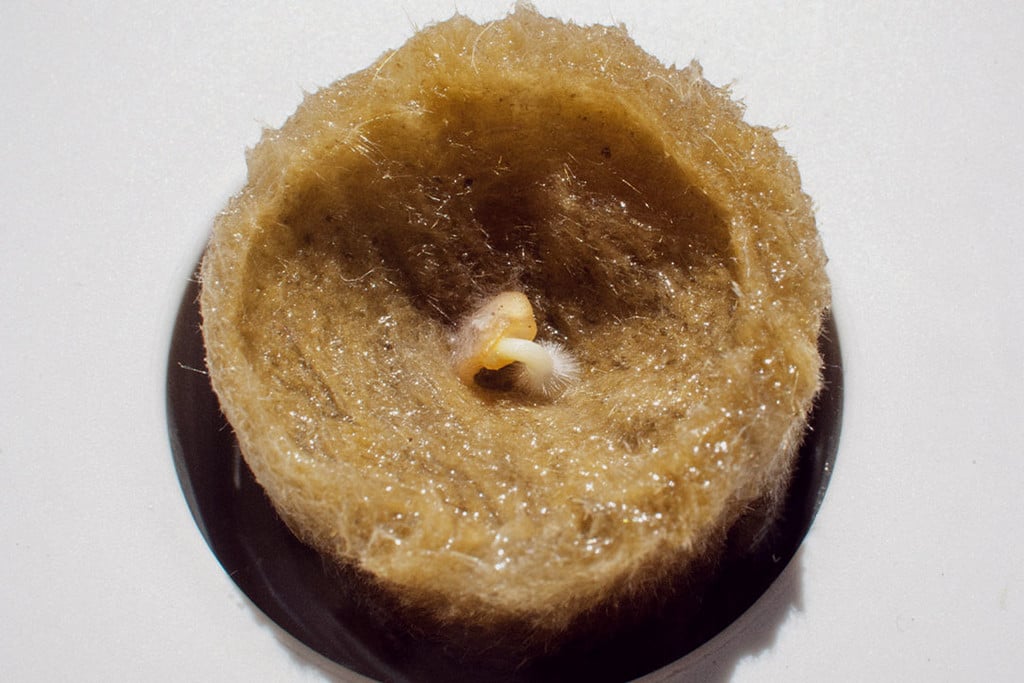
Substrate: Rockwool
Temperature and humidity: stable and within optimal ranges for vegetative growth and flowering