Amount exceeded


4.7 out of 5 based on 59654 reviews




















4.7 out of 5 based on 59654 reviews
.
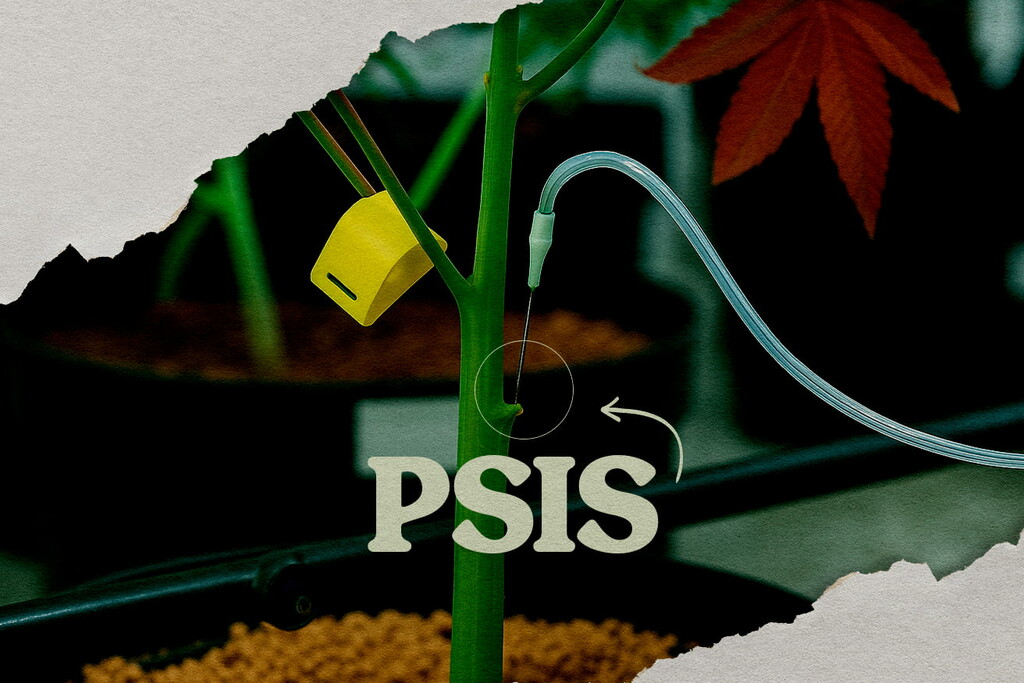
A new study reveals that PSIS, stem infusion of sucrose, can redirect growth toward buds and increase cannabis flower dry mass and total cannabinoid yield, without compromising plant balance or chemotype stability. This simple approach may shape future cultivation.
Contents:
Researchers have discovered that introducing sucrose directly into the stem of flowering cannabis plants, a technique called PSIS, can significantly boost flower dry mass and total cannabinoid yield without disrupting chemotype or plant balance.
This simple, low-pressure method could become a valuable future tool for both commercial and home growers seeking to enhance production in a clean and biologically aligned manner. Discover everything you need to know about PSIS below.
The modern cannabis landscape is changing quickly. Genetics continue to advance, environments are becoming more controlled, and growers are becoming more informed than ever before. From hobby tents to licensed facilities, one theme remains consistent: everyone wants the healthiest plants possible, and everyone wants more consistent and reliable buds when harvest time arrives.


Innovations in cannabis cultivation sometimes come from complex tech or new breeding strategies. Other times, they come from surprisingly simple places. The study discussed here centres on one of the simplest inputs imaginable: plain table sugar (sucrose).
A recent study[1] conducted between the University of Ljubljana, Slovenia, and the Czech University of Life Science Prague, Czech Republic, explored a novel approach called PSIS, short for plant stem infusion of sucrose.
Instead of relying on standard soil feeding or foliar sprays, PSIS introduces a carefully controlled sucrose solution directly into the plant stem at a stable pressure during the flowering period. The idea is simple: adding extra sucrose provides the plant with more carbon at the precise moment when flowers need it most, directing more energy into buds rather than excess leaf growth.


What makes this study so interesting is the non-disruptive nature of the intervention. PSIS improved cannabinoid yield and flower dry mass, but photosynthesis parameters barely changed. Instead of “forcing” a plant to work harder or pushing its metabolism into stress territory, the change seemed to help the plant make smarter decisions internally about where to place its energy, carbon, and structural biomass.
This subtle shift is what makes PSIS one of those rare innovations that is both scientifically novel and conceptually accessible to the general grower. Overall, this study uncovered a simple but effective input that could easily find a place amongst both home growers and commercial cultivators.
PSIS is a targeted stem-based delivery method. In practical terms, a sterile line feeds a specific concentration of sucrose directly into the plant stem using controlled low pressure.
The carbon from the sucrose enters the internal transport pathways of plants directly, bypassing the natural bottlenecks and variables that come from soil/root-based nutrient delivery.
To appreciate why this is different, it helps to contrast this with methods most growers already know:
By comparison, PSIS allows the movement of sucrose through the vascular system using controlled pressure. Because the study maintained relatively low pressure in the most successful treatments, the plants were not mechanically overwhelmed.
Instead, they received additional carbon with minimal disruption to their normal metabolism. This direct infusion provided a steady and predictable way to boost yield without the risk of destabilising the entire system.
It is also important to remember that sucrose is not just an energy source. In plants, it also acts as a regulatory signal. When it appears in specific locations and ratios within the plant, it influences developmental outcomes.
It can “tell” tissues where to act like sinks (pulling resources in) versus where to act like sources for other parts of the plant. Flowers are strong natural sinks, and during flowering, introducing more sucrose in a controlled way appears to reinforce that sink behaviour.
This is likely why the study showed a substantial increase in flower dry mass and cannabinoid yield under the right pressure conditions, even though classical measures of photosynthetic output changed only slightly.
To explore the potential of PSIS, researchers conducted controlled experiments on 72 plants of Charlotte’s Angel, a well-known high-CBD, low-THC chemotype. This choice of plant material also helps isolate the changes in total cannabinoid yield without generating major concerns about unexpected increases in THC content, because the baseline genetic expression is already strongly tilted toward CBD dominance.
The study tested multiple sucrose concentrations (0%, 7.5%, 15%, and 30%) and combined each with three different pressure levels: 0.5 bar, 1 bar, and 2 bar. Infusions were applied during early flowering, and the researchers assessed numerous parameters, including plant height, total structural biomass, and physiological measurements, such as photosynthesis.


The most important discovery from the work was how clearly gentle pressure stood out. At 0.5 bar, PSIS paired with 15–30% sucrose produced the strongest positive outcomes: flower dry mass increased by up to 31% and cannabinoid yield rose by as much as 34% per plant.
The plants receiving PSIS at 0.5 bar were taller, with significantly greater flower dry mass and stem mass. Meanwhile, as pressure increased, results reversed. At 1 bar, plants exhibited spikes in respiration, indicating that they were burning additional carbon instead of storing it in structural tissues or cannabinoids.
At 2 bar pressure, some treatment groups even underperformed against controls in terms of cannabinoid yield.


Another important detail was that the chemotype didn’t change. Although flower dry mass increased and total cannabinoid yield rose with PSIS, CBD remained the dominant cannabinoid, and THC levels remained very low, similar to those of the control plants.
This indicates that the improvement resulted from the plant investing more energy in flower production, rather than from altering the balance of cannabinoids themselves. For growers working with regulated or specific cannabinoid profiles, this stability is a significant advantage in maintaining levels below certain thresholds.
The findings from this study point toward a promising new direction in cannabis cultivation. PSIS won’t replace fertilisers, soil biology, genetics, or the fundamentals growers already rely on. Instead, it will likely serve as a subtle, well-timed support method that adds focused carbon exactly when flowers need it most, boosting yield and cannabinoid content where required.
For commercial operations, this approach could eventually become a scalable way to nudge yields higher without having to overhaul entire feeding strategies. And because the mechanism is so simple, it may be easier to trial, measure, and validate than more complicated alternatives.
For smaller tents and home growers, PSIS is a technique that could find a natural place in the future, once further testing and refinement are completed. It blends scientific grounding with a concept that’s intuitively easy to understand: carbon matters when buds are building fast.
The bigger picture? PSIS shows that gentle, well-timed carbon support can steer energy toward the parts we actually harvest, without disrupting plant balance or changing chemotypes.