By Steven Voser


  • Hydrogen peroxide can kill powdery mildew spores, but it’s no cure-all.
  • Using hydrogen peroxide during flowering is tricky and requires special care.
  • Hydrogen peroxide is better at preventing powdery mildew than treating it.
  • Bud washing is a better alternative when treating powdery mildew during late flowering.
  • Milk sprays, citric acid, and Oidioprot are all good alternatives to hydrogen peroxide.


Few things stress growers out as much as finding powdery mildew (PM) on their cannabis plants. Creeping in quickly and often close to harvest, powdery mildew can be challenging to treat and has the potential to ruin your bud. Hence, when it strikes, many turn to hydrogen peroxide as a treatment.

Using hydrogen peroxide for powdery mildew is very popular as it is quick and effective in killing fungal spores, and it's easy to source. However, it’s no silver bullet, and if not used correctly, it can damage your plants and dramatically reduce the quality of your bud.

In this guide, we break down how to safely and effectively use hydrogen peroxide on cannabis. Learn how to suppress powdery mildew from the get-go, and deal with an infection if it strikes. We’ll even cover bud washing and popular alternatives to hydrogen peroxide, such as milk sprays and citric acid. Strap in, and get ready to beat powdery mildew once and for all.

Does Hydrogen Peroxide Kill Powdery Mildew?

Yes! Hydrogen peroxide is a time-tested remedy for powdery mildew and a core practice in the weed grower’s handbook. It is a very effective method for dealing with PM because it doesn’t simply wash the fungus from affected plant areas: it actually destroys it, cell by cell.

Cannabis growers use this method to treat plants with PM across different growth stages, even during flowering (though this requires caution).

How Hydrogen Peroxide Works Against PM

When applied correctly, hydrogen peroxide can destroy the delicate cell structure of the powdery mildew fungus. It does this by breaking down into water (H₂O) and a spare oxygen atom, which attacks and breaks down the lipid cell membranes of PM cells.

This oxidation occurs instantly upon contact and damages the integrity of the fungus on a molecular level. Best of all, it doesn’t produce any toxic byproducts, meaning it doesn’t put you or your plants at risk. All that said, hydrogen peroxide for PM isn't always 100% effective.

Timing and concentration are very important, especially if you’re using hydrogen peroxide during flowering. Using it inappropriately or at high concentrations, for example, can burn your buds or other parts of the plant.

Is It Truly Effective in Late Flower?

With no delicate bud structures, vegging cannabis plants are easy to treat with hydrogen peroxide. Once they enter bloom, however, things get a little more complicated. Early bloom treatments are usually straightforward, but once buds become more complex, it gets trickier.

Treating PM during bloom is difficult because:

  • You risk damaging your plants’ flowers by over-handling them.
  • The fungus can hide deep between bracts, making it hard to completely treat an infection.
  • You can't use bud washing. When in veg, you can thoroughly wash entire plants with hydrogen peroxide or even hose them down completely. In bloom, that’s not a good idea, as residual hydrogen peroxide can affect the taste of your bud, and washing flowers close to harvest increases the risk of mould.
  • As your plants develop longer, thicker colas, they trap even more moisture, creating ideal conditions for powdery mildew to spread.

Generally speaking, growers report mixed results when using hydrogen peroxide during flowering, especially during the final weeks. In late flower, powdery mildew can penetrate deep into the buds. Plus, as they thicken up, colas can trap more moisture and further restrict airflow, creating a breeding ground for the fungus.

If you haven’t managed to contain a powdery mildew infestation before bloom, don’t expect miracles. At best, most growers find that they’re able to stop the spread of the fungus by this stage, but not cure an infection completely.

What Hydrogen Peroxide Can and Can’t Do

Using hydrogen peroxide for powdery mildew is a solid tool. But it usually performs better as a preventative measure than an actual cure.

Hydrogen peroxide CAN:

  • Kill surface spores on contact: When mixed properly and applied directly to fungus spores, HP oxidises them effectively. It’s great for spot treating leaves, stems, and even small, underdeveloped buds or bud sites. Catch powdery mildew early and treat it quickly, and hydrogen peroxide might just keep it at bay throughout the rest of your grow.
  • Serve as a preventative measure: Generally speaking, a good defence is the best offence against cannabis pests and pathogens. Hence, it’s usually best to use hydrogen peroxide at low doses in your weekly or bi-weekly pest control routine. This helps create an inhospitable environment for pathogens and can delay or prevent powdery mildew outbreaks altogether.


Hydrogen peroxide CAN’T:

  • Eliminate embedded infections: Hydrogen peroxide isn’t effective at attacking powdery mildew mycelium. And when it attacks spores, it can only do so upon contact, meaning it can’t get rid of spores hidden deep inside flowers or other plant tissue.
  • Treat plant stress: While it can help control powdery mildew infestations, hydrogen peroxide won’t treat the actual stress your plants suffer from the infection. The best way to help your plants recover from a PM infection is a healthy feeding and watering routine, ideal growing conditions, and adequate recovery time (i.e. extended veg period, if possible).

Is Hydrogen Peroxide Safe During Flowering?

As mentioned, using hydrogen peroxide during flowering is possible, but it’s not without risks and challenges. While technically safe for human consumption at very small doses, applying hydrogen peroxide to budding plants (especially late in the flowering phase) can affect the quality of your harvest.

Risks to Trichomes and Terpenes

Hydrogen peroxide can damage the trichomes: delicate, tiny resin glands responsible for your bud’s potency, flavour, and aroma. Using it at high concentrations and applying it directly to your flowers can destroy the terpenes and cannabinoids that give your weed its kick.

Unwanted Residue

Hydrogen peroxide breaks down into water and oxygen, meaning it doesn’t leave behind any chemical residue (a big part of why it’s so popular for treating cannabis pests and pathogens).

However, when used to treat powdery mildew on flowering weed, it may leave behind dead fungal matter and trace oxidants that contribute to a harsh smoke or flavour degradation.

Plant Tissue Damage

Used excessively, hydrogen peroxide may oxidise healthy plant tissue and cause leaf or bud burn. If you plan to apply it to blooming plants, follow the instructions and dilution recommendations further down in this article for the best results.

Alternatives to Consider in Late Flower

If you’re hesitant to use hydrogen peroxide for powdery mildew during flowering, you’re not alone. Plenty of growers look to gentler or more targeted alternatives, especially during the final weeks of bloom. Some are organic, others not so much, and they all offer distinct pros and cons. Use the table below to figure out which one best suits you:

Hydrogen Peroxide
Pros Kills spores fast, affordable, and easy to source
Cons Can damage trichomes and foliage, hard to reach embedded infections during flowering
Milk Spray (1:1 water and milk mix)
Pros Natural, inhibits mildew growth by changing pH
Cons Produces residue, can cause mould if overused and not washed off properly
Citric Acid Spray (1 tbsp per 500 ml of water)
Pros Organic and food-safe, antifungal, gentle on plants
Cons Needs consistent application, may not kill all spores
Green Cleaner
Pros Commercial-grade antifungal agent, safe to use during bloom, kills spores on contact
Cons Costly, may require multiple applications
Dr. Zymes
Pros Enzyme-based, non-chemical treatment for PM and other pests/pathogens
Cons Strong smell, limited availability

How to Use Hydrogen Peroxide for Powdery Mildew

If you decide to use hydrogen peroxide to treat powdery mildew, proper application is everything. The right mix and method can stop spores in their tracks without damaging your plants or their buds. Get it wrong, however (especially during flowering), and you risk damaging the flavour and potency of your harvest.

Recommended Dilution Ratios

When using hydrogen peroxide on powdery mildew, stronger isn’t always better. Remember, the goal here is to kill spores, not harm your plants. Hence, always stick to these ratios:

  • 1:3 ratio (H₂0₂:H₂O): Ideal for treating the leaves and stems of vegging plants.
  • 1:10 ratio (H₂0₂:H₂O): Better for treating delicate young foliage/plants or use during bloom.

Note: Always test your hydrogen peroxide solution on a single leaf first before treating an entire plant. Wait at least 24 hours for signs of stress or burn.

Application Method (Spray, Wipe, or Fog)

When using hydrogen peroxide to treat cannabis with powdery mildew, spot-treating might not always be enough. For the best results, cover the entire plant, including areas that appear unaffected. Mildew spreads quickly and doesn’t always leave signs until it’s well established.

To apply hydrogen peroxide:

  1. Inspect your plants closely, and use a clean cloth to wipe down any areas with visible powdery mildew.
  2. Pay close attention to the undersides of leaves. It’s one of the fungus’s favourite hiding places.
  3. Spray your plants thoroughly, including all their stems and leaf surfaces.
  4. When treating larger plants or grows, using a pump sprayer or UVL fogger is best for ensuring efficient, effective, and even coverage.
Illustration showing cannabis application methods: spray, wipe, or fog, with green and white design on a dark background.

When and How Often to Apply Hydrogen Peroxide

Remember: timing matters when treating mouldy bud with hydrogen peroxide. To avoid stressing your plants, spray them during their lights-off period (indoors) or after sunset (outdoors). Light and heat can interact with hydrogen peroxide and cause leaf burn.

For prevention, spray your plants every 7–10 days. To treat a powdery mildew infestation, spray your plants every 1–3 days until the issue resolves. Always give your plants ample time to dry after spraying, and monitor them closely for signs of leaf damage or stress.

Should You Spray Buds or Wait and Wash After Harvest?

When powdery mildew strikes during flowering, growers can either spray their plants or opt to wait out the infection and wash their buds with hydrogen peroxide post-harvest. Both methods have their pros and cons, and deciding which approach to use depends on the individual case.

Spraying Buds: Pros and Cons

Pros:

  • Can effectively slow the spread of PM when applied slowly and carefully, especially when caught early.

Cons:

  • Difficult to implement effectively in late flowering.
  • Can cause bud rot, especially when treating long, fat colas.
  • Will degrade trichomes, reducing the potency, flavour, and aroma of your weed.
  • Can leave behind residue on your bud that may further affect its quality.
  • Some growers also report frying pistils and significantly halting bud development.

Generally speaking, spraying flowering plants with hydrogen peroxide is a last resort. If you do it, ensure maximum airflow, and only lightly mist your plants.

Bud Washing After Harvest

Bud washing with hydrogen peroxide is fairly popular, and often attributed to iconic grower Jorge Cervantes. This technique involves washing harvested bud in a water and hydrogen peroxide solution to eliminate fungus spores and wash away dirt, dust, and other impurities.

Here's what Jorge Cervantes’ bud washing method involves:

  • Use a 1:10 ratio of 3% hydrogen peroxide to water.
  • Rinse your fresh, trimmed flowers 2–3 times, then hang them to dry.

Some growers use Jorge Cervantes’ bud washing method after every harvest, not only to treat PM. They argue that the washing process promotes a cleaner, smoother smoke. We’ve found that, when performed properly, bud washing is a great way of cleaning your flower and elevating the quality of your harvest. Make sure to check out our comprehensive guide to bud washing and try it out for yourself.

Is Bud Washing Necessary If Buds Look Clean?

Bud washing is generally a good idea. Powdery mildew spores can be invisible, and spread even once you’ve given your plants the chop. In fact, spores can even reactivate in your curing jars, rendering your dried and cured weed completely unusable.

Moreover, given their dense structure, cannabis flowers can trap a lot of dirt. So washing them post-harvest is usually a good idea. And if you’re sceptical, don’t be: bud washing won’t ruin the cannabinoids or terpenes in your weed. Instead, it’s a great way to elevate both your weed’s aromas and flavours.

How to Dry Cannabis After Bud Washing: Best Practices

Since bud washing introduces excess moisture to your flowers, an effective drying technique is super important. Use the tips below to ensure your weed dries evenly after washing:

Fan Placement and Airflow Tips

  • Place oscillating fans 30–60 cm from your weed. Never point them directly at your plants/branches.
  • Turn the buds every 12–24 hours to ensure they dry evenly.
  • Remember that intense airflow can damage trichomes and even hinder drying.

Use Drying Trays and Gentle Circulation

  • Individual buds dry faster than entire branches. After bud washing, separate individual flowers and dry them on trays that allow free air circulation from all angles.
  • Regularly monitor your buds and rotate them to promote even drying.

Preventing Powdery Mildew From Returning

While hydrogen peroxide can effectively treat powdery mildew, remember that its effectiveness varies. Hence, your best strategy for preventing PM is to master the following:

Environmental Control (Humidity, Temp, VPD)

  • Respect weed’s optimal temperature and RH levels.
  • Make sure your grow space is well ventilated (see Improve Airflow below).
  • Keep RH below 50% during late flowering (crucial to avoid mould and pathogens).
  • Monitor VPD (vapour pressure deficit). The difference between how much moisture is in the air and how much moisture the air can actually hold, VPD can tell you how effectively your plants are transpiring and is key to preventing mould.

Remember that mould thrives in hot, humid conditions with poor airflow. Keep your grow space cool, relatively dry, and well-ventilated, and you’re on the right path to a mould-free harvest.

Improve Airflow and Plant Spacing

  • Use oscillating fans to move air throughout your grow space, and intake/exhaust systems to replace the air inside it regularly.
  • Regularly and strategically prune your plants to prevent humidity and hot pockets.
  • Use LST to open up dense canopies, improving both airflow and light penetration at once.
  • Defoliate your plants as they enter the flowering phase, but be careful: never remove more than 20–30% of a plant’s fan leaves at a time.
  • When growing outdoors, elevate your plants to expose them to better airflow.
  • Rotate your plants periodically if possible.

Weekly Preventive Sprays in Veg or Early Flower

  • During veg and early bloom, spray your plants every 7–10 days as a preventative measure.
  • Avoid spraying your plants in late bloom.
  • If treating powdery mildew during late flowering, use light hydrogen peroxide mixes, milk sprays, or citric acid sparingly. Consult the pros and cons of each in the table above.
  • Spray your plants at lights out and keep up good airflow afterwards to avoid mould.
  • Don't forget: a good defence is the best offence against pests and pathogens, including powdery mildew.

A More Effective Alternative to Hydrogen Peroxide

Hydrogen peroxide definitely has its place in treating powdery mildew. It’s cheap, accessible, and very effective at killing surface spores. However, it has its drawbacks and is especially limited during flowering.

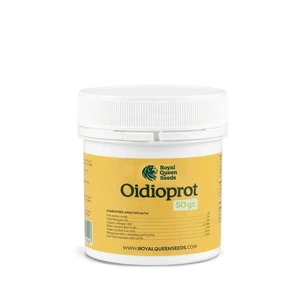
Moreover, hydrogen peroxide can stress your plants, damage trichomes, and it isn’t always effective at treating aggressive PM infections. That’s why some growers turn to Oidioprot, an organic fungicide developed specifically for cannabis cultivation.

Oidioprot offers a gentler, more targeted approach and is especially effective at preventing PM or dealing with infections early.

What Makes Oidioprot Different?

  • It’s safe to use during early flowering.
  • It helps protect your plants' natural microbiome.
  • It’s designed to target PM spores without damaging trichomes.
  • It can be used preventively in your integrated pest management routine.

While hydrogen peroxide might work in a pinch, Oidioprot may be worth considering if you’re looking for a more reliable long-term solution to powdery mildew.


Hydrogen Peroxide & Powdery Mildew FAQ

Can I spray hydrogen peroxide directly on buds?
Yes, but only lightly and at low concentrations. Ideally, wash your buds as per Jorge Cervantes' method for the best results.
Will hydrogen peroxide ruin my trichomes or flavour?
Yes, hydrogen peroxide can damage trichomes. Apply it as outlined in this article to minimise damage.
What’s the safest dilution of hydrogen peroxide to use on cannabis?
A 1:3 ratio of hydrogen peroxide to water can be used to treat aggressive infections during veg. A 1:10 ratio, however, is safer and less likely to damage your plants or their trichomes.
Can I use hydrogen peroxide every day?
Yes, but only for short periods when tackling a powdery mildew infection. For prevention, use hydrogen peroxide every 7–10 days.
Is citric acid or milk spray better than peroxide?
Both citric acid and milk sprays can help prevent or treat powdery mildew, but neither is necessarily better than hydrogen peroxide. The best prevention and/or treatment for powdery mildew is Oidioprot: a natural, organic fungicide.

Cookies settings

We are requesting your permission to use your data for the reasons stated below:

Functional cookies

Functional cookies help our website to function optimally and allow us to personalise certain features.

Preference cookies

Preference cookies allow us to remember information that influences the way our website looks, including your preferred language based on your region.

Analytical cookies

Analytical cookies give us insights into website traffic and customer behaviour, including how many people visit our site, how long they browse for, and which parts of our site they visit.

What are cookies?

Cookies are small pieces of data from a particular website that get stored on a user’s computer while they’re surfing the internet. Cookies have several different functions. Some of them track browser activity that enables businesses to deliver targeted advertisements. Other cookies serve to remember user login details to different websites to make jumping on social media, or other sites, a more fluid process. Because each cookie has its own unique ID, these pieces of data allow website owners to measure the unique traffic coming into their site.

Why do we use cookies?

Cookies come in handy when you visit our website. They ensure you stay logged in, that you can shop safely, and that the items you add to your cart stay there before you make a purchase. But cookies also help us. The data they provide allow us to improve our website and enable us to present you with targeted advertisements that are compatible with your interests.

What kind of cookies do we use?

Functional cookies

Functional cookies help our website to function optimally and allow us to personalise certain features.

Preference cookies

Preference cookies allow us to remember information that influences the way our website looks, including your preferred language based on your region.

Analytical cookies

Analytical cookies give us insights into website traffic and customer behaviour, including how many people visit our site, how long they browse for, and which parts of our site they visit.

How can I disable or delete cookies?

Not a fan of cookies? No worries. You can disable them (with the exception of necessary cookies) in your browser settings. However, blocking cookies may impact your browsing experience and prevent you from enjoying all of the technical features of our site.

Privacy Policy - Royal Queen Seeds

To ensure a safe online environment and guarantee adequate data protection, we strictly comply with all legal requirements. In this privacy statement, we provide information about how and for what purpose data is collected, safety measures, storage periods and contact details.


COMPANY NAME: SNORKEL SPAIN, SL (hereinafter ROYAL QUEEN SEEDS)

C/ Vilar d'Abdelà, 5 (nave 1) CP: 08170 de Montornès del Vallès

+34 937 379 846

[email protected]


The present Privacy Policy sets out the terms on which we will treat personal data at ROYAL QUEEN SEEDS; this includes any personal data collected through our website https://www.royalqueenseeds.com/ as well as any other data we process in the course of our business activities.

ROYAL QUEEN SEEDS collects the following personal data for the purposes listed below:

SECTION 1 – PERSONAL INFORMATION WE COLLECT

1.1 Account purchases

Account purchases can only be made if you are in possession of a personal account. When you create an account or purchase something from our shop, as part of the buying and selling process we collect the following personal information that you provide to us:

This information is required for delivery. In addition, when you browse our shop, we automatically receive the Internet Protocol (IP) address of your computer. Based on this information, we can optimise your online experience and at the same time protect our online environment.

Purpose of data collection

We collect and store account-related data for the following purposes:

(a) to carry out obligations arising from any contracts between you and us, and to provide you with information, products and services that you may request from us;

(b) to set up, manage and communicate with you about your account and your orders;

(c) to conduct market research and analysis;

(d) to confirm your age and identity, and to detect and prevent fraud.

1.2 Newsletters

With your explicit permission, we may send you newsletters about our shop, new products and other updates. We send newsletters based on your explicit consent. In the event that you purchase a product, and in accordance with current regulations, we may send you commercial communications in accordance with the legitimate interest of our company, always about products or services similar to those you have purchased or contracted. In any case, you may exercise your right of opposition through the channels announced in this Privacy Policy. The following information is collected in relation to the newsletter:

We do not need to know the sex of the person in order to send the newsletter (data minimisation: by law we must ask for data that is strictly necessary to provide the service, and in this case knowing the sex is not necessary to send the newsletter).

Purpose of data collection

The data collected is used to:

(a) personalise our emails, including your name and gender;

(b) provide gender-specific content.

You can withdraw your consent at any time by using the link provided in the newsletter or the contact information provided in section 2.

1.3 Customer service and contact form

In order to provide appropriate support, our customer service employees have access to information related to the account. Consequently, their support will be highly effective and friendly. The data provided in our contact form is used by our CRM provider, SuperOffice. We will only use your details to respond to your message.

SECTION 2 – LEGITIMATE INTEREST

If you have purchased any of our products, please note that we may process your personal data for promotional purposes, based on Royal Queen Seeds' legitimate interest only to offer you products or services from our company and about products or services similar to those you have purchased. You may exercise your right to opt out of future messages by the means set out in this Privacy Policy or through any notification you receive.

2.1 How do you withdraw consent?

If you change your mind, you can withdraw your consent for us to contact you for the purpose of collecting, using, or disclosing your data at any time by reaching out to us at: [email protected].

SECTION 3 – DISCLOSURE

We may disclose your personal information if we are required to do so by law or if you breach our Terms of Service.

SECTION 4 – HOW LONG DO WE KEEP YOUR DATA?

At Royal Queen Seeds, we will not retain your data for longer than is necessary for the purposes described in this Policy. Different retention periods apply for different types of data; however, the longest period we will normally hold any personal data is 10 years.

4.1 Account information

Data relating to the account remains relevant for as long as the consumer is in possession of an account. Therefore, the data remains documented for as long as the account exists. When our customers delete an account, the associated data will be deleted within a reasonable period of time. Requests regarding the inspection or correction of stored personal data or the deletion of an account can be sent to [email protected].

4.2 Newsletters

In the event that you give us your consent to inform you about our products or services, we will keep your data until you express your wish not to receive any further communications from us. However, we regularly (every month) carry out a relevance check. Registered customers (and their personal information) will be deleted whenever customers do not reply to our request. In addition, our newsletter mailing has an opt-out feature. Consumers can withdraw their consent by using this opt-out feature.

SECTION 5 – COOKIES

Cookies are small information files that notify your computer of previous interactions with our website. These cookies are stored on your hard drive, not on our website. Essentially, when you use our website, your computer displays its cookies to us, informing our site that you have visited before. This allows our website to function more quickly and remember aspects related to your previous visits (such as your username), making your experience more convenient. At Royal Queen Seeds, we use two types of cookies: functional and analytical.

5.1 Functional Cookies

Functional cookies are used to enhance your online experience. Among other things, these cookies track what is added to your shopping cart. The use of these cookies does not require prior authorization.

5.2 Analytical Cookies

Analytical cookies are used for research and market analysis. The data collected with these analytical cookies is anonymous, making it unusable for third parties. The use of these cookies does not require prior authorization.

SECTION 5 – THIRD-PARTY SERVICES

Third-party services are required to conduct transactions and provide our services. In general, the third-party providers we use will only collect, use and disclose your information to the extent necessary to enable them to perform the services they provide to us.

However, certain third-party service providers, such as payment gateways and other payment transaction processors, have their own privacy policies regarding the information we must provide to them for your transactions.

We encourage you to read the privacy policies of these providers so that you can understand how these providers will handle your personal information.

In particular, certain suppliers may be located or have facilities located in a different jurisdiction than yours or ours. Therefore, if you choose to proceed with a transaction involving the services of a third party, your information may be subject to the laws of the jurisdiction in which that service provider or its facilities are located.

Once you leave our website or are redirected to a third-party website or application, you are no longer governed by this Privacy Policy or the Terms of Service of our website.

Web analytics service (anonymous data)

On this website we have integrated an element of a web analytics service (with anonymisation functionality). Web analytics can be defined as the gathering, processing and analysis of data about the behaviour of visitors to websites. An analytics service collects, among other things, data about which website a person came from (the so-called referrer), which sub-pages they visited or how often and for how long they visited a sub-page. Web analytics is mainly used for website optimisation and for a cost–benefit analysis of internet advertising.

Courier service

To complete deliveries we use a courier service. This courier service carries out the delivery between our company and the consumer's home. To complete these logistics, the company requires access to the consumer's name and address information.

Mailing service

Royal Queen Seeds uses a third-party mail service provider to send its newsletter. This provider has access to limited account information related to opt-in consent (e.g. email address).

Marketing services

Royal Queen Seeds has the support of a company that specialises in marketing and communication activities. Their access to personal information is very limited and mostly anonymous.

Payment services

At Royal Queen Seeds we use external payment services to handle our transactions (e.g. credit card payments).

SECTION 6 – SECURITY

To protect your personal information, we take reasonable precautions and follow industry standard best practices to ensure that it is not inappropriately lost, misused, accessed, disclosed, altered or destroyed.

If you provide us with your credit card information, the information is encrypted using secure socket layer technology (SSL) and stored using AES-256 encryption. Although no method of transmission over the internet or electronic storage is 100% secure, we follow all PCI-DSS requirements and implement additional industry standards that are commonly accepted. Information related to the account is protected with a hashing method. This method transforms the information into a generated hash. As a result, confidential information is protected and invisible, even to us. In addition, our databases are exceptionally protected against unauthorised access. For example, access to the database is only possible and permitted via approved IP addresses (e.g. from Royal Queen Seeds headquarters). Other attempts and addresses are rejected at all times.

Furthermore, data is anonymised as much as possible, so it cannot be directly linked to a specific consumer. With this data, however, we may be able to carry out market research and analysis. In addition, the third parties concerned (e.g. mailing service) are examined prior to our collaboration, comply with the GDPR from the EU and receive a processing agreement. Within Royal Queen Seeds, employees are assigned different access permissions. Specific permission provides access only to information that is strictly required to perform a task. Digital security measures are subject to change and must meet high requirements to ensure the safety of online customers. That is why, at Royal Queen Seeds, we appoint a security officer. Regular verification and improvement of security measures (where necessary) are part of the role.

SECTION 7 – CHANGES TO THIS PRIVACY POLICY

We reserve the right to modify this Privacy Policy at any time, so please check back regularly. Changes and clarifications will be effective immediately upon being published on the Website. If we make substantial changes to this policy, we will notify you here that it has been updated so you will know what information we collect, how we use it and under what circumstances, if any, we use and/or disclose it.

SECTION 8 – YOU HAVE THE RIGHT TO: