Amount exceeded


4.7 out of 5 based on 59725 reviews




















4.7 out of 5 based on 59725 reviews
.

Starting from clones is the easiest way to grow cannabis successfully. Skip germination, save time, and enjoy predictable results. Learn the basics of humidity, light, watering, and clone care to turn healthy cuttings into thriving plants ready to flower in just a few weeks.
For anyone curious about cultivation, starting from seed isn’t the only route. Many new growers are discovering the simplicity of growing cannabis from clones. They offer a faster, more predictable way to bring healthy plants to harvest.
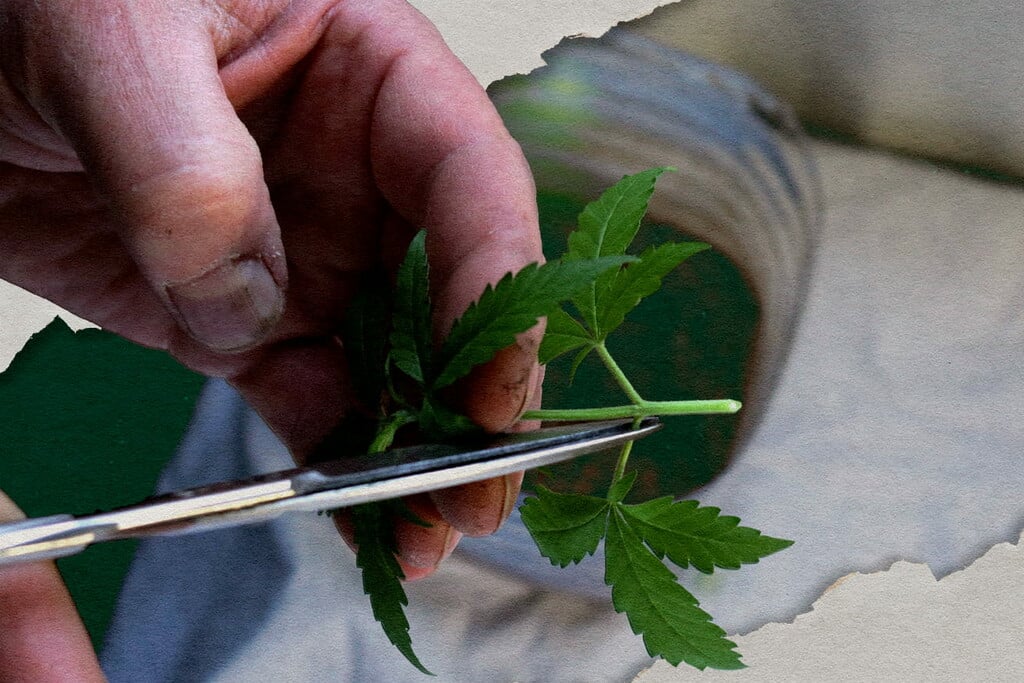
A clone is a small cutting taken from a mature, thriving mother plant. Once rooted, that cutting becomes an entirely new plant, genetically identical to its parent. The result is a perfect copy with the same aroma, flavour, structure, and potency every single time.
Compared to seeds, clones remove two major sources of uncertainty: germination and genetic variation. With no risk of males or weak seedlings, you begin your grow with a guaranteed performer. The process of cloning a marijuana plant was once the preserve of professionals, but with the right conditions, it’s entirely accessible to beginners.
Growing from clones is not complicated. With a few key basics, including optimal humidity, light, clean soil, and patient care, your first harvest can be just as rewarding as that of a seasoned cultivator.
Because new cuttings have minimal roots, they cannot draw enough water from the soil. Instead, they rely on moisture in the air to stay hydrated. That’s why humidity for clones is one of the most critical factors for success.
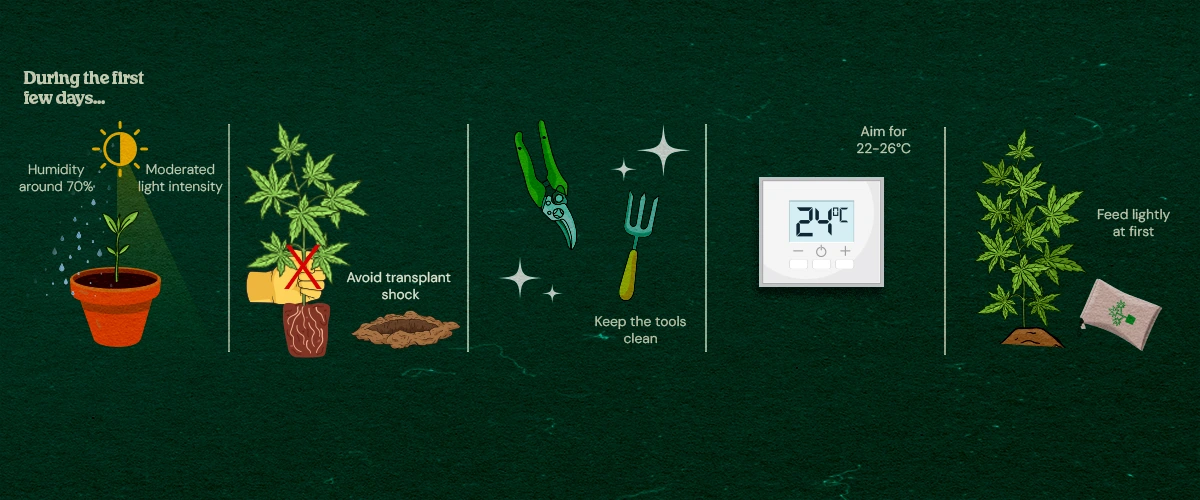
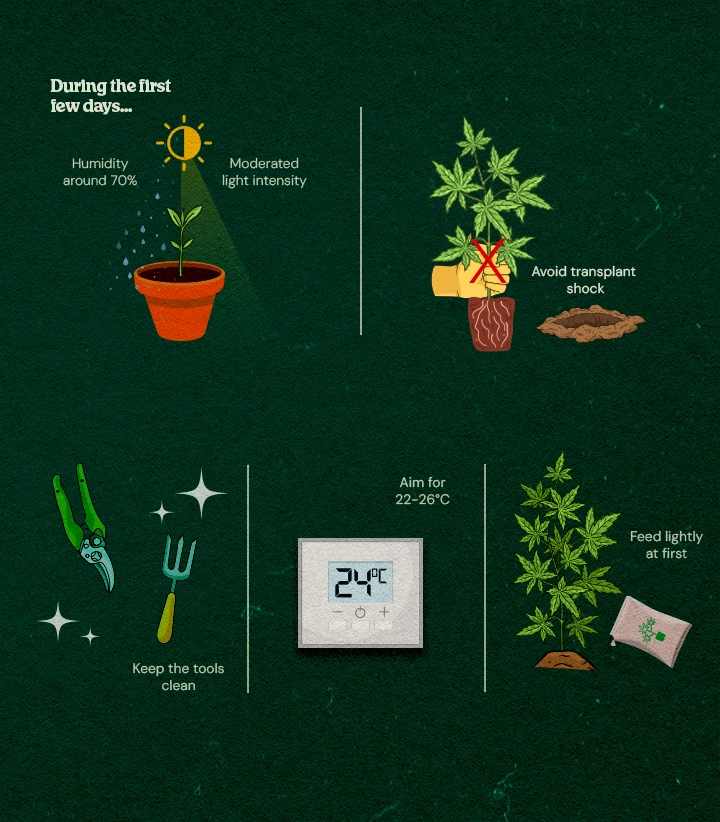
Maintain temperatures around 22–26°C and humidity levels between 65 % and 75 %. A small hygrometer will help you track these levels. High humidity reduces transpiration, preventing the delicate leaves from drying out before the roots establish.
After a week or two, as roots begin to develop, gradually lower the humidity to 60 %. This slow reduction teaches the plant to regulate its own moisture and strengthens tissue for the next phase of growth.
Keep gentle air movement around the canopy, just enough to ripple the leaves. Proper airflow discourages fungal spores, keeps stems firm, and distributes temperature evenly. Avoid strong direct wind, which can desiccate fragile cuttings.
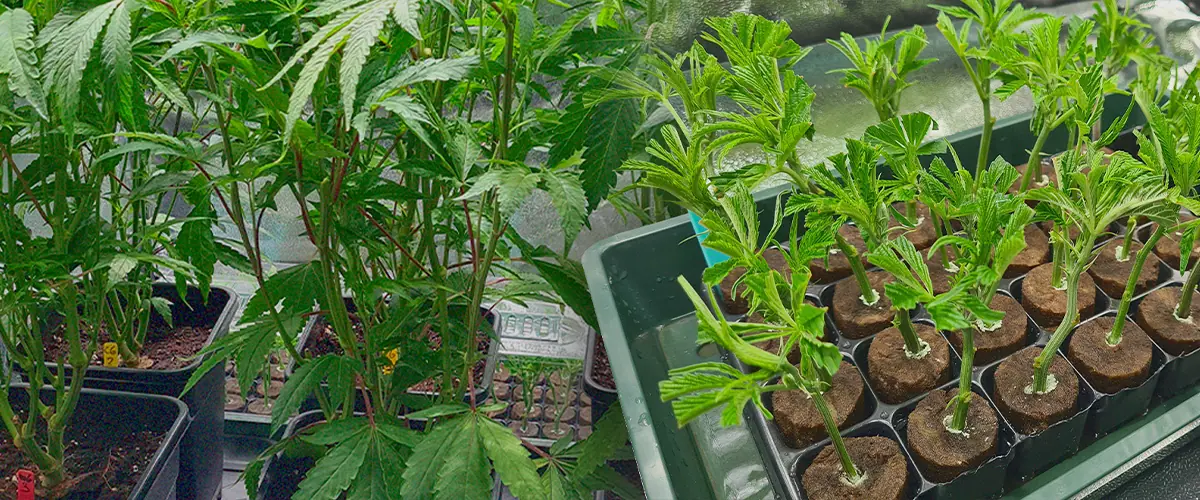
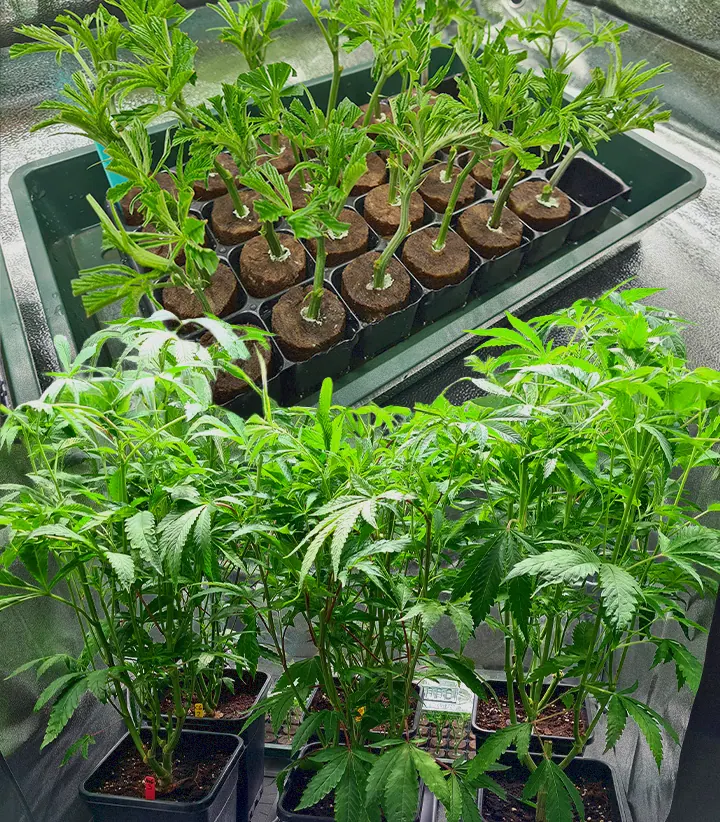
Clones live in the vegetative phase from day one, so lighting is simple but crucial. Aim for an 18-hour light / 6-hour dark schedule. Shorter days can trigger premature flowering, while continuous light may stress the plant.
For intensity, 400–600 PPFD is ideal for beginners, providing sufficient light for healthy photosynthesis without burning the leaves. As your confidence grows, you can increase the intensity or fine-tune according to the cultivar's needs.
Lighting options include:
Place the light close, around 20–40 cm from the canopy for fluorescents and 40–60 cm for LEDs, but watch for signs of stress such as curling tips or bleaching. If the top leaves feel warmer than your hand, raise the fixture slightly.
Clones begin life beyond the seedling stage, but their young roots are still tender. Feeding must therefore be balanced and mild.
Begin with a light, vegetative nutrient solution rich in nitrogen but gentle overall. Many growers initially mix a quarter-strength feed, gradually increasing the strength as the plant establishes. Living soils, also known as bioactive substrates, provide a gentler introduction by releasing nutrients slowly and buffering against pH swings.
Overfeeding is the most common mistake for beginners. If leaves curl downward or show dark, shiny patches, cut back on fertiliser and flush the soil with clean water.
Watering follows the same rule of moderation. Keep the medium moist, not soaked. Allow the top layer to dry slightly before watering again. Roots need both moisture and oxygen, and a waterlogged pot deprives them of air.
When transitioning to bloom, reduce nitrogen and raise phosphorus and potassium to support flower formation. A consistent feeding rhythm will keep clones green, strong, and ready to flower on schedule.
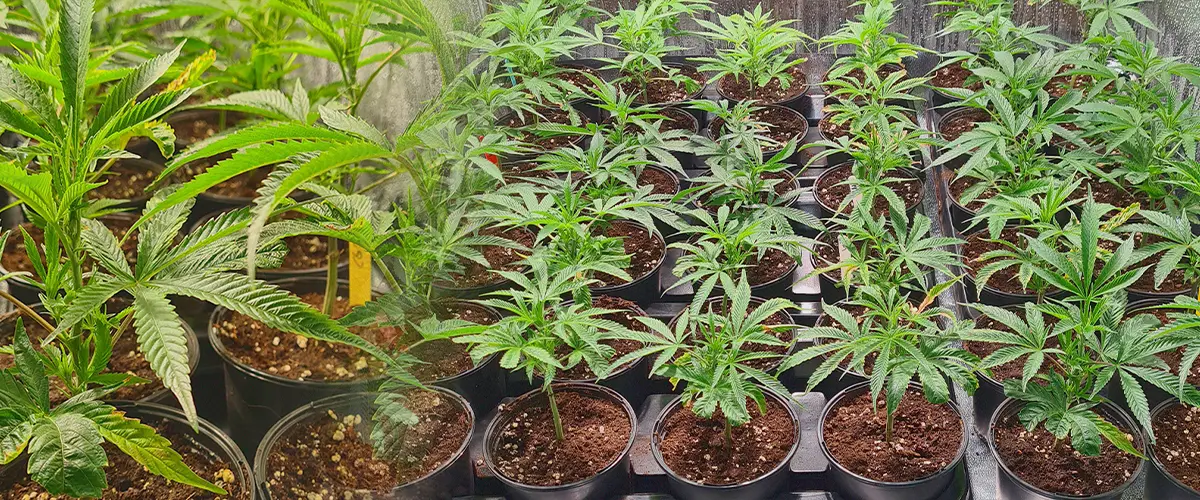
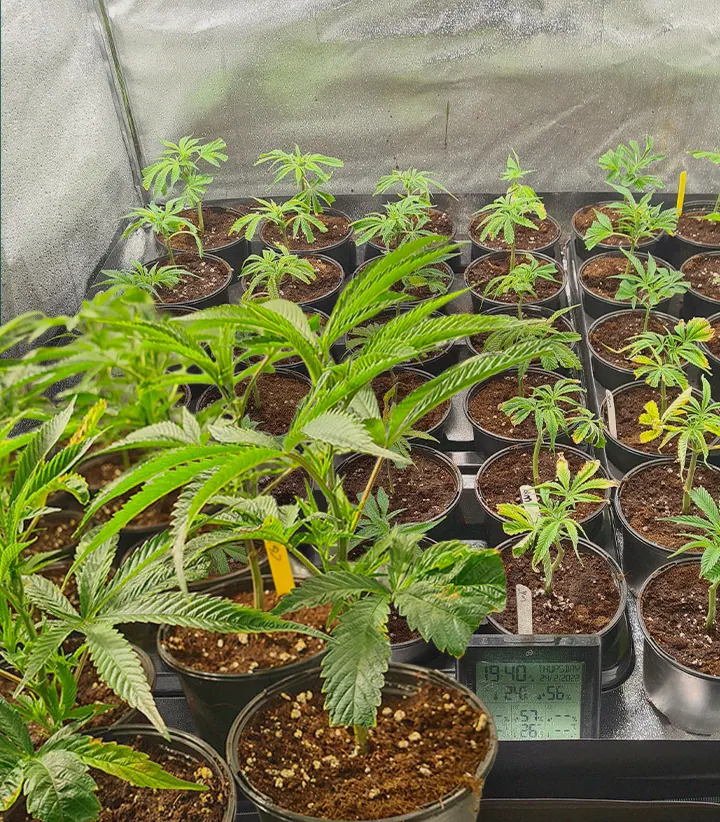
Learning how to clone a plant is one of the most satisfying skills a grower can master. Even if you start with purchased clones, understanding the process deepens your confidence and independence.
Cloning can be done using several media, including soil, coco coir, or rockwool, and some growers experiment with how to root plant cuttings in water before transferring them into pots. Each approach is effective when moisture, oxygen, and cleanliness are correctly balanced.
The following method focuses on cloning cannabis in soil, which is both forgiving and straightforward.
Follow the simple steps below to kick off your soil-based clone grow:
If you’re curious about how long it takes to grow a clone weed plant, the answer varies by strain, but expect to harvest roughly three weeks sooner than with seed-grown plants.
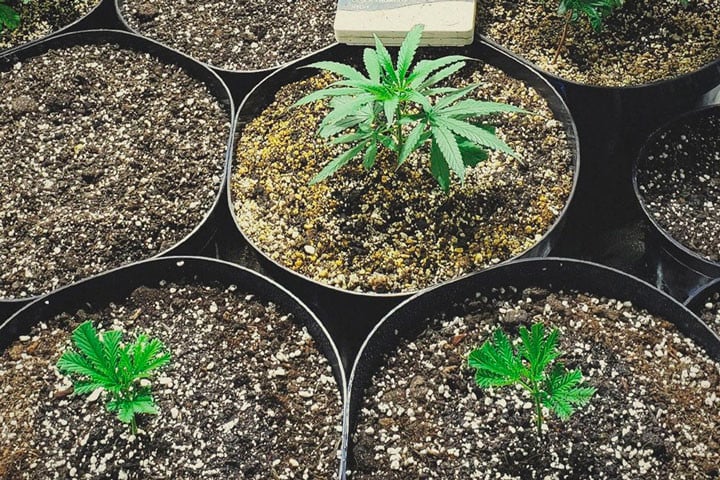
Knowing when to transplant cannabis clones is critical. Wait until the roots are white, firm, and clearly visible along the edge of the container. Transplanting too early can stunt development, whereas waiting too late can cause binding and nutrient lockout.
For hydroponic systems, the same rules apply. Rinse the soil carefully from the roots before transferring it to rockwool or clay pellets to keep the water lines clean.
Daily observation is your best growing tool. Clones communicate their health through subtle changes in colour and texture:
If problems appear, revisit environmental basics first. Most issues with humidity for clones, such as overwatering or stagnant air, can be corrected before serious damage occurs.
Success with clones becomes much easier once you grasp the logic behind each condition:
By balancing these factors, you create an environment that almost guarantees success. Beginners often find that once these fundamentals are stable, clones practically grow themselves.
Many new cultivators ask, “I just bought a clone, now what?” The first step is patience. Even a perfectly rooted clone needs a few days to adapt to its new home.
Maintain high humidity and moderate light for the first week. Once new growth appears, treat your clone as a young vegetative plant. Feed lightly, prune carefully, and gradually introduce training methods such as topping or low-stress bending.
Consistent clone care is about observation. Check leaves for colour, feel the soil before watering, and keep the environment steady. Avoid sudden temperature drops or substantial fertiliser changes.
Over the following weeks, you’ll notice stronger stems, wider leaves, and faster vertical growth. When the plant fills its pot and shows vigorous new shoots, it’s ready for flowering.
Using clones has another hidden advantage: it teaches structure. Because each clone grows predictably, you can refine your techniques by experimenting with lighting, nutrients, or pruning without genetic variables.
For beginners, how to grow clones is less about chasing yields and more about learning the rhythm of plant development. Once that rhythm becomes familiar, growing feels natural and intuitive.
Starting from clones combines reliability with efficiency. You eliminate male plants, shorten the timeline, and work with genetics you already know will perform. For new hobbyists and small indoor gardeners, this means fewer surprises and more confidence.
Clones also open the door to sustainability. By keeping a mother plant, you can take future cuttings and maintain a personal library of favourite strains. This practice saves money over time and ensures access to genetics that may no longer be available commercially.
Whether you grow in soil, coco, or hydro, these clones give you a head start toward consistent, flavourful harvests. With a clean environment, steady humidity, and attentive care, your plants will reward you quickly and predictably.