Amount exceeded


4.7 out of 5 based on 59684 reviews




















4.7 out of 5 based on 59684 reviews
.
Cannabis carbon filters help remove strong odours from indoor grow setups. This guide explains how long they last, how to tell when they need replacing, and what you can do to make them last longer.
Contents:
Cannabis carbon filters typically last 12 to 24 months, depending on factors like humidity, plant density, and air quality. Regular maintenance, such as cleaning pre-filters and monitoring airflow, can extend their lifespan. Look out for telltale signs like noticeable odours, reduced airflow, or visible dust buildup to know when it’s time to replace them. Below you will find a much more comprehensive explanation as we dive into it.
Key takeaways:
Cannabis carbon filters trap the odour given off by weed, making indoor grows safer and more discreet. However, you’ll need to replace these filters from time to time to ensure effectiveness.
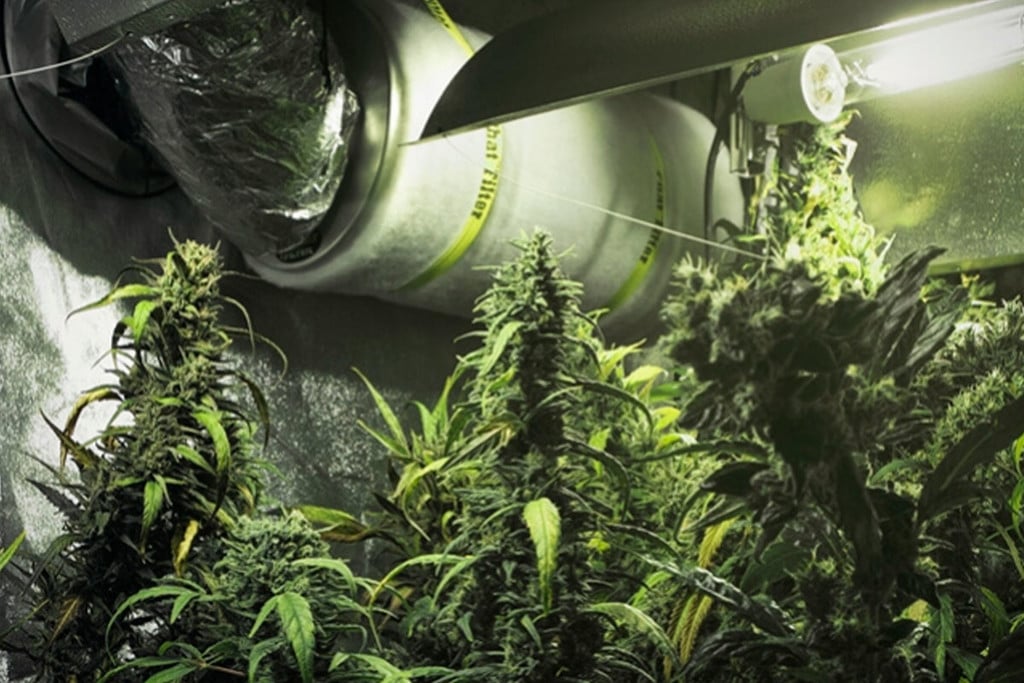
Growers often fit carbon filters to the exhaust systems of cannabis grow tents and rooms to eliminate the pungent smell. Contained within the carbon filter is activated charcoal, the surface of which is pitted and rutted to such a degree that it has an extraordinarily large surface area.
As volatile organic compounds (VOCs)[1] are drawn through the ventilation system and pass over the carbon, they are trapped and adsorbed. As a consequence, the aromatic particles released from weed are prevented from leaving the exhaust system.
The effectiveness of activated carbon depends on the size of the pores in the charcoal and the total surface area available. This is why even a relatively compact filter can neutralise a large volume of air when set up properly. Activated carbon works via a process called adsorption, not to be confused with absorption. In the former, airborne molecules bond to the surface of the carbon, rather than being soaked up by it. This is what makes carbon filters especially useful in environments like grow rooms, where odour control is essential.
Home growers typically pair carbon filters with inline fans and ducting systems. Air is pulled from the grow space into the filter, where odour particles are captured and then pushed outside, leaving little to no detectable smell. When installed correctly, this setup is very effective and widely regarded as the most reliable method for indoor cannabis odour control.
On average, a cannabis carbon filter lasts 12 to 24 months, depending on factors like humidity, usage intensity, grow room size, and filter quality. Heavy use and poor air quality shorten lifespan, while proper care can extend it.
However, its actual lifespan depends on several variables:
| Humidity | High RH reduces adsorption efficiency |
| Temperature | Extreme heat can wear down materials |
| Usage intensity | Continuous grows = faster degradation |
| Filter quality | Higher-end filters generally last longer |
| Grow room size | Larger volume = more VOCs to process |
| Plant density | More plants = stronger, more persistent odours |
| Humidity | High RH reduces adsorption efficiency |
| Temperature | Extreme heat can wear down materials |
| Usage intensity | Continuous grows = faster degradation |
| Filter quality | Higher-end filters generally last longer |
| Grow room size | Larger volume = more VOCs to process |
| Plant density | More plants = stronger, more persistent odours |
If you’re growing a lot of plants year-round, the filter will stop working sooner than if you’re growing fewer plants and less often.
Pro Tip: Most filters don’t fail all at once. Instead, they degrade gradually. This means that in the early stages of decline, the filter might trap most odour particles but allow a trace amount to escape. If you start noticing faint smells during flowering or after lights-out, that’s often the first sign the filter is nearing the end of its useful life. At that point, it’s wise to prepare a replacement before a full failure occurs.
You should replace your cannabis carbon filter if you notice weed odour escaping, reduced airflow, louder fan noise, or visible damage or dust on the filter. These are signs it's no longer working effectively.
Wondering when to replace your cannabis carbon filter? Here are the clear signs it’s nearing the end of its life:
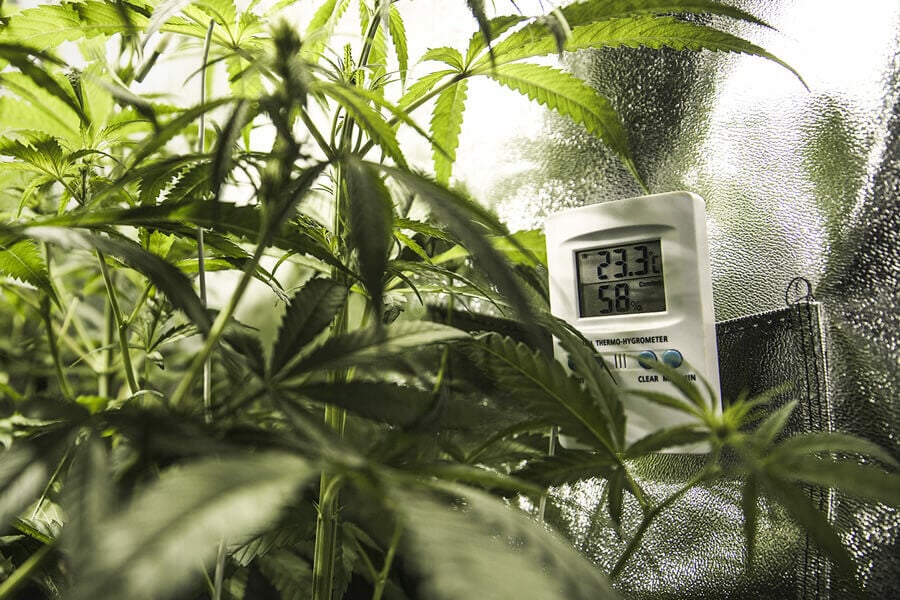
One other subtle sign is an increase in room temperature without any change to lighting or environment. When airflow slows down, this can trap heat in your grow space. Keep an eye on your thermometer; small changes might be telling you something.
If your carbon filter isn't working and you still want to hide the smell of cannabis, the best solution is to replace it. Here at Royal Queen Seeds, we offer a carbon filters specifically engineered for home cannabis growers. With proper care, they can last up to 24 months.
Available in two sizes, our filter can fit into all home grow scenarios, making your grow more discreet and your money stretch further!
Pro tip: Before installing a new filter, it’s worth checking the state of your existing ducting and fan as well. Blockages, tears, or leaks in the ducting can also reduce efficiency and strain the system. Replacing the filter alone won’t restore full performance if the surrounding equipment is already compromised.
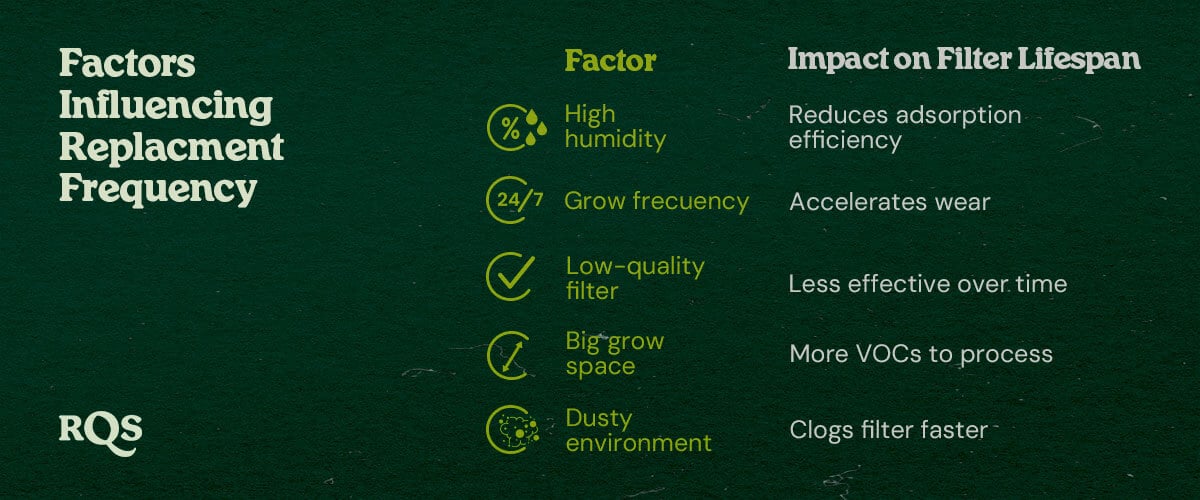
As mentioned, there are several factors that will affect how often you need to replace your filter. Recognising the following factors can help keep your carbon filter working from day one and extend its lifespan.
In addition to the above, local air quality can also make a difference. If you live in a dusty area or somewhere prone to airborne contaminants like pollen or construction debris, your filter will clog more quickly than one in a cleaner environment. Using a reliable pre-filter can help reduce this risk.
Alongside understanding the factors that cause filters to degrade, you should also be aware that you can actively maintain filters and extend their lifespan.
Here are some tips:
Pro Tip: It’s also a good idea to inspect your system for signs of negative pressure. If your exhaust setup is too strong relative to intake airflow, the filter will struggle to cope, and performance may drop. Balancing intake and exhaust helps ease the load on the filter and keeps odour control consistent over time.
If you use carbon filters when growing weed, and you intend to do so regularly, you'll need to change them every year or two. Fortunately, they are not expensive and changing them is straightforward. Plus, armed with the right knowledge, you can manage your grow in such a way that your filters last longer and work better!
For most growers, the key is consistency. Make filter checks part of your regular maintenance schedule: note installation dates, watch for airflow changes, and keep spare filters on hand if possible. Staying ahead of the curve ensures your grow stays low-key and free from unwanted attention. For a filter that fits most grow spaces and performs reliably, check out our options at RQS.