Amount exceeded


4.7 out of 5 based on 59984 reviews




















4.7 out of 5 based on 59984 reviews
.

Survey data points to uneven trust in retail cannabis and broad support for growing at home, especially among users seeking cleaner, more transparent options.
Contents:
Cannabis use continues to climb across the U.S., but rising demand has also put a brighter spotlight on product safety and transparency. For many consumers, pesticides in weed have become a major concern, influencing trust in the legal market just as much as price or potency.
Based on survey findings and broader reporting on changing public attitudes and consumer risk awareness, this article looks at the data around cannabis pesticides and what these results mean for buyers weighing convenience against confidence.
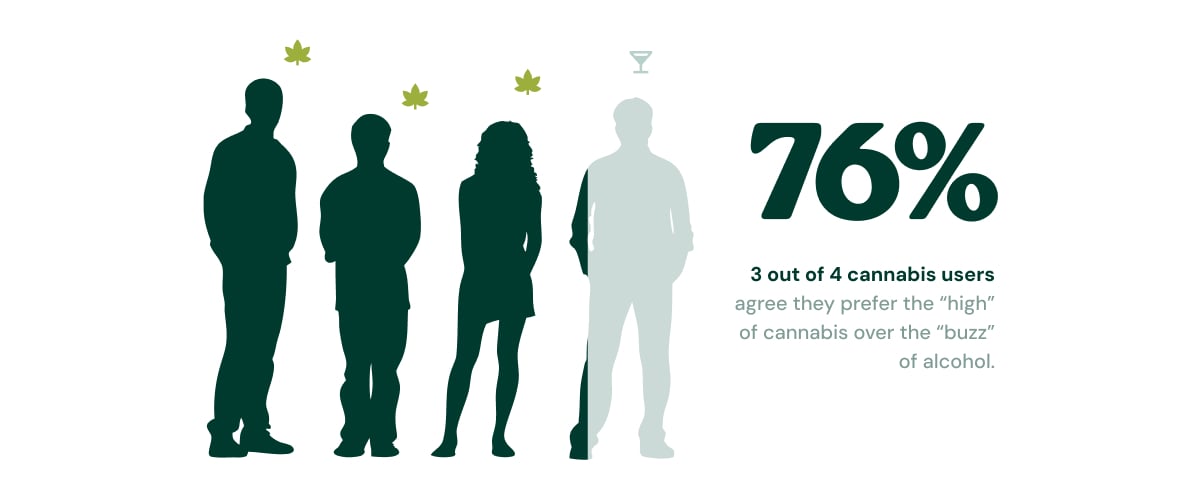
Recent survey data shows a steady increase in cannabis use, up 4% since 2024, with 13% of respondents saying they consume daily. Just 23% say they use cannabis purely for enjoyment, while most report some kind of wellness-related motivation, and nearly 80% describe a broader wellness connection in their habits. A strong majority (76%) of consumers also say they prefer the experience of cannabis over the “buzz” of alcohol, reinforcing its appeal beyond simple recreation.

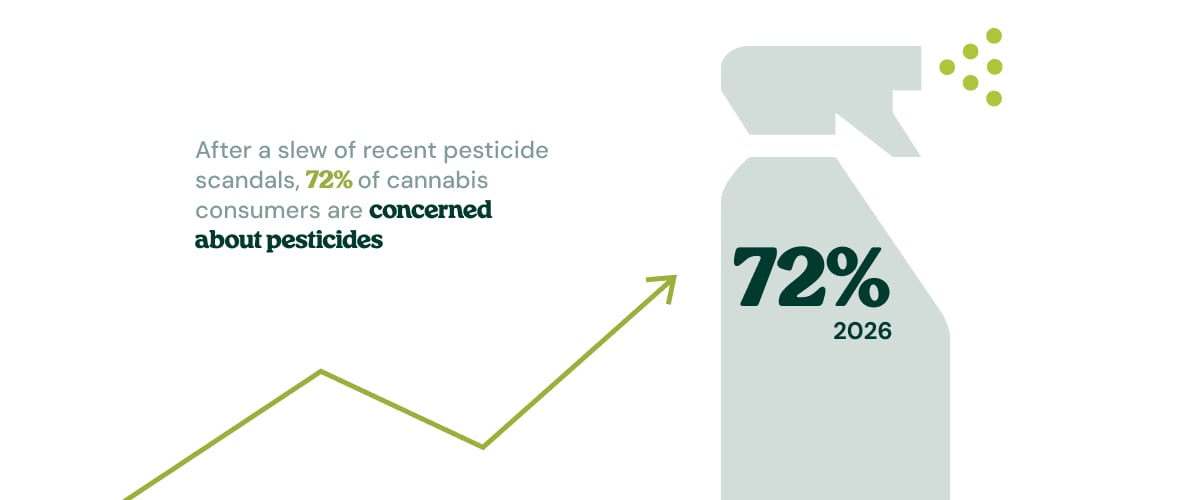
Concerns about contamination run deep, and 72% say they are very concerned about pesticides in cannabis. That figure remains strikingly consistent across age, gender, and political lines.
Sixty-three percent of consumers say the industry is transparent about safety, but trust drops when respondents are asked more directly. Confidence levels come in at 36% among women and 46% among men, suggesting that reassurance is not reaching every part of the market equally.
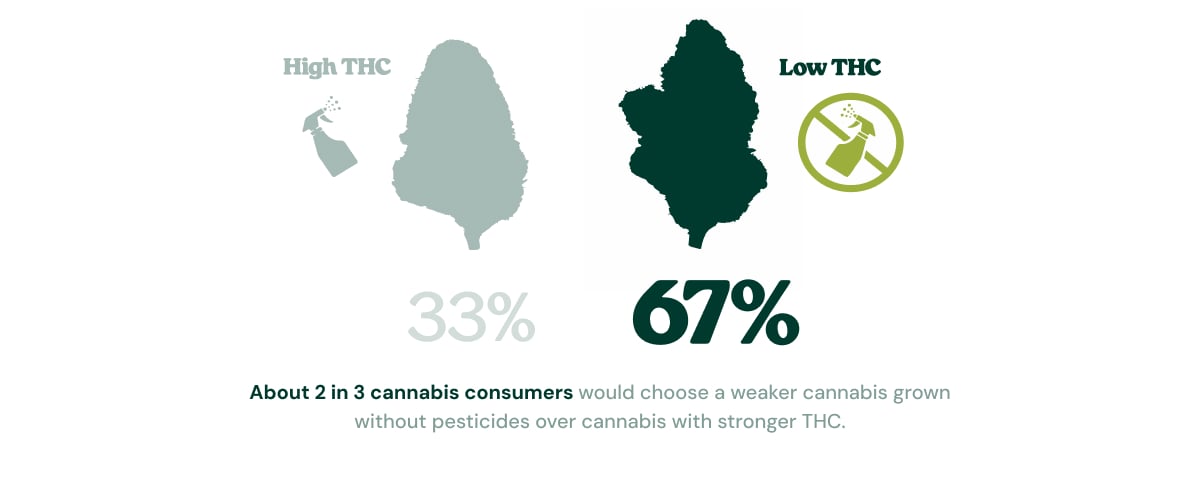
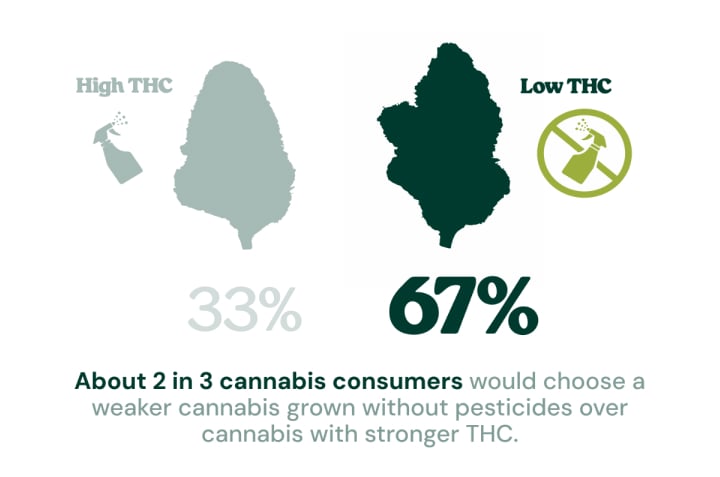
Recent reporting also seems to play a major role: 65% say media coverage has made them more concerned, and 67% would choose pesticide-free weed over a product with higher potency. As attention around cannabis pesticides grows, more consumers are beginning to view home cultivation as a practical way to gain more control and clearer visibility into what they consume.
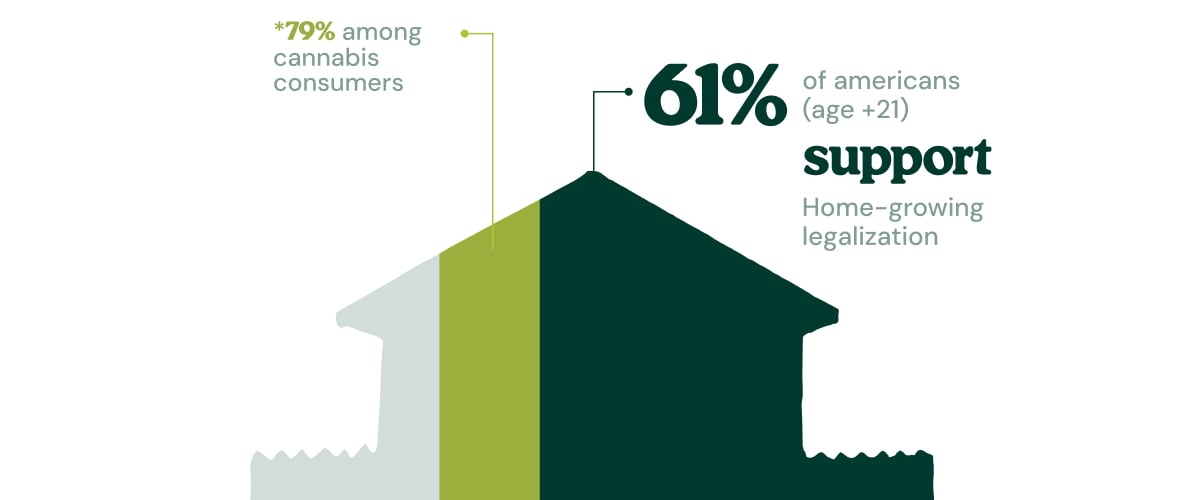
Support for home cultivation is no longer a niche view.
Overall, 61% of Americans support the legal right to grow at home, which is a higher percentatge than those who consume cannabis in the US (43%).
Regional differences add another layer, with the strongest support recorded in the South at 63% and in the West at 54%, showing that interest reaches well beyond any single political or cultural group.
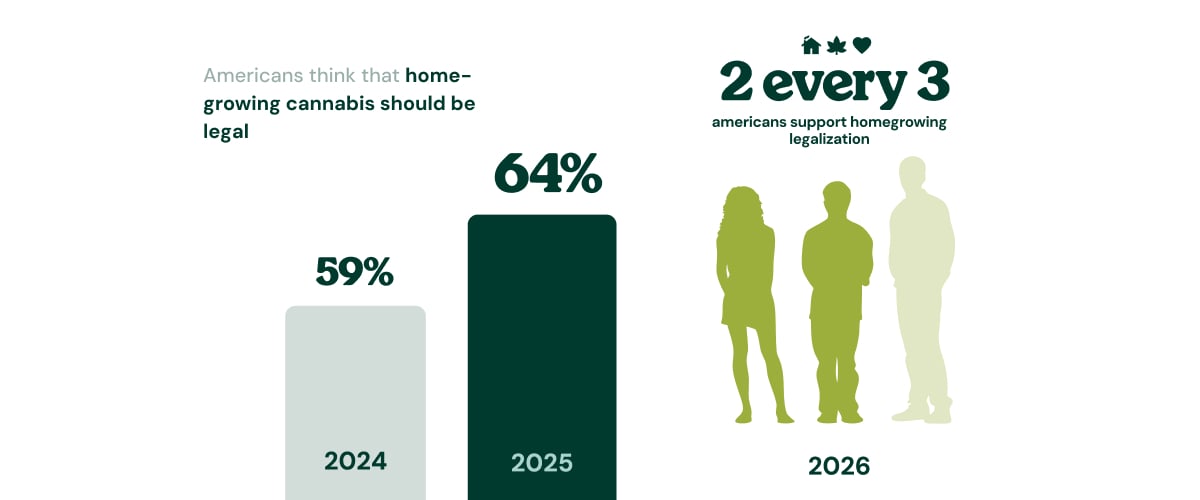
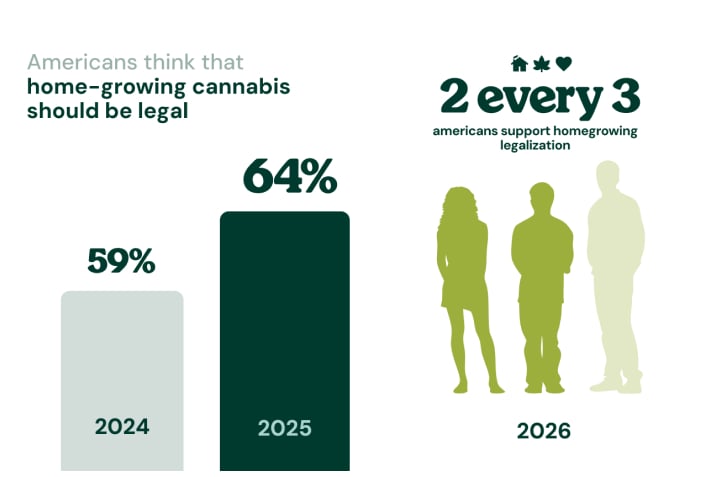
Age and gender both shape how Americans relate to cannabis, though the differences are more subtle than dramatic. Adults ages 45+ show strong support for home growing (53%) and are also more likely to link cannabis use with wellness. Women, meanwhile, are more likely to be motivated by wellness overall, with 22% citing that reason compared with 16% of men.
The strongest concentration appears among women ages 65 and older, where 49% say wellness is a key reason for use. Concern about product safety also trends slightly higher among women, with 31% reporting elevated concern compared with 26% of men. Taken together, the data suggests purchasing priorities are not uniform across the market.
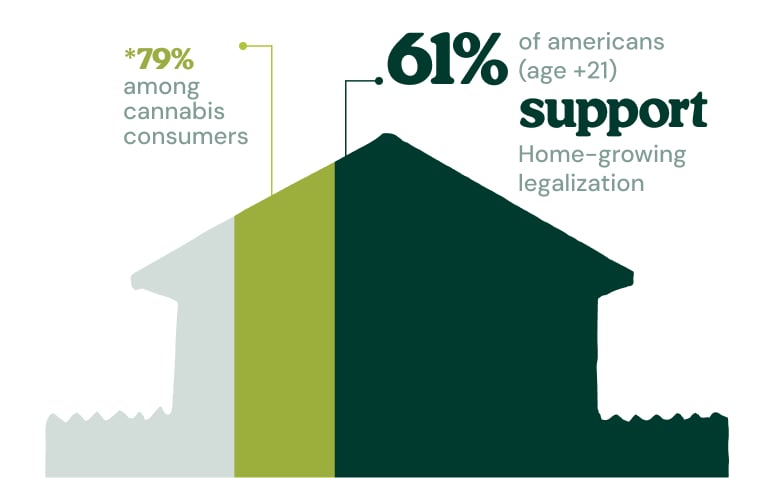
For consumers unsettled by safety concerns, home cultivation offers a more transparent alternative. Survey results show that demand for pesticide-free cannabis cuts across demographic lines, and growing at home gives people direct control over inputs, feeding routines, and the broader grow environment. That visibility matters when trust in retail supply remains uneven.
Instead of relying only on tags or testing claims, homegrown cannabis allows growers to make informed decisions at every stage. For those weighing their options, exploring home cultivation is a practical next step.
More broadly, these trends point to a market where cannabis use is rising alongside concern about contamination, especially around pesticides. Trust remains uneven, but expectations around safety and transparency are clearly increasing. As a result, cleaner production and greater control, whether through regulation or home cultivation, are likely to play a bigger role in shaping consumer choices moving forward.