Amount exceeded


4.7 out of 5 based on 60174 reviews




















4.7 out of 5 based on 60174 reviews
.

Short, fast, high-yielding, or easy to manage? See how small indoor cannabis strains suit tight tents when usable height starts to shrink.
Key Takeaways
Contents:
Limited tent space leaves little room for excessive stretch, uneven canopy development, or plants that occupy more space than expected. Still, the shortest cultivar is not automatically the smartest choice. A very low plant can underuse your setup if it produces less, takes longer, or develops a canopy that is awkward to manage.
The best strains for small grow tents are compact RQS genetics judged by indoor height, stated yield, lifecycle or flowering time, and plant format. Sometimes, a slightly taller strain makes better practical use of restricted space by offering stronger output, faster turnaround, more predictable growth, or another advantage that matters once the tent starts filling up.
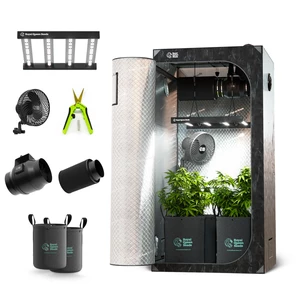
A 60x60 cm tent gives you a clear, practical frame for comparing compact cannabis genetics. The RQS 60x60x180 Grow Tent Kit offers a 60x60 cm floor area, 180 cm total height, and a 0.36 m² footprint, roughly the footprint of a 2x2 ft tent.
That 180 cm figure is not the same as usable plant height. Your container raises the plant from the floor, while the grow light, hanging hardware, and safe light-to-canopy distance all occupy vertical space above the canopy. The kit's 150 W LED hangs from the tent roof, so the light and its hangers use part of that height before you add a safe gap to the canopy. Possible flowering stretch reduces the margin further.
Floor space matters just as much. A 60x60 cm base limits canopy spread, pot choice, and plant number, especially when a cultivar grows wider than expected. For this reason, suitability is not judged by advertised height alone. The stronger comparison is how effectively each strain uses restricted space relative to stated yield, speed, lifecycle or flowering time, and plant format.
Free Indoor
Grow Guide

| Strain | Type | Indoor Height | Indoor Yield | Lifecycle / Flowering Time | Space Trade-Off | Best Fit |
| Epsilon F1 | F1 Auto | 50–70 cm | XXL | 60 days after germination | Compact and quickest to harvest; uniform plants keep a multi-plant canopy level, but the XXL label isn't directly comparable | Fast, compact F1 grow |
| Wedding Cake Auto | Auto | 60–70 cm | 400–450 g/m² | 70–75 days after germination | About 10 cm more height than Quick One for a much higher stated yield | Compact auto with strong yield |
| Royal Bluematic | Auto | 60–75 cm | 425–475 g/m² | 75–85 days after sprouting | A little more height and a longer cycle than Wedding Cake Auto for the highest stated auto yield | High yield relative to height |
| Sweet Skunk Auto | Auto | 40–80 cm | 400–450 g/m² | 75–85 days after sprouting | Can stay very low with a competitive yield, but the wide range makes final size less predictable | Very compact auto with solid yield |
| Quick One | Auto | 50–60 cm | 275–325 g/m² | 65–70 days after germination | Lowest maximum height and a quick cycle, at the cost of the lowest stated yield | Minimum vertical footprint |
| Mimosa | Photoperiod | 60–80 cm | 350–400 g/m² | 60–65 days flowering | Low height and control over the flip, with a lower stated yield than Critical Kush | Compact photoperiod option |
| Critical Kush | Photoperiod | 60–100 cm | 500–550 g/m² | 55–65 days flowering | Needs the most headroom here in exchange for the highest stated yield | Higher-output compact photoperiod |
| Epsilon F1 | |
|---|---|
| Type | F1 Auto |
| Indoor Height | 50–70 cm |
| Indoor Yield | XXL |
| Lifecycle / Flowering Time | 60 days after germination |
| Space Trade-Off | Compact and quickest to harvest; uniform plants keep a multi-plant canopy level, but the XXL label isn't directly comparable |
| Best Fit | Fast, compact F1 grow |
| Wedding Cake Auto | |
| Type | Auto |
| Indoor Height | 60–70 cm |
| Indoor Yield | 400–450 g/m² |
| Lifecycle / Flowering Time | 70–75 days after germination |
| Space Trade-Off | About 10 cm more height than Quick One for a much higher stated yield |
| Best Fit | Compact auto with strong yield |
| Royal Bluematic | |
| Type | Auto |
| Indoor Height | 60–75 cm |
| Indoor Yield | 425–475 g/m² |
| Lifecycle / Flowering Time | 75–85 days after sprouting |
| Space Trade-Off | A little more height and a longer cycle than Wedding Cake Auto for the highest stated auto yield |
| Best Fit | High yield relative to height |
| Sweet Skunk Auto | |
| Type | Auto |
| Indoor Height | 40–80 cm |
| Indoor Yield | 400–450 g/m² |
| Lifecycle / Flowering Time | 75–85 days after sprouting |
| Space Trade-Off | Can stay very low with a competitive yield, but the wide range makes final size less predictable |
| Best Fit | Very compact auto with solid yield |
| Quick One | |
| Type | Auto |
| Indoor Height | 50–60 cm |
| Indoor Yield | 275–325 g/m² |
| Lifecycle / Flowering Time | 65–70 days after germination |
| Space Trade-Off | Lowest maximum height and a quick cycle, at the cost of the lowest stated yield |
| Best Fit | Minimum vertical footprint |
| Mimosa | |
| Type | Photoperiod |
| Indoor Height | 60–80 cm |
| Indoor Yield | 350–400 g/m² |
| Lifecycle / Flowering Time | 60–65 days flowering |
| Space Trade-Off | Low height and control over the flip, with a lower stated yield than Critical Kush |
| Best Fit | Compact photoperiod option |
| Critical Kush | |
| Type | Photoperiod |
| Indoor Height | 60–100 cm |
| Indoor Yield | 500–550 g/m² |
| Lifecycle / Flowering Time | 55–65 days flowering |
| Space Trade-Off | Needs the most headroom here in exchange for the highest stated yield |
| Best Fit | Higher-output compact photoperiod |
Browse more compact cannabis strains .
Epsilon F1 is the F1 Auto option in this comparison, and her appeal starts with practical dimensions. Indoors, she sits at around 50–70 cm, with a very short overall lifecycle of roughly 60 days from germination, giving you a fast route through a restricted setup.
Her small-tent advantage is not the F1 label on its own. It comes from the combination of compact growth, rapid turnaround, and uniformity. In a multi-plant tent, that uniformity can make the canopy easier to keep level, which helps when light distance and vertical margin are already tight.
Quick One follows a similar compact-and-fast brief, but Epsilon F1 belongs to a different genetic format with a more uniform growth profile. That makes her especially relevant when predictable canopy management matters as much as final height.

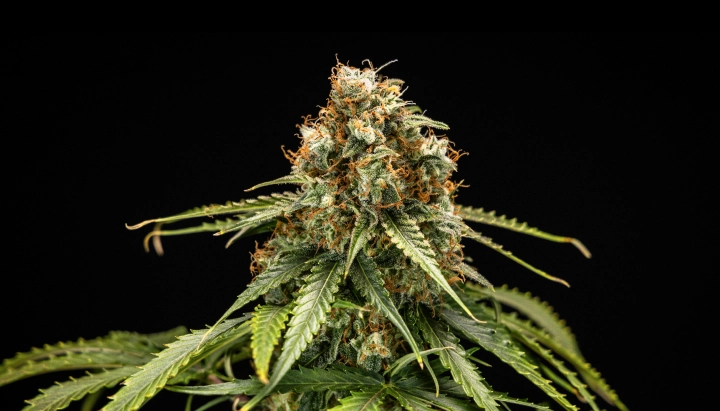
Wedding Cake Auto earns her place by pairing a modest published indoor height with a useful stated harvest. On paper, she reaches around 60–70 cm indoors, alongside indoor yields of 400–450 g/m², which puts her in a stronger productivity bracket than many cultivars chosen only because they stay extremely low.
That balance matters in a small tent. Among compact autoflower strains, Wedding Cake Auto uses slightly more advertised vertical space than Quick One, but offers substantially higher stated yield potential than Quick One's 275–325 g/m². If you have enough clearance for the extra 10 cm or so on paper, that trade can make sense.
Published height ranges still need a margin. Real plants can exceed breeder figures, and the later Wedding Cake Auto grow example shows why you should not design your setup around the advertised maximum alone.
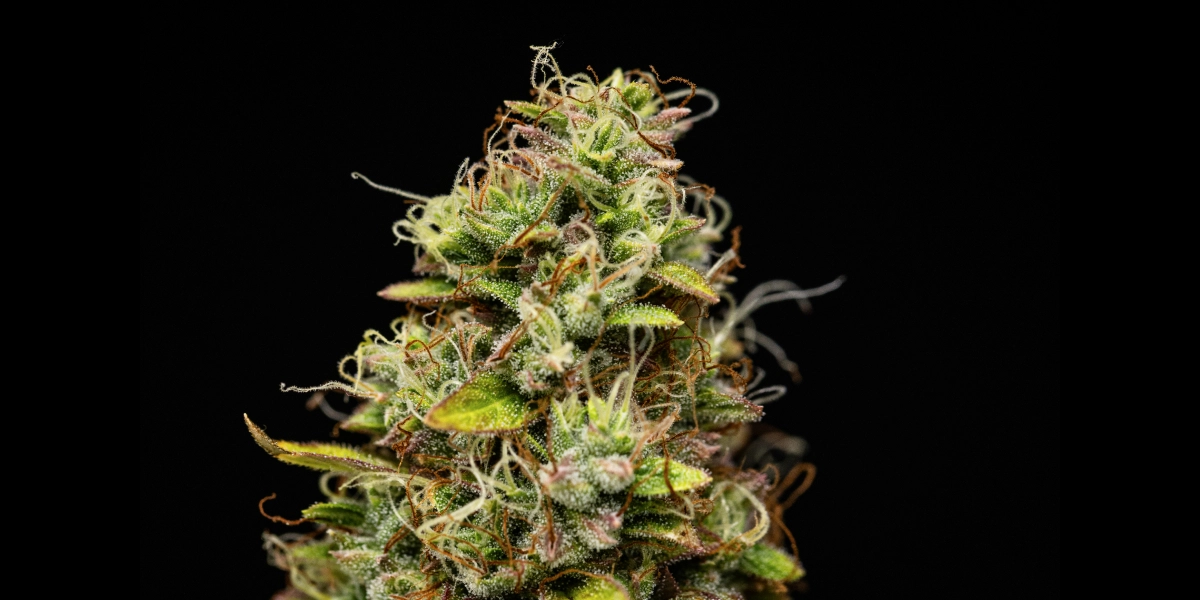
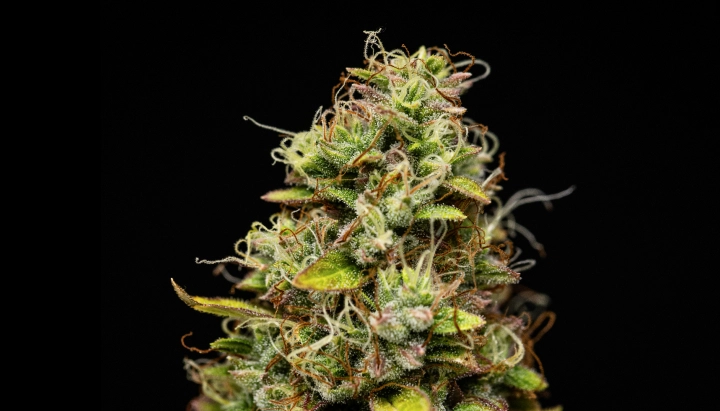
Royal Bluematic makes a strong case when yield matters but vertical space remains tight. We list her at around 60–75 cm indoors, with stated indoor yields of 425–475 g/m² and a total lifecycle of 75–85 days after sprouting.
Those figures put her among the stronger conventional autos in this shortlist for growers who want compact growth without dropping too far on stated output. Royal Bluematic sits slightly above Wedding Cake Auto on published yield and needs up to 5 cm more height, but her 75–85-day lifecycle can run up to 10 days longer than Wedding Cake Auto's 70–75 days.
The trade-off is a little more height and a slightly longer cycle, paid back through the highest stated yield among the conventional autos here.


Sweet Skunk Auto stands out because her published indoor range starts very low while her stated yield remains competitive. Her published range runs from approximately 40–80 cm indoors, with indoor yields of 400–450 g/m² and a total lifecycle of around 75–85 days after sprouting.
That 40 cm lower figure should not be read as the size you can expect from every plant. Pot volume, light intensity, nutrition, temperature, training, and overall cultivation style can all influence final stature. The range works best as a comparison point, not a guarantee.
In practical terms, Sweet Skunk Auto sits between the ultra-small choices and the more yield-focused compact autos. She gives you a chance at a very low vertical footprint without stepping down to the lower stated yields seen in the shortest options.

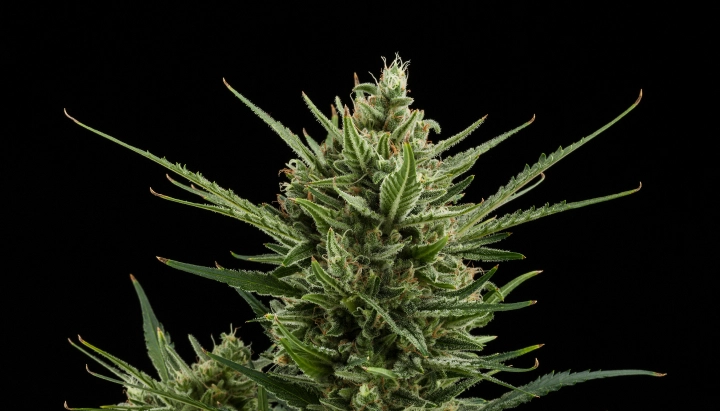
Quick One is one of the shortest cultivars in this comparison, with an indoor height of approximately 50–60 cm. That makes her especially useful when your main restriction is vertical space rather than maximum harvest weight.
Her strengths are a low footprint and rapid turnaround. The stated indoor yield of 275–325 g/m² is clearly lower than several other strains in the shortlist, including Wedding Cake Auto, Royal Bluematic, Sweet Skunk Auto, and Critical Kush. For some growers, that trade-off is still worthwhile. A small tent may leave so little margin for pots, lights, and canopy clearance that keeping the plant short matters more than chasing the highest published yield.
For more ultra-short options, see our guide to the smallest cannabis plants . Quick One earns her place in this shortlist because she shows how speed and low height can outweigh raw output.
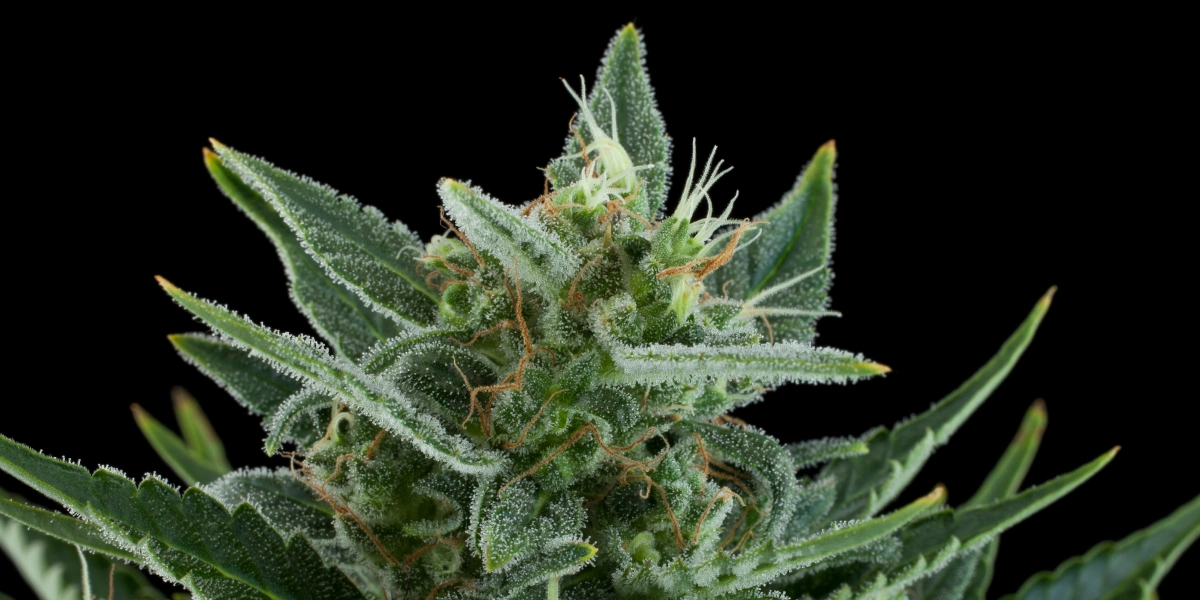
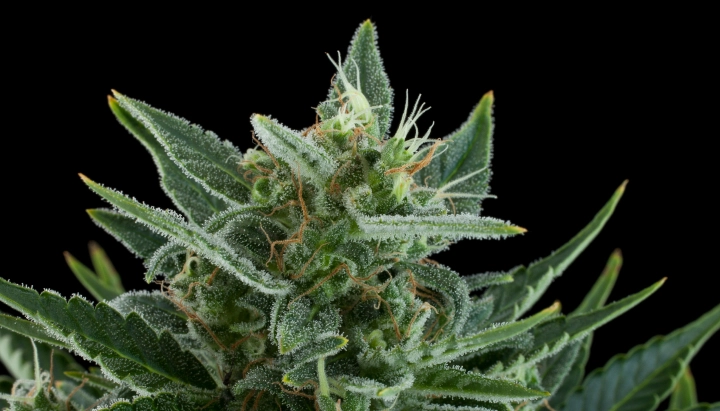
Mimosa shows why a small tent does not automatically mean choosing autoflower genetics. She reaches approximately 60–80 cm indoors, with stated yields of 350–400 g/m² and a flowering period of 60–65 days, placing her in a manageable range for restricted indoor setups.
Her main advantage is control. As a photoperiod cultivar, Mimosa stays in vegetative growth until you change the light cycle, so you decide when flowering begins. That gives you a useful way to manage final size, especially when you want to keep plants compact without selecting only the shortest available option.
Compared with the autos in this shortlist, Mimosa asks for more involvement with timing, but rewards that attention with flexibility. She is a practical reminder that small-tent strain selection is about usable space, not just minimum advertised height.
.webp "Mimosa: Compact Photoperiod for Small Tents")
.webp "Mimosa: Compact Photoperiod for Small Tents")
Critical Kush is the higher-output photoperiod choice in this shortlist. We list her at approximately 60–100 cm indoors, with stated indoor yields of 500–550 g/m², placing her well above Mimosa on published production while still remaining compact enough for careful small-tent planning.
The trade-off is vertical margin. Mimosa stays lower at around 60–80 cm and gives you photoperiod control with a more modest stated yield of 350–400 g/m². Critical Kush can use more headroom than Mimosa and most of the autos covered here, but she offers considerably stronger stated output in return.
Among small indoor cannabis strains, she makes most sense when your tent has enough clearance for the upper end of her range and you want restricted floor space to work harder. Choose Mimosa for lower height pressure; choose Critical Kush when extra headroom can be put to productive use.
.webp "Critical Kush: More Yield From a Compact Photoperiod")
.webp "Critical Kush: More Yield From a Compact Photoperiod")
A low advertised height can look decisive until you compare what the plant gives back. For this guide, space-efficient means the balance between the room a cultivar needs and the value it returns through stated yield, speed, manageability, or plant format.
Quick One is the clearest example. At around 50–60 cm indoors, she keeps vertical demand very low and finishes quickly, but her stated 275–325 g/m² yield sits below Wedding Cake Auto and Royal Bluematic. Both use slightly more height on paper, yet offer much stronger stated productivity, making them better fits when your tent has enough safe clearance.
Photoperiods show the same pattern. Mimosa stays lower and gives you control over the flowering flip, while Critical Kush can reach closer to 100 cm and offers considerably higher stated yield. Breeder height and yield figures are ranges, not precision data, so read them as a guide to the trade-off rather than an exact exchange rate. Once clearance is secure, extra vertical space can be worth spending.
Breeder height ranges help you compare cultivars, but they are not guaranteed maximum plant sizes. Wedding Cake Auto shows the difference clearly. Its published indoor range sits at around 60–70 cm, while our documented Wedding Cake Auto grow report recorded a plant reaching approximately 95 cm.
That doesn't make the published range wrong; it shows how one plant behaved in one setup. She measured just 32 cm after three weeks, then stretched hard once flowering began, adding more than 60 cm over the next three weeks.
This matters in the RQS 60x60x180 Grow Tent because the full 180 cm is not plant space. The container, fixture, hanging hardware, canopy clearance, and safety margin all take height. If your headroom is especially restricted, keep extra margin beyond the advertised maximum.
Start with your tightest constraint, not a universal ranking. These choices are all compact candidates, but they solve different space problems in different ways.
Choosing genetics for a small tent is not just a hunt for the shortest cannabis plants. Height matters, but stated yield, speed, lifecycle, plant format, and canopy behaviour decide how well a cultivar uses restricted space.
The RQS 60x60x180 setup shows why usable room matters more than nominal dimensions once pots, lights, clearance, and stretch reduce headroom. Quick One and Sweet Skunk Auto prioritise a limited vertical footprint. Epsilon F1 adds compactness, speed, and uniformity. Wedding Cake Auto and Royal Bluematic offer stronger height-to-yield trade-offs, while Mimosa and Critical Kush give two different photoperiod routes.
Compare your space against the RQS 60x60x180 Grow Tent Kit , then explore the Compact Strains collection .