Amount exceeded


4.7 out of 5 based on 59843 reviews




















4.7 out of 5 based on 59843 reviews
.webp "Royal Dwarf Grow Report Cover: Compact Harvest-Ready Plant")
.webp "Royal Dwarf Grow Report Cover: Compact Harvest-Ready Plant")
Key Takeaways
Contents:
I chose Royal Dwarf for my first grow because I wanted something compact, fast, and approachable. I had a micro grow in mind from the start, and Royal Dwarf seemed like a natural fit. She stays small, flowers automatically, and has enough sativa influence to match what I usually look for.
This Royal Dwarf grow diary follows two plants from seed to harvest. Both grew in the same setup, but one stayed consistently smaller. Most Royal Dwarf grow diaries follow a single plant; I tracked both of mine together and noted the differences where they mattered.
The biggest challenges were summer heat, one period of overfeeding, and fluctuating humidity late in flower. By harvest, they had reached 20 in and 22 in and produced 4.6 oz dry between them.
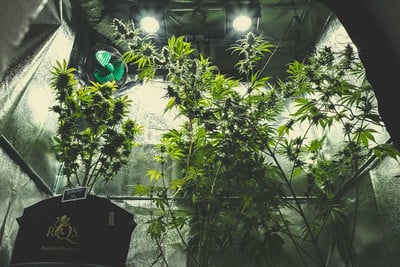
I built this run around a compact setup that gave the plants room to develop while staying easy to manage.
The MIGRO 200+ ran 24 hours a day right through the vegetative period, and I only moved to a 20/4 schedule once the plants showed their first flowers.


|
Skunk x Ruderalis |

|
5 to 7 oz/m² |

|
1 to 2 feet |

|
45 - 50 days |

|
Up to 13% |

|
Sativa 35% Indica 35% Ruderalis 30% |

|
1 to 3 oz/plant |

|
2 to 3 feet |

|
Creative, Motivating |

|
Low |

|
65 - 70 days after germination |
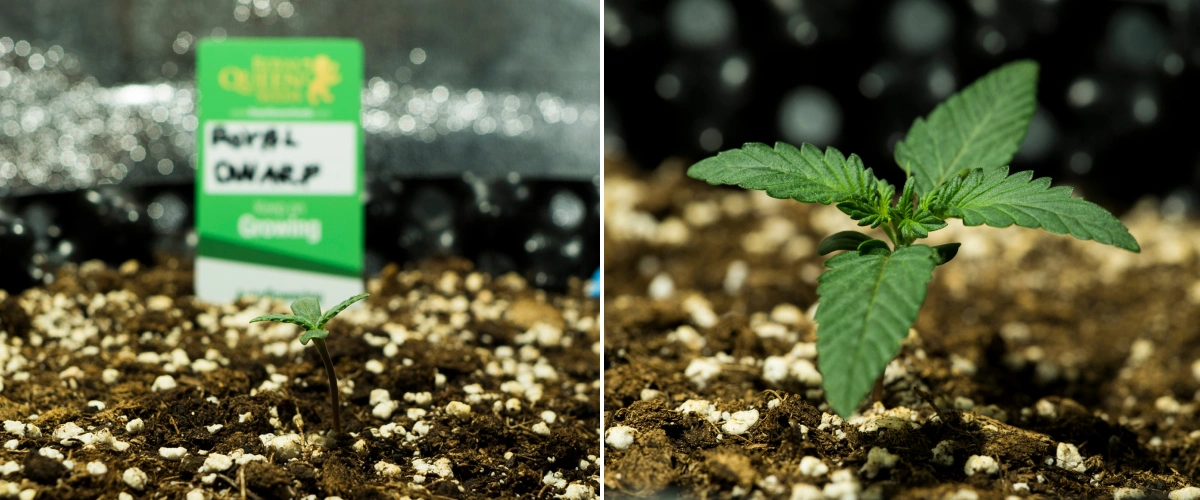
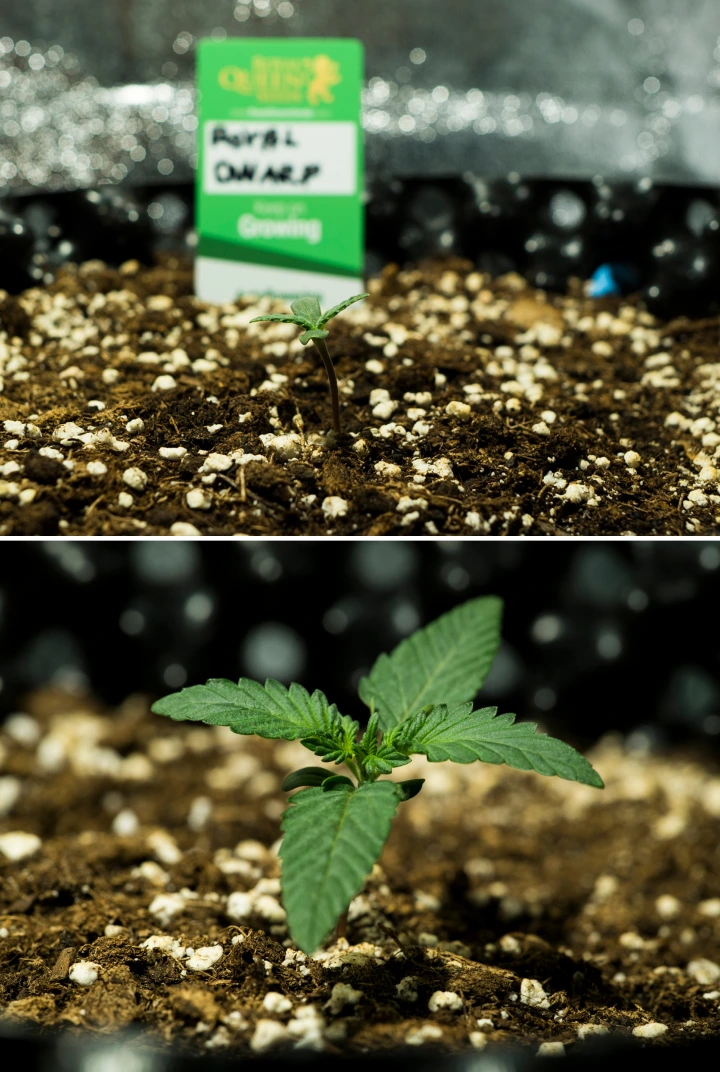
I sowed both seeds directly into their final 3 gal AirPots after thoroughly moistening the soil, around 1 in deep to avoid transplanting later. The larger plant emerged after 4 days, the smaller after 5.
For the first watering I added 2 ml of ATAMI NRG Root-C, later introducing 2 ml of Bio-Heaven, 2 ml of Acti-Vera, and 3 ml of Root-C. Each plant was getting around 0.11 gal every 3–4 days.
I started with the lamp 14 in above the canopy and kept it there through week two. By day 8 the smaller plant stood at 1.5 in and the larger at 2.5 in, the tent was sitting at about 82 °F by day and 79 °F at night, humidity held near 60%, and my nutrient solution went in at pH 6.3.
Summer heat was the main challenge early on. The outside weather pushed the tent toward 86 °F, so much of the first part of the grow was about keeping conditions under control without overcorrecting. Frozen water bottles inside the box usually held daytime conditions closer to 82 °F.
Both seedlings looked healthy despite the heat, with compact, steady growth, exactly what I expected from Royal Dwarf.
Royal Dwarf moves quickly through vegetation, so these two weeks were mostly about matching watering to rising demand while keeping feeding under control.
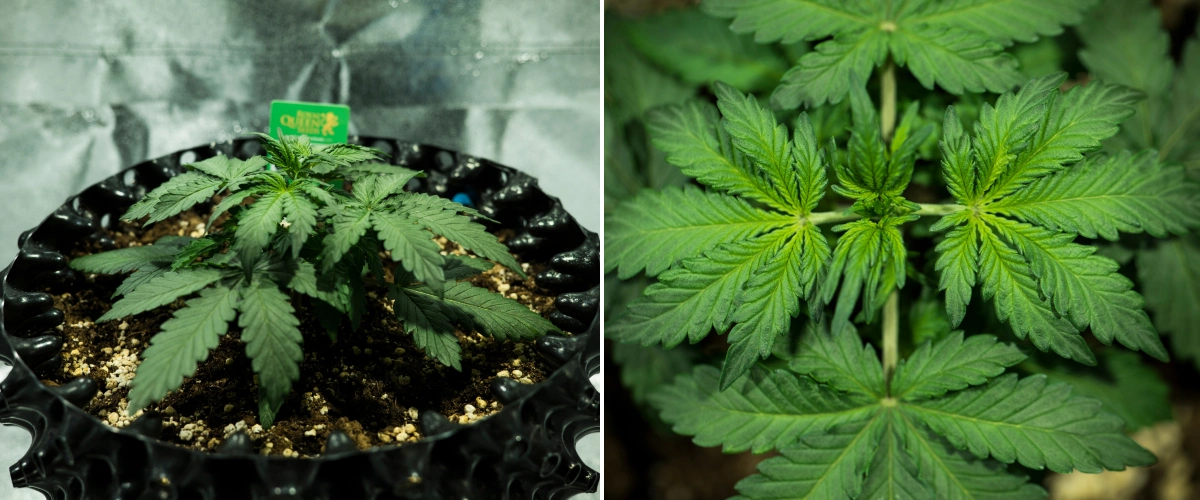
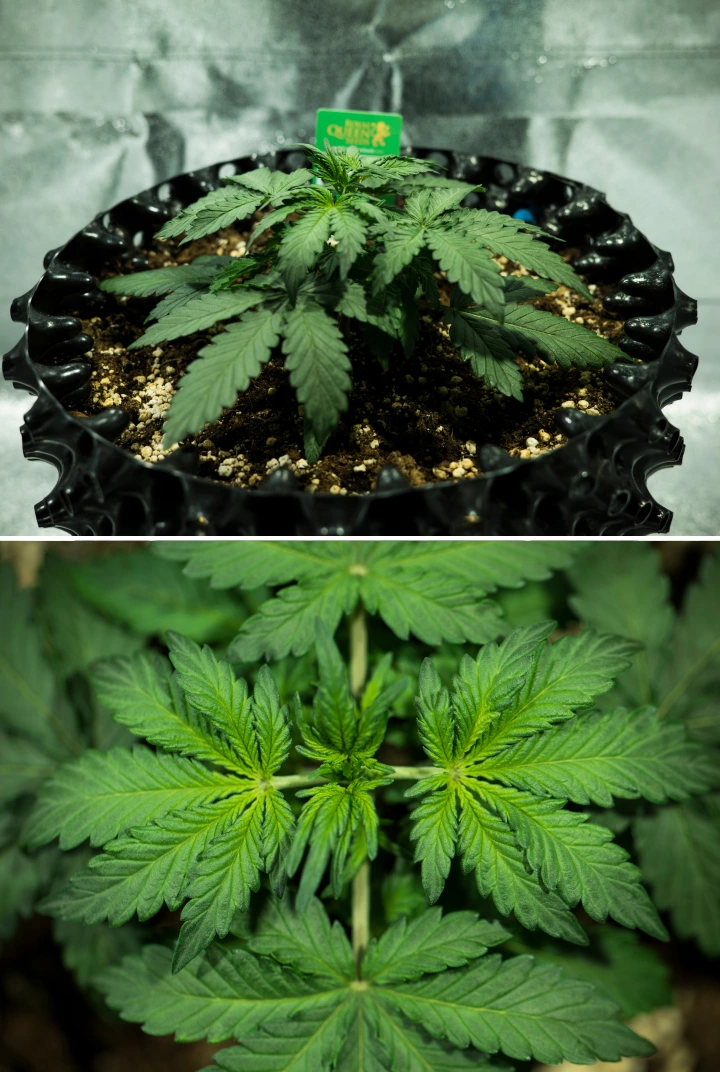
The second week was another battle with temperature. Outdoor conditions stayed above 86 °F, making it hard to keep the grow box below 84 °F, so the frozen bottles stayed in rotation.
Watering remained every 3–4 days, but I increased the amount to around 0.16 gal per plant. For the first watering of the week, I added 4 ml of ATAMI Root-C, then continued with the BioBizz schedule.
By the end of week two, the smaller Royal Dwarf measured 5 in and the larger one 6 in.
I also spotted a small yellow mark on one leaf of the larger plant. Nothing else looked wrong, so I decided not to make any sudden changes.
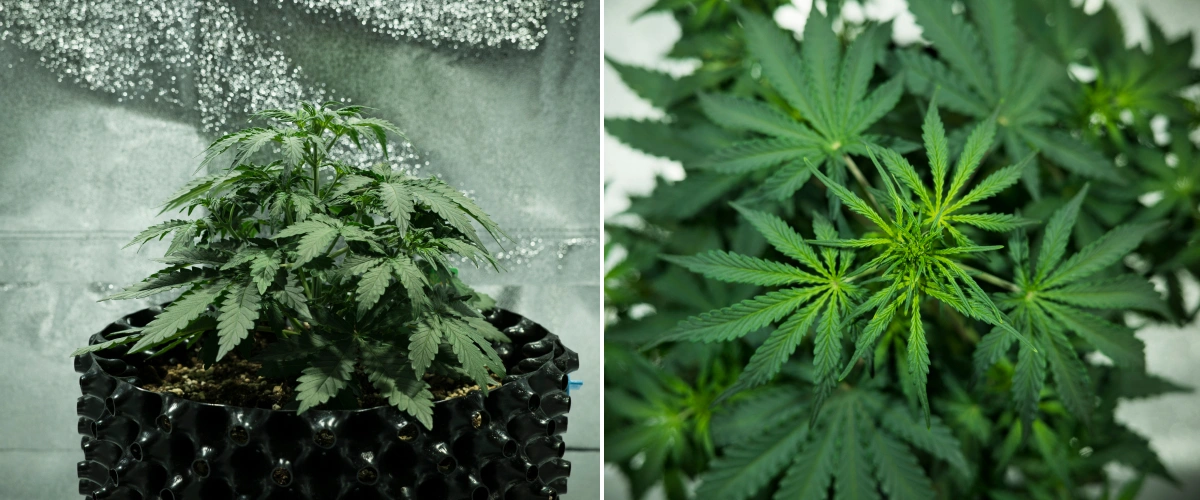
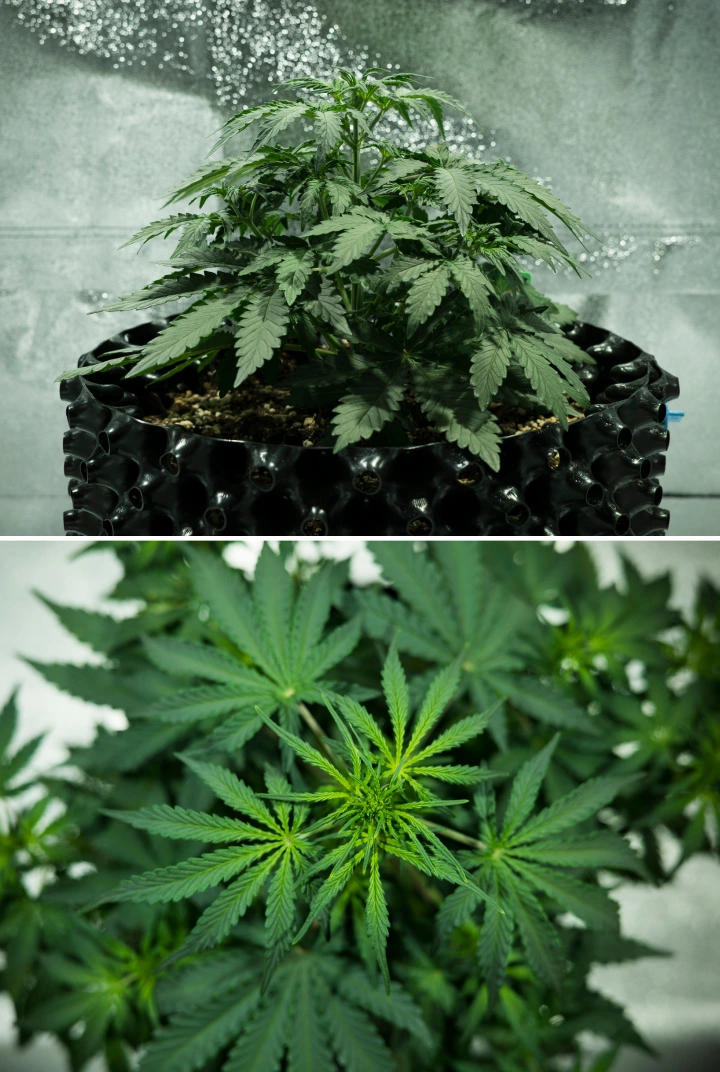
Week three brought the first major growth spurt. I spent 5 days away, and by the time I returned the larger Royal Dwarf had shot up noticeably.
The two plants reached 10 in and 14 in by the end of the week. With that much new height in seven days, I raised the lamp from 14 in to 16 in above the canopy.
They had also been fed a little too heavily while I was away, and dark green and brown patches appeared on some leaves. Instead of adding more products, I simplified the next watering to Alga-A-Mic only, holding the pH at 6.3.
Water demand was rising quickly at this point. I was watering roughly every 2 days, at around 0.26 gal per plant each time.
The plants were also beginning to show early flowering signs, so I prepared to switch the lights from 24 hours on to 20 hours on and 4 hours off. I also planned a light clean-up of the lower foliage.
From week four, the focus shifted from building structure to managing stretch, flowering, and ripening.
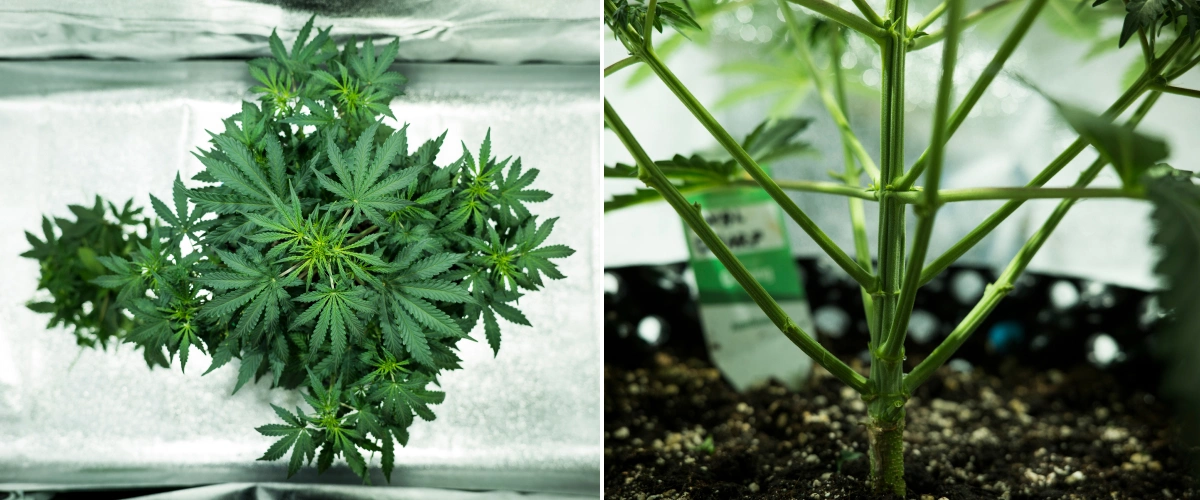
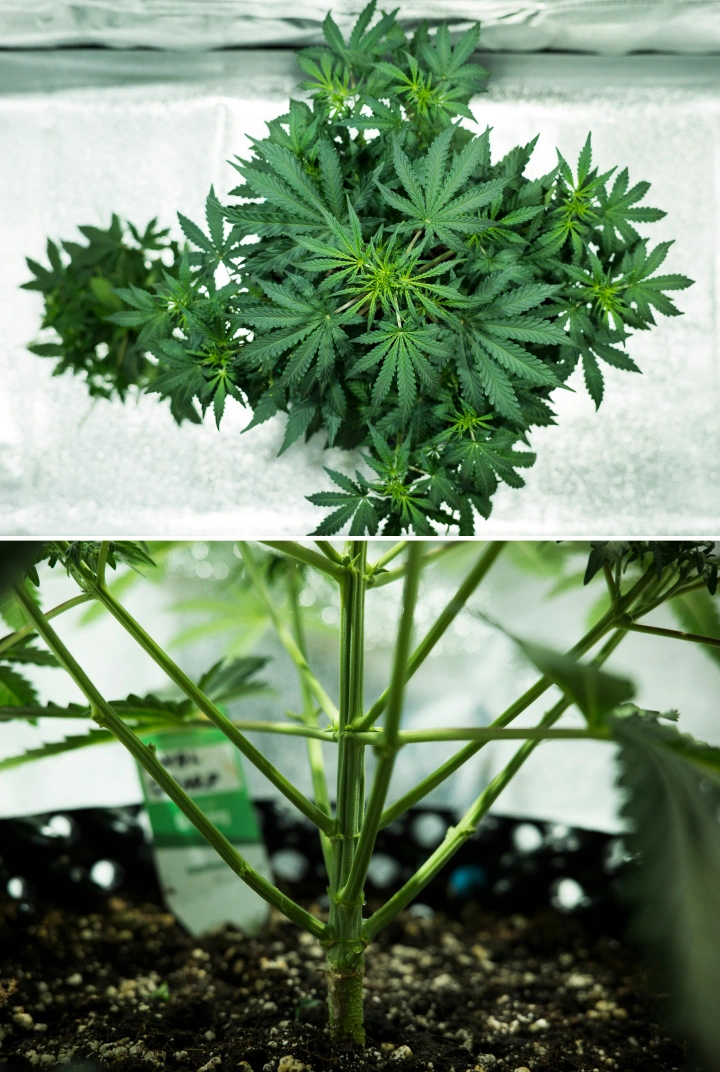
The first flowering week started with my first light defoliation and the change to a 20/4 lighting schedule.
After the previous week's overfeeding, I backed off the nutrients. Every other watering was mainly water with 2 ml per liter of Acti-Vera, and I used BioBizz pH- to keep irrigation water in range.
By the end of the week they needed watering roughly every second day.
The smaller Royal Dwarf reached 13 in, while the larger plant measured 17 in.
I was away for most of this week, so my wife handled the routine care. Despite the earlier feeding issue, both plants grew well.
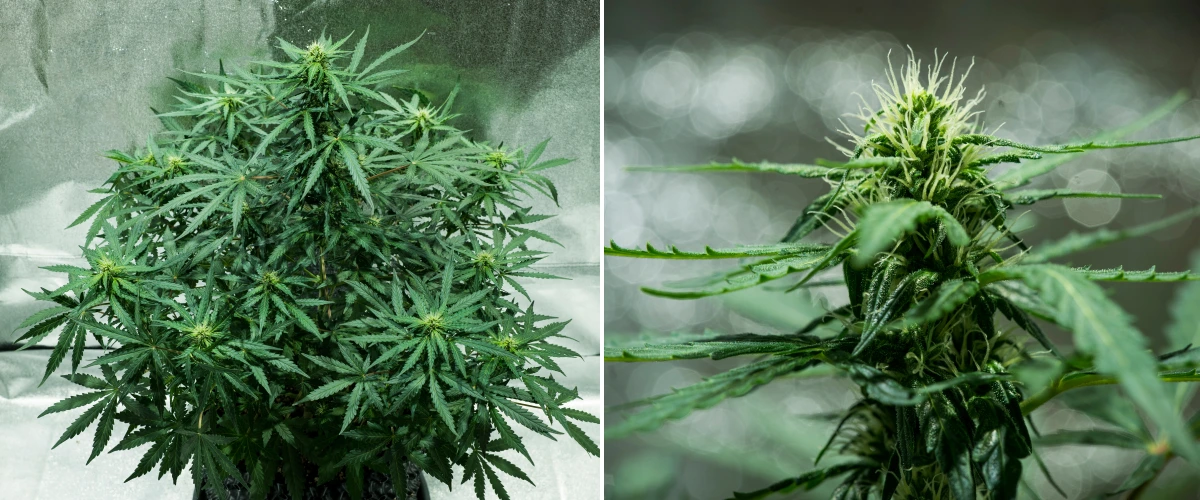
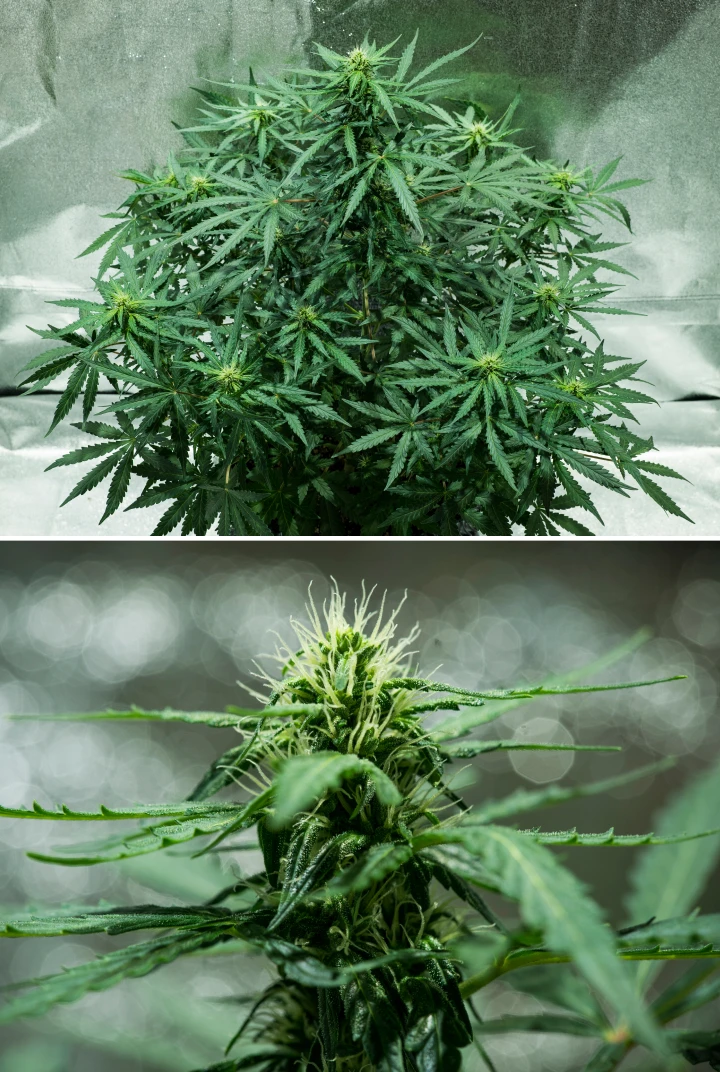
When I returned from traveling, both Royal Dwarf plants had filled much more of the tent than I expected. They were clearly in bloom and gaining height quickly. The lamp stayed at 16 in from here through to harvest; even at full stretch they never came close enough to need it moved.
The smaller plant reached 19 in, while the larger one measured 22 in.
I kept watering every other day, feeding on alternating irrigations. Between feeds, I gave 2 ml per liter of Acti-Vera and continued adjusting the pH.
The 20/4 schedule also helped with heat. Putting the 4-hour dark period in the hottest part of the day held tent temperatures around 82 °F without frozen bottles.
At the end of the week I carried out a second defoliation with a more experienced friend, keeping it light and focused on opening up the structure rather than stripping too much at once.
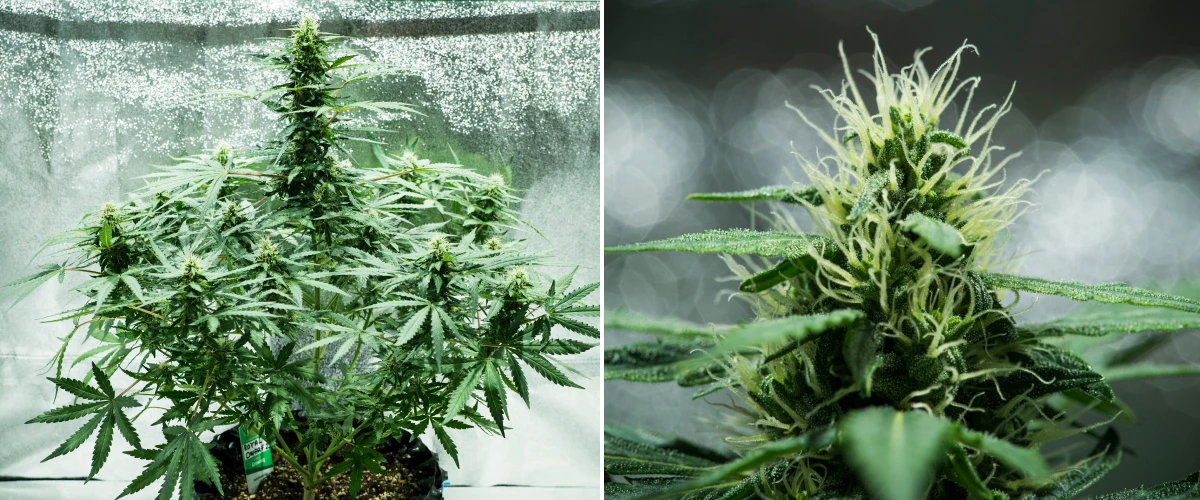
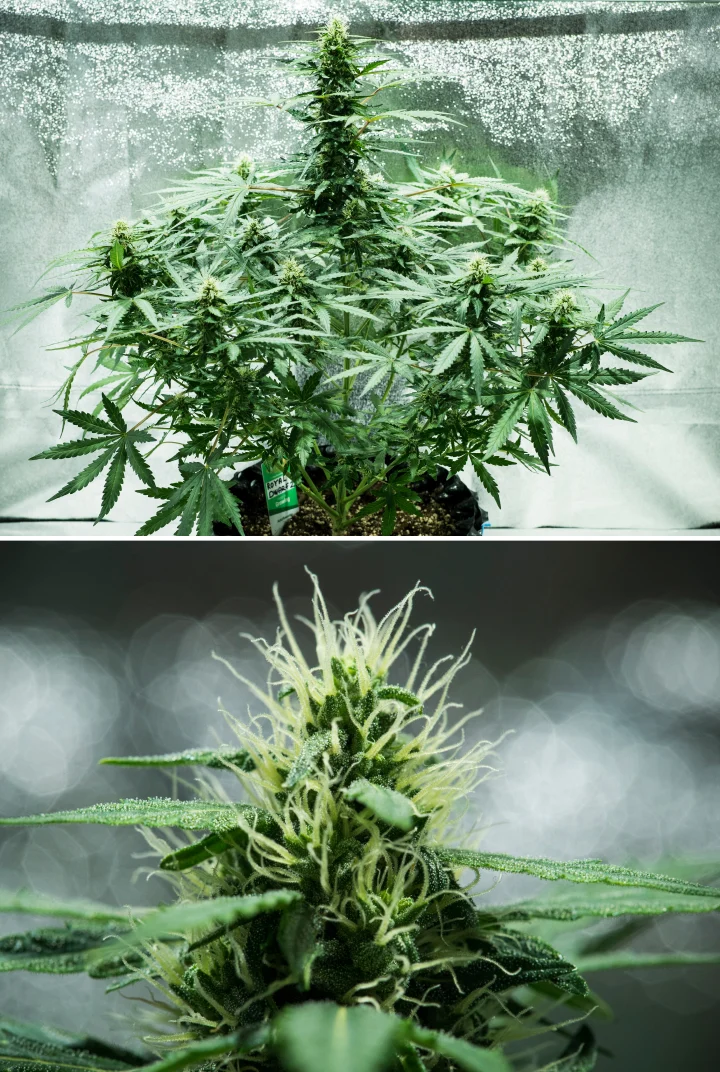
By week six, the stretch had almost stopped.
The smaller Royal Dwarf reached 20 in, while the larger plant remained around 22 in. From here, most of the visible development was in the flowers rather than vertical growth.
Watering settled at roughly every 2–3 days, with around 0.34 gal per plant. Every third watering consisted of pH-adjusted water without nutrients.
The lower flowers were developing more slowly than those higher up, but overall both plants looked healthy. The nights had also started cooling off, dropping from 79 °F to around 72 °F, and my nutrient solution came down with them to about 68 °F. After the heat and feeding problems earlier in the grow, this was one of the smoothest weeks.
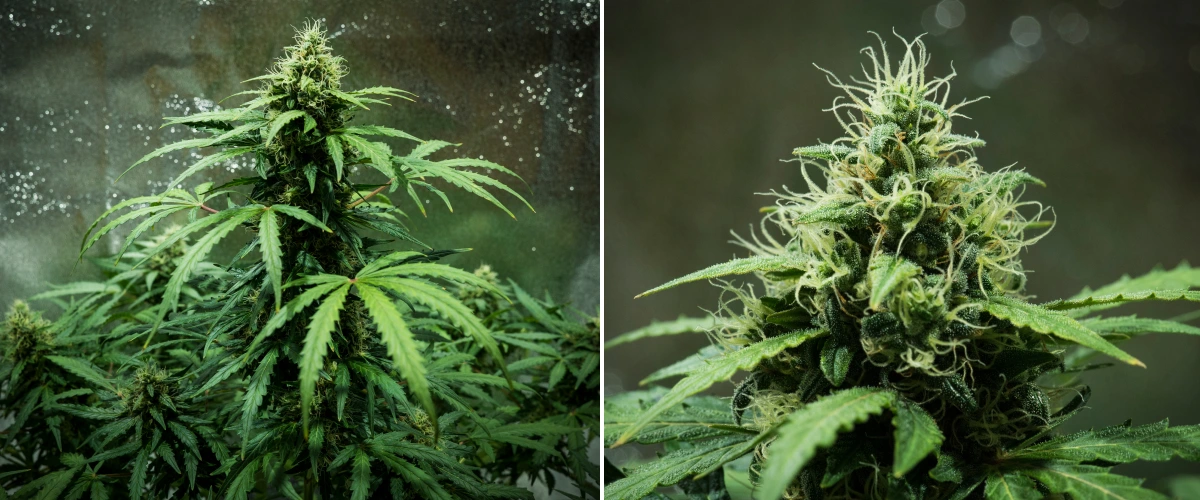
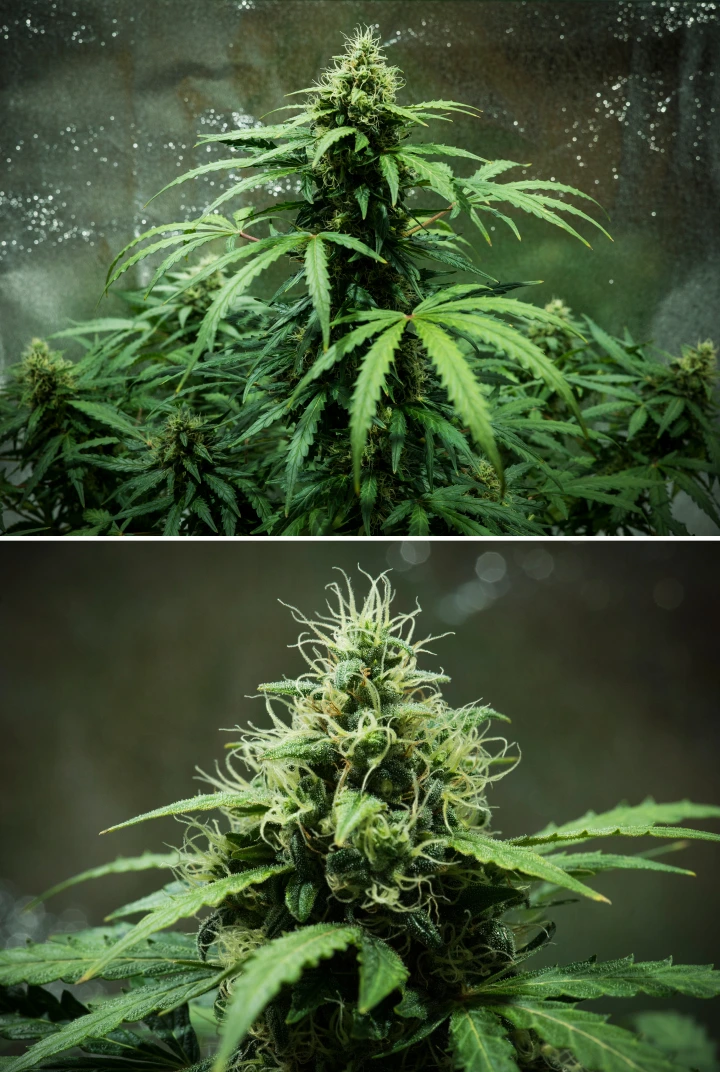
The smaller plant measured 20 in and the larger nudged up to 22 in, so vertical growth had all but finished.
The flowers had become noticeably denser, firmer, and stickier, and the aroma inside the tent was much stronger. Even some of the lower branches were filling out better than I expected.
Water demand started to drop, so I reduced irrigation to around every 3 days. Nutrients were still added every other watering.
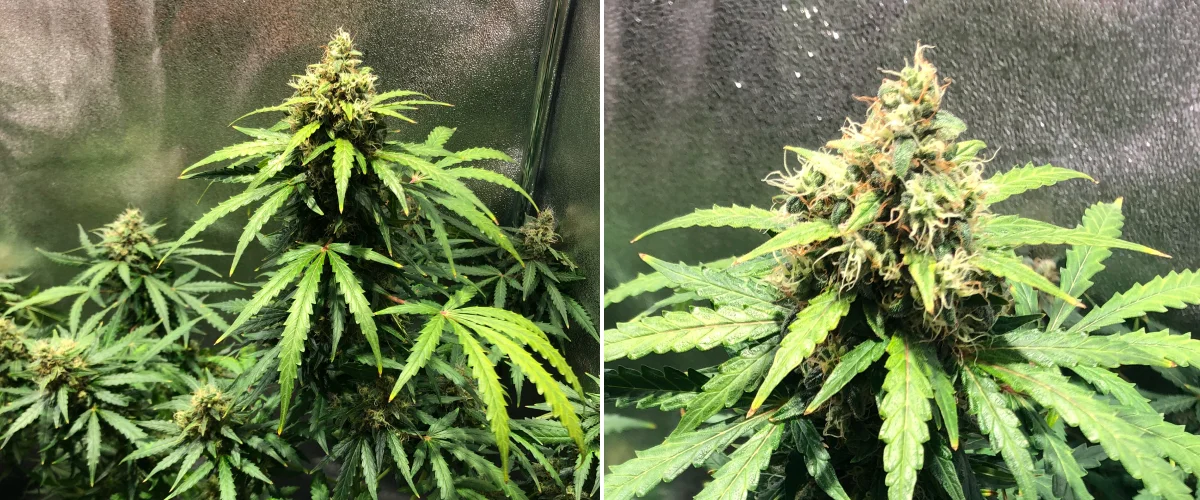
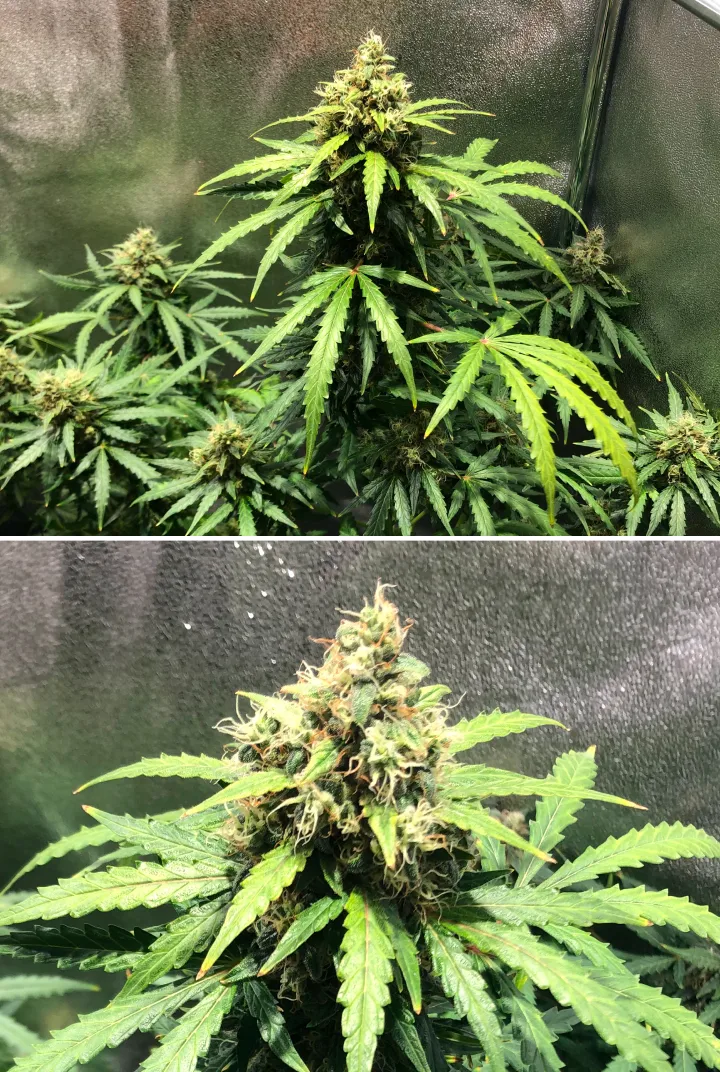
By week eight, the Royal Dwarf plants were clearly moving into late flower.
I was away again, so my wife and a friend handled the grow. The branches had started to bend under the weight of the flowers, so my friend tied some up for support and removed some older leaves.
Watering had slowed to roughly once every 4 days.
Humidity became more variable during this period, ranging from around 50% to 60% depending on the weather outside. With dense flowers developing, I kept the two oscillating fans working to maintain airflow through the tent.
This was the last week I used BioBizz nutrients; from here on it was pH-adjusted water only.
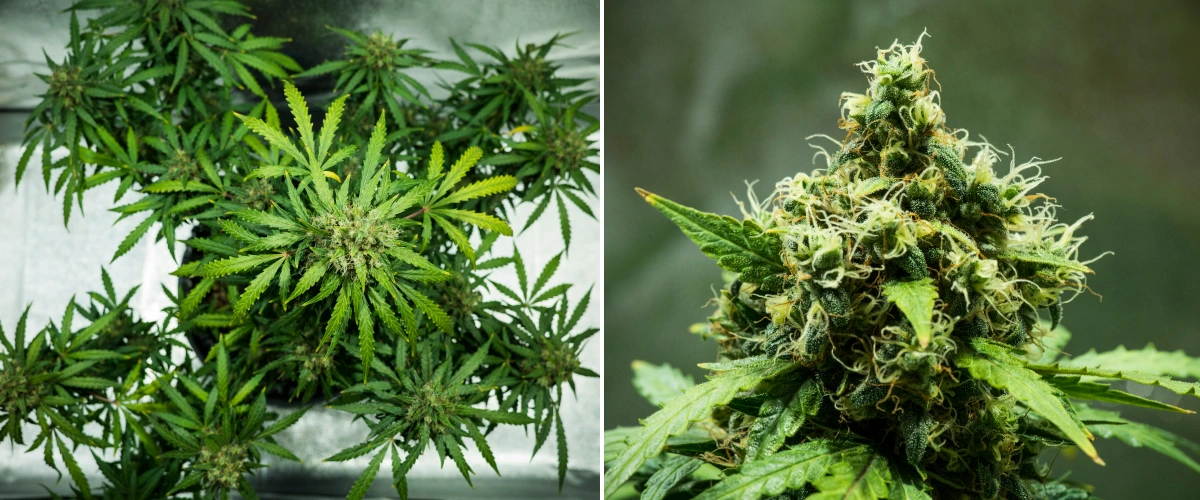
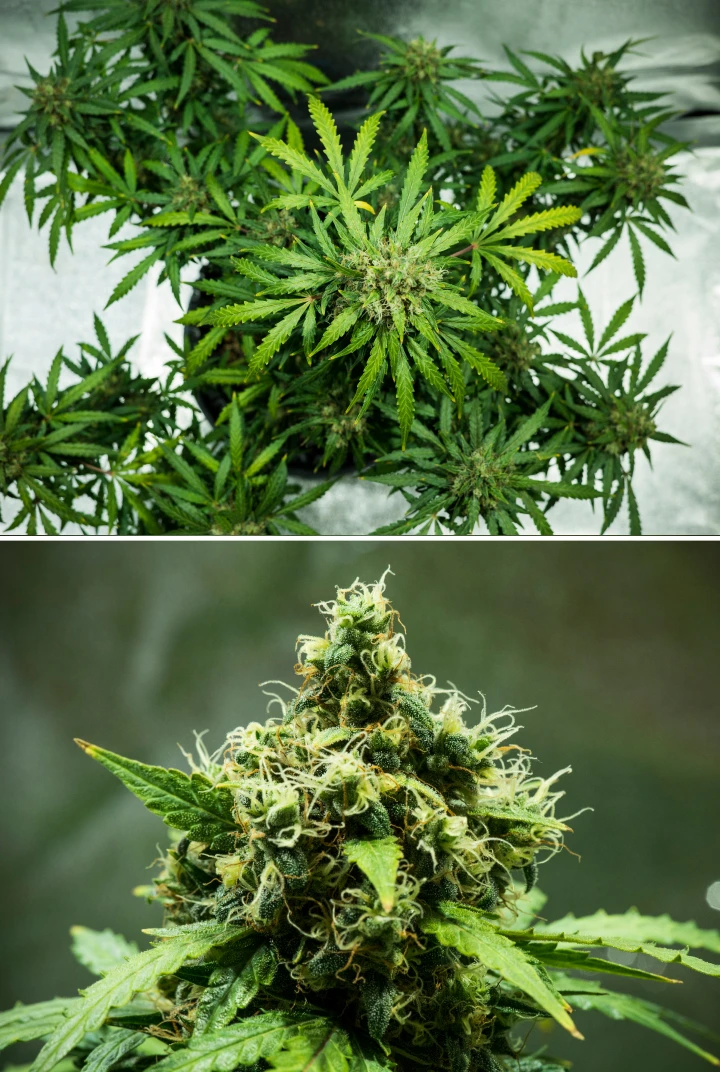
When I returned, both plants looked very close to harvest. I had bought a small microscope so I could check the trichomes rather than relying on the calendar.
Final height came in at 20 in for the smaller Royal Dwarf and 22 in for the larger plant.
Humidity had come down to around 55%, still higher than I would have preferred this late in flower, so airflow remained a priority.
After checking the flowers under the microscope, I estimated that harvest was no more than 48 hours away.
Once both plants looked ready, I harvested them and prepared a separate drying space.
I couldn't use the grow box because another plant was still finishing, so I made small drying boxes from cardboard and kept the flowers inside them in the dark.
Drying lasted 6 days. After trimming, the final dry weights were 2.1 oz from the smaller plant and 2.5 oz from the larger one, giving me a total of 4.6 oz, or an average of 2.3 oz per plant.
My original target had been around 1.8 oz per plant, so I was more than happy with the result.
Royal Dwarf descends from Skunk x Ruderalis and contains 35% sativa, 35% indica, and 30% ruderalis genetics.
The Skunk influence contributes much of her characteristic aroma and overall growth profile, while ruderalis provides the autoflowering trait and helps keep her compact.
RQS lists Royal Dwarf as an autoflower that reaches around 16–28 in indoors and 20–35 in outdoors, with a flowering phase of 45–50 days and harvest typically falling 65–70 days after germination. Mine ran slightly ahead of that, with the flowers ready around six weeks into bloom.
Both of my plants finished inside the expected indoor height range.
| Genetic Background | Skunk x Ruderalis |
| Type | Sativa 35% Indica 35% Ruderalis 30% |
| THC | Up to 13% |
| CBD | Low |
| Yield (Indoor) | 4–6 oz/yd² |
| Yield (Outdoor) | 1–3 oz/plant |
| Height (Indoor) | 16–28 in |
| Height (Outdoor) | 20–35 in |
| Flowering Time | 45–50 days |
| Harvest | 65–70 days after germination |
| Climate | Long summers |
| Effect | Creative, motivating |
| Flavor | Earthy, Skunk |
| Genetic Background | Skunk x Ruderalis |
| Type | Sativa 35% Indica 35% Ruderalis 30% |
| THC | Up to 13% |
| CBD | Low |
| Yield (Indoor) | 4–6 oz/yd² |
| Yield (Outdoor) | 1–3 oz/plant |
| Height (Indoor) | 16–28 in |
| Height (Outdoor) | 20–35 in |
| Flowering Time | 45–50 days |
| Harvest | 65–70 days after germination |
| Climate | Long summers |
| Effect | Creative, motivating |
| Flavor | Earthy, Skunk |
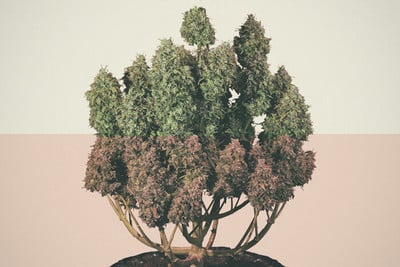
Royal Dwarf developed into a compact, manageable autoflower, which was exactly what I wanted from this grow.
Despite the stretch during early bloom, both plants finished at just 20–22 in, placing them comfortably inside the official indoor range of 16–28 in. Neither came close to outgrowing the available space.
The plants were also surprisingly sturdy for their size. By late flower, some branches needed support as the buds gained weight, but the overall structure remained manageable from start to finish.
Water demand changed noticeably throughout the cycle. I went from watering every 3–4 days early on, to every 2 days during the strongest growth, then back to every 3–4 days as flowering approached the finish. Volumes followed the same pattern, increasing from 0.11 gal per plant in week one to a peak of 0.37 gal in week five, before dropping to around 0.21 gal by harvest.
The main challenges were summer heat, a period of overfeeding in week three, and fluctuating humidity later in flowering. Once I recognized the dark and brown patches caused by feeding too heavily, simplifying the next watering worked better than trying to correct the problem with additional inputs.
Overall, Royal Dwarf stayed compact, recovered well from the few issues I encountered, and remained straightforward to manage throughout the grow.
Royal Dwarf's official flavor profile centers on earthy and Skunk notes, while the effect is described as creative and motivating.
During late flowering, the plants became noticeably more pungent as the buds matured and resin production increased. Skunky and gassy aromas developed in the tent, although the dried flowers ended up leaning slightly differently. Pine was the note that stood out most to me, with a lighter overall flavor than I expected.
She reaches up to 13% THC and contains low levels of CBD. For me, the finished flowers worked well for daytime use, which was exactly what I had been looking for when I chose the strain.
That difference between the official flavor profile and my own harvested flowers was also a useful reminder that phenotype, growing conditions, harvest timing, and drying can all influence the final aromatic profile.
For my first complete grow, Royal Dwarf gave me plenty to learn without becoming difficult to manage. Despite the heat, overfeeding, and late humidity swings, both plants stayed compact and reached harvest in good condition. I finished with a much better understanding of watering and environmental control, along with plenty of lessons to carry into the next run.